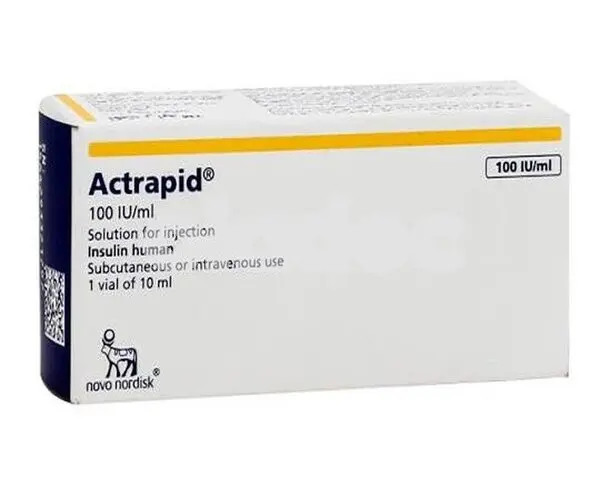
About Actrapid Hm Vial 10ml
Actrapid HM is a short-acting human insulin injection used to control blood sugar levels in adults with diabetes.
Actrapid HM Vial 10ml Uses
- Controls blood sugar levels in patients with Type 1 diabetes mellitus who require insulin therapy.
- Used in Type 2 diabetes mellitus when blood sugar cannot be controlled by diet, exercise, or oral medications alone.
- Manages diabetic ketoacidosis, a serious complication of uncontrolled diabetes requiring urgent treatment.
- Administered during surgical procedures or critical illness in patients with diabetes to maintain stable glucose levels.
- Used in continuous intravenous insulin infusion protocols in hospital and intensive care settings.
Actrapid HM Vial 10ml Benefits
- Delivers human insulin that is identical in structure to the insulin produced by the human pancreas.
- Short-acting formulation allows precise mealtime glucose control when administered 30 to 45 minutes before eating.
- Vial format supports individualized dose titration that fixed-dose delivery systems cannot provide.
- Compatible with standard insulin syringes and continuous infusion systems for hospital use.
- Proven efficacy in both Type 1 and Type 2 diabetes across decades of clinical use worldwide.
What Experts Say
Endocrinologists recognize Actrapid as one of the most clinically characterized short-acting human insulins available. Unlike engineered rapid-acting analogs, regular human insulin like Actrapid begins working within 30 minutes and requires administration 30 to 45 minutes before a meal to match the postprandial glucose curve effectively.
The vial format allows precise dose titration that fixed-dose delivery devices cannot replicate, making it the preferred formulation for hospitalized patients and individuals with variable insulin requirements. Clinicians rely on Actrapid for continuous IV infusions during surgical procedures and diabetic emergencies because of its predictable dose-response relationship.
Regular blood glucose monitoring is essential during Actrapid therapy to identify patterns and guide dose adjustments. Hypoglycemia is the primary clinical risk with any insulin, and patients are counseled to keep a fast-acting carbohydrate source available at all times. Rotating injection sites is also advised to prevent lipodystrophy, which can impair absorption consistency.
Drug Class
- Short-acting human insulin
Actrapid HM Vial 10ml Uses in Urdu
Actrapid HM ایک مختصر اثر والا انسانی انسولین انجیکشن ہے جو ذیابیطس کے مریضوں میں خون کی شکر کو کنٹرول کرتا ہے۔
- ذیابیطس ٹائپ 1 میں خون کی شکر کو کنٹرول کرتا ہے
- ذیابیطس ٹائپ 2 میں انسولین تھراپی کے لیے استعمال ہوتا ہے
- ذیابیطس کیٹوایسیڈوسس کے علاج میں مدد کرتا ہے
Actrapid Hm Vial 10ml formula
How to use Actrapid Hm Vial 10ml?
- Actrapid HM is administered by subcutaneous injection, typically into the abdomen, thigh, or upper arm. Rotate injection sites within each area with every dose.
- Inject 30 to 45 minutes before a meal to align insulin action with the rise in blood glucose after eating.
- Dose is individualized by your physician based on blood glucose readings, diet, physical activity, and overall health status. Do not adjust your dose without consulting your doctor.
- Inspect the solution before each use. Actrapid should be clear and colorless. Do not use if it appears cloudy, contains particles, or has changed color.
- Use a new sterile needle for each injection. Never share vials, syringes, or needles with another person.
Drug Interactions
Actrapid HM may interact with various medications that affect blood glucose levels. Inform your doctor and pharmacist of all medications you are taking.
- Oral hypoglycemic agents (metformin, sulfonylureas): May have additive blood-sugar-lowering effects when combined with insulin. Dose adjustments may be required.
- Beta-blockers: May mask the symptoms of hypoglycemia such as rapid heartbeat and tremor, making low blood sugar harder to detect.
- Corticosteroids: Raise blood glucose levels and may significantly increase insulin requirements during and after a course of steroid treatment.
- Alcohol: Can unpredictably lower blood glucose and increase the risk of severe hypoglycemia, especially on an empty stomach.
Risks and warnings
- Hypoglycemia: Low blood sugar is the most common risk with insulin. Symptoms include shakiness, sweating, confusion, and rapid heartbeat. Keep fast-acting sugar readily available at all times.
- Injection site reactions: Lipodystrophy (fat thickening or hollowing) may develop if injections are not rotated. Rotate sites within each injection zone consistently.
- Illness and surgery: Insulin requirements change during illness, fever, or surgery. Contact your physician promptly and do not stop insulin without medical guidance.
- Driving and machinery: Hypoglycemia can impair alertness and reaction time. Monitor blood glucose before driving or operating machinery, especially early in treatment.
- Pregnancy: Insulin requirements change during pregnancy and breastfeeding. Close monitoring and dose adjustment under physician supervision are essential.
Actrapid HM Vial 10ml Side Effects
Actrapid HM is well tolerated when used as prescribed. Most side effects are related to insulin's blood-sugar-lowering action or to injection technique.
- Hypoglycemia (low blood sugar): shakiness, sweating, dizziness, and hunger
- Injection site redness, swelling, or mild pain
- Lipodystrophy at injection sites with repeated use in the same location
- Mild weight gain, common with insulin therapy in general
The following effects require immediate medical attention.
- Severe hypoglycemia causing confusion, seizures, or loss of consciousness
- Generalized allergic reactions including rash, difficulty breathing, or swelling of the face — discontinue and seek emergency care immediately
- Severe hypokalemia (low potassium) with IV infusion use — monitored by clinical staff in hospital settings
Storage Conditions
- Store unopened vials in a refrigerator between 2°C and 8°C. Do not place near the freezer compartment or ice pack as freezing destroys insulin.
- Once in use, the vial may be kept at room temperature below 25°C for up to 6 weeks. Do not refrigerate an in-use vial repeatedly.
- Protect from direct sunlight and heat at all times. Do not leave the vial in a car or near a window.
- Discard the vial if the solution becomes cloudy, changes color, or if particles are visible.
- Keep out of reach of children. Check the expiry date before each use.