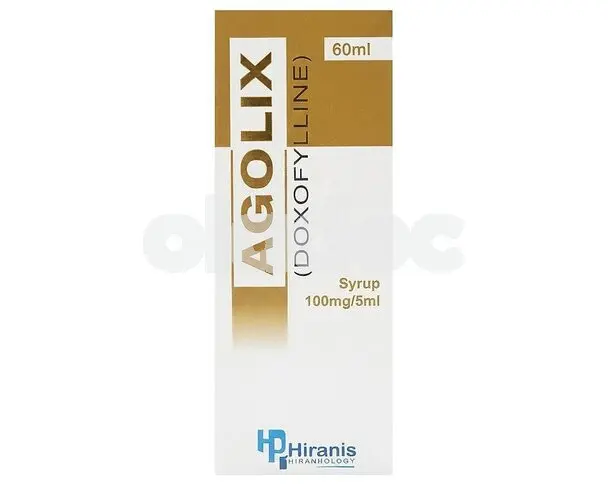
About Agolix Syrup 100 mg / 5 ml
Agolix Syrup: Doxofylline bronchodilator syrup for asthma and COPD relief.
Agolix Syrup 100 mg / 5 ml Uses
- Relieves bronchospasm in bronchial asthma
- Eases breathing difficulty in chronic bronchitis
- Used as add-on therapy in chronic obstructive pulmonary disease (COPD)
- Helps control wheezing and chest tightness in children with reactive airway disease
- Reduces frequency of asthma flare-ups when used with inhaled therapy
Agolix Syrup 100 mg / 5 ml Benefits
- Bronchodilator effect without major cardiac stimulation
- Liquid form suits children and patients who cannot swallow tablets
- Allows precise weight-based dosing in paediatric patients
- Lower risk of nausea and palpitations compared to theophylline
- Convenient twice-daily dosing schedule
What Experts Say
Doxofylline works differently from older xanthine bronchodilators like theophylline. Its unique dioxolane side chain lowers affinity for adenosine receptors, which explains why cardiac and central nervous system side effects are less frequent at therapeutic doses despite similar bronchodilator potency.
In paediatric use, physicians favour weight-based dosing over fixed adult doses because children clear the drug at variable rates depending on age and body mass. The syrup formulation allows finer titration than a tablet split, which matters most in children under twelve years who cannot swallow tablets reliably.
Doctors typically start with the lowest effective dose and monitor for gastrointestinal upset or mild tachycardia during the first week of treatment. Pakistan carries a significant burden of childhood asthma and recurrent wheeze, so paediatricians often pair doxofylline syrup with inhaled therapy rather than relying on it as monotherapy.
Drug Class
- Xanthine derivative bronchodilator
- Respiratory smooth muscle relaxant
Agolix Syrup 100 mg / 5 ml Uses in Urdu
- دمہ میں سانس کی نالیوں کی سکڑن کو کم کرتا ہے
- دائمی برونکائٹس میں سانس لینے میں آسانی پیدا کرتا ہے
- سی او پی ڈی کے علاج میں معاون دوا کے طور پر استعمال ہوتا ہے
- بچوں میں سینے کی جکڑن اور گھرگھراہٹ کو کم کرتا ہے
- دمہ کے دورے کم کرنے میں مدد دیتا ہے
Agolix Syrup 100 mg / 5 ml formula
How to use Agolix Syrup 100 mg / 5 ml?
- Shake the bottle well before every dose to mix the syrup evenly.
- Use the measuring cup or oral syringe provided with the pack, not a household spoon.
- Dose is calculated by the child's or adult's body weight, so follow the doctor's prescribed amount exactly.
- Give the syrup after meals to reduce stomach upset.
- Space doses evenly, usually twice a day, about 12 hours apart.
- Do not double the dose if one is missed; give the next dose at the usual time.
- Keep a dosing diary for young children to avoid accidental repeat doses.
Drug Interactions
- Ciprofloxacin and other fluoroquinolones: Can raise doxofylline levels and increase side effects.
- Erythromycin and macrolide antibiotics: May slow doxofylline clearance, raising toxicity risk.
- Other xanthine drugs (theophylline, aminophylline): Combined use increases the chance of overlapping side effects.
- Beta-blockers: May reduce the bronchodilator effect of doxofylline.
- Cimetidine: Can increase doxofylline blood levels when taken together.
Risks and warnings
- Liver disease: Doxofylline is metabolised by the liver, so patients with hepatic impairment need dose adjustment and monitoring.
- Kidney disease: Reduced kidney function can slow drug clearance and increase side effect risk.
- Heart conditions: Use with caution in patients with arrhythmia or ischaemic heart disease.
- Peptic ulcer: The syrup can worsen acid-related stomach irritation in susceptible patients.
- Seizure disorders: Xanthine derivatives can lower the seizure threshold in rare cases.
- Pregnancy and breastfeeding: Use only if clearly advised by a doctor, as safety data in these groups is limited.
- Young infants: Safety in children under one year has not been well established, so paediatric review is essential.
Agolix Syrup 100 mg / 5 ml Side Effects
- Nausea
- Vomiting
- Stomach pain
- Headache
- Restlessness
- Insomnia
- Fast heartbeat
- Dizziness
- Loss of appetite
- Skin rash
- Tremors
Storage Conditions
- Store the syrup bottle at room temperature, below 30 degrees Celsius.
- Keep the bottle tightly capped and upright to prevent leakage.
- Protect from direct sunlight and store away from heat sources.
- Discard any unused syrup 30 days after opening.
- Keep out of reach of children, ideally in a locked cabinet.