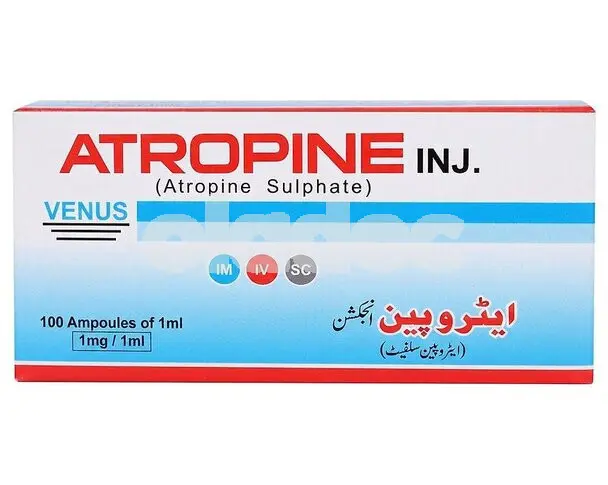
About Atropine Injection 1mg/1ml
An anticholinergic injection used for bradycardia, poisoning antidote and pre-anesthetic care.
Uses
- Treatment of symptomatic bradycardia (abnormally slow heart rate)
- Antidote for organophosphate and carbamate pesticide poisoning
- Antidote for nerve agent exposure in emergency settings
- Pre-anesthetic medication to reduce airway and salivary secretions
- Reversal of certain muscarinic effects during anesthesia
Benefits
- Acts within minutes when given intravenously in emergencies
- Restores a safer heart rate during vagally mediated bradycardia
- Controls dangerous secretions and bronchospasm in poisoning cases
- Supports safer airway management during surgical procedures
What Experts Say
Atropine Sulfate works by blocking acetylcholine at muscarinic receptors, which increases heart rate and reduces glandular secretions throughout the body. This dual action makes it valuable in emergency cardiac care and as an antidote in cholinergic toxicity. Its onset is rapid when given intravenously, which suits time critical hospital scenarios.
In symptomatic bradycardia, Atropine restores a safer heart rate by removing vagal inhibition on the sinoatrial node. In organophosphate or nerve agent poisoning, it competes with excess acetylcholine building up at receptor sites, controlling secretions, bronchospasm and bradycardia until the toxin clears. Dosing in poisoning cases is often repeated and titrated against clinical response.
Clinicians weigh its anticholinergic side effect profile carefully, especially tachycardia and reduced sweating, before administration. Because effects are systemic and fast acting, Atropine is reserved for monitored settings where vital signs and response can be tracked continuously by trained staff.
Drug Class
- Anticholinergic agent
- Antimuscarinic drug
- Antidote (cholinergic toxicity)
Atropine Injection 1mg/1ml Uses in Urdu
- دل کی دھڑکن کے غیر معمولی طور پر سست ہونے کے علاج کے لیے
- زہریلی کیڑے مار ادویات (آرگینوفاسفیٹ) کے زہر کے علاج کے لیے
- سرجری سے پہلے تھوک اور سانس کی نالی کے رطوبات کم کرنے کے لیے
- ایمرجنسی اور ہسپتال کی نگرانی میں ماہر طبی عملے کے زیر استعمال
Atropine Injection 1mg/1ml formula
How to use Atropine Injection 1mg/1ml?
- Administered only by trained medical or paramedic staff in hospital, emergency or surgical settings
- Given by intravenous, intramuscular or subcutaneous injection depending on the clinical situation
- Dose and repeat frequency are decided by the treating physician based on heart rate and response
- Continuous heart rate and vital sign monitoring is required during and after administration
- In poisoning cases, dosing is titrated and repeated until secretions and airway signs improve
- Not intended for self administration or home use under any circumstance
Drug Interactions
- Other anticholinergic drugs: Combined use increases dry mouth, blurred vision and urinary retention
- Antipsychotics with anticholinergic effects: May intensify confusion and anticholinergic side effects
- Tricyclic antidepressants: Additive anticholinergic burden can worsen heart rate and cognitive effects
- Digoxin: Atropine may alter heart rate response and requires careful cardiac monitoring
- Other drugs that slow gut motility: May worsen constipation or delayed gastric emptying
Risks and warnings
- May cause tachycardia or an irregular fast heartbeat
- Can cause urinary retention, particularly in men with prostate enlargement
- Commonly causes dry mouth and temporary blurred vision
- Use with caution in patients with glaucoma due to raised eye pressure risk
- Caution advised in elderly patients who may develop confusion or agitation
- Reduces sweating, which increases risk of heat intolerance and overheating
- Avoided in certain obstructive gastrointestinal or urinary tract conditions
- Requires careful dose titration in patients with heart disease
Atropine Injection 1mg/1ml Side Effects
- Dry mouth and throat
- Blurred vision and light sensitivity
- Fast heartbeat or palpitations
- Flushed or dry skin
- Difficulty urinating
- Confusion, especially in elderly patients
- Constipation
- Reduced sweating and heat intolerance
- Restlessness or irritability at higher doses
Storage Conditions
- Store ampoules at room temperature, away from direct light
- Protect from freezing and extreme heat during storage
- Keep in original packaging until the point of use
- Use each ampoule for a single administration only and discard any unused portion
- Store securely in hospital emergency trolleys or pharmacy stock away from children