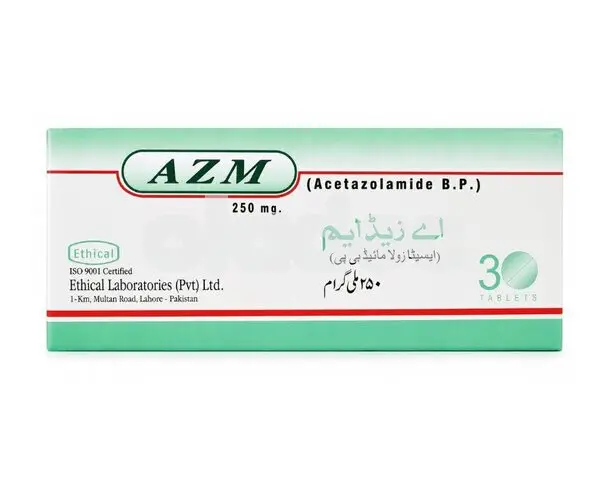
About Azm Tablet 250mg
Azm Tablet lowers fluid pressure in the eyes, brain, and body to treat glaucoma, edema, and related conditions.
Azm Tablet Uses
- Used for open-angle glaucoma to lower pressure inside the eye and protect vision
- Chosen for fluid retention in heart failure, where the body holds onto excess water
- Helpful in controlling certain epilepsy types, including absence seizures, alongside other medicines
- Given to people traveling to high altitudes to prevent or relieve mountain sickness
- Treats body swelling that develops as a side effect of certain medications
- Indicated for secondary glaucoma and prescribed before eye surgery to reduce eye pressure
- Effective in reducing sudden muscle weakness episodes in hypokalemic periodic paralysis
- Supports ongoing glaucoma management when eye drops alone cannot control pressure
Azm Tablet Uses in Urdu
- یہ دوا آنکھوں میں دباؤ کو کم کرنے کے لیے گلوکوما کے علاج میں استعمال ہوتی ہے۔
- دل کی ناکامی کی وجہ سے جسم میں پانی جمع ہونے کی صورت میں یہ گولی پانی خارج کرنے میں مدد دیتی ہے۔
- مخصوص قسم کے مرگی کے دوروں کو قابو میں رکھنے کے لیے دی جاتی ہے۔
- پہاڑوں پر سفر کے دوران اونچائی کی بیماری سے بچاؤ اور علاج کے لیے استعمال ہوتی ہے۔
- بعض دواؤں کے استعمال سے جسم میں جمع ہونے والی سوجن کو کم کرنے میں معاون ہے۔
Azm Tablet 250mg formula
Acetazolamide 250mg
How to use Azm Tablet 250mg?
- Azm tablet can be taken with or without food
- Swallow the tablet whole with a full glass of water
- Take this medicine at the same time each day to keep levels stable in your body
- Complete the full prescribed course, even if your symptoms improve before it ends
- Do not stop this medicine suddenly if you are using it for seizures or glaucoma
Contraindications
- Allergy to acetazolamide, sulfa drugs, or any sulfonamide-type medicine
- Patients with cirrhosis or severe liver disease, as it can worsen the condition
- Not suitable for people with severe kidney disease or very low potassium or sodium levels
- Contraindicated in those with adrenal gland failure (Addison's disease)
- Should not be taken by patients with metabolic acidosis or acidic blood problems
- Those with a history of aplastic anemia or other serious blood disorders
Drug Interactions
- Aspirin and salicylates: a dangerous combination that can cause loss of appetite, rapid breathing, extreme fatigue, and, in severe cases, coma or death
- Phenytoin (Dilantin): Azm tablet raises phenytoin levels in the blood, increasing the risk of bone softening with long-term use
- Primidone (Mysoline): This combination may lower primidone levels in the blood, reducing its seizure-control effect
- Lithium: Azm tablet increases lithium excretion through urine, which can lower its effectiveness
- Digoxin: When taken together, there is a higher risk of digoxin toxicity due to potassium loss
- Methotrexate: Azm tablet can slow the removal of methotrexate from the body, raising toxicity risk
Risks and warnings
- QT prolongation or heart rhythm problems: Azm tablet can affect electrolyte levels, which may worsen heart rhythm issues
- Kidney stones: this medicine raises the risk of kidney stone formation, especially with high fluid intake; drink plenty of water
- Diabetes: Azm tablet can interfere with blood sugar readings and insulin requirements; monitor carefully
- Gout: this medicine can raise uric acid levels, potentially triggering a gout attack
- Sulfa allergy: patients allergic to sulfonamide antibiotics may also react to acetazolamide
- Sun sensitivity: Azm tablet can make skin more sensitive to sunlight; use sunscreen outdoors
- Pregnancy: only use during pregnancy when clearly needed and under supervision
- Breastfeeding: acetazolamide passes into breast milk; consult your doctor before feeding
- Elderly patients: older patients are more sensitive to electrolyte changes; closer monitoring is needed
- Kidney or liver problems: dosage adjustment may be required; inform your doctor before starting
Azm Tablet Side Effects
- Tingling or numbness in the hands, feet, or around the mouth
- Loss of appetite or unusual taste in the mouth
- Increased urination, especially in the first few days
- Nausea, vomiting, or stomach cramps
- Headache or dizziness
- Blurred vision
- Drowsiness or fatigue
- Low potassium levels causing muscle weakness or cramps
- Blood in urine or severe lower back pain
- Unusual bruising, pale skin, or unexplained fever (signs of blood disorder)
- Severe skin rash or peeling
- Signs of liver problems: yellowing of the skin or eyes, dark urine, stomach pain
Storage Conditions
- Store at room temperature, below 25°C
- Keep away from direct sunlight, heat, and moisture
- Keep out of reach of children and pets