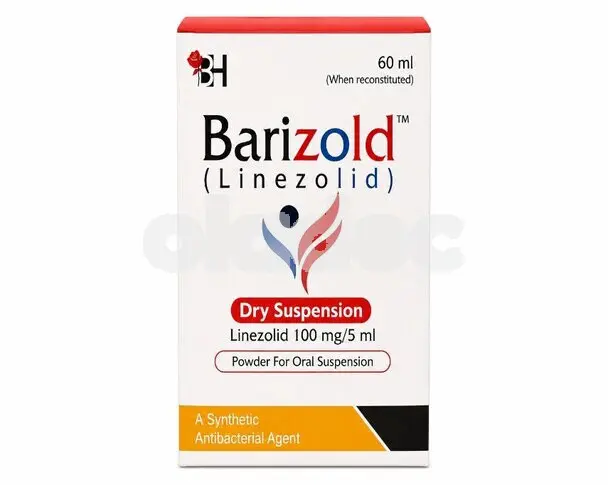
About Barizold Syrup 60ml
Barizold Syrup is a prescription antibiotic suspension for serious bacterial infections in adults and children.
Barizold Syrup Uses
- Complicated skin and soft tissue infections caused by susceptible bacteria
- Community-acquired pneumonia, including cases with confirmed bacteremia
- Hospital-acquired (nosocomial) pneumonia in children and adults
- Infections caused by Methicillin-resistant Staphylococcus aureus (MRSA)
- Infections caused by Vancomycin-resistant Enterococcus faecium (VRE)
Barizold Syrup Benefits
- Clears infections that no longer respond to common first-line antibiotics
- Gives children a needle-free option when resistant bacterial infections need treatment
- Works against a wide range of Gram-positive bacteria, including MRSA and VRE strains
- Allows outpatient antibiotic therapy in cases that once required hospital-based IV treatment
- Reaches high concentrations in skin, lung, and soft tissue for a reliable clinical response
What Experts Say
Linezolid belongs to the oxazolidinone class of antibiotics, a newer group developed specifically for resistant Gram-positive bacteria. Most physicians reserve Barizold Syrup for infections that have not responded to standard antibiotics like penicillins or cephalosporins, rather than using it as a first-choice treatment.
Antimicrobial resistance is rising sharply across Pakistani hospitals, and MRSA rates in ICUs in Lahore, Karachi, Islamabad, and Rawalpindi remain a concern for treating physicians. Culture and sensitivity testing before starting Barizold Syrup helps confirm the exact bacteria and supports responsible antibiotic use.
Weekly blood monitoring becomes important during longer courses, since linezolid can affect platelet and red blood cell counts. The full prescribed course should be completed even after symptoms improve, since stopping early raises the risk of a resistant infection returning.
Drug Class
Barizold Syrup Uses in Urdu
بریزولڈ سیرپ ایک اینٹی بایوٹک دوا ہے جو ان بیکٹیریل انفیکشنز کے علاج کے لیے استعمال ہوتی ہے جو عام دوائیوں سے ٹھیک نہیں ہوتے۔ ڈاکٹر عام طور پر اسے مشکل یا مزاحم انفیکشنز کے لیے تجویز کرتے ہیں۔
- جلد اور نرم بافتوں کے شدید انفیکشن
- نمونیا جو ہسپتال یا کمیونٹی میں لگا ہو
- MRSA بیکٹیریا سے ہونے والے انفیکشن
- VRE بیکٹیریا سے ہونے والے انفیکشن
- وہ انفیکشن جو عام اینٹی بایوٹکس سے ٹھیک نہ ہوں
Barizold Syrup 60ml formula
Available forms
- Oral Suspension (Dry Syrup)
How to use Barizold Syrup 60ml?
- Shake the bottle well before every dose to mix the suspension evenly.
- Measure the exact dose using the oral syringe or spoon provided with the pack.
- Give the prescribed dose every 8 or 12 hours, based on the doctor's instructions and the child's body weight.
- Take doses at evenly spaced times to keep antibiotic levels steady in the body.
- Continue the full course prescribed by the doctor, usually 10 to 14 days, even if symptoms improve early.
- Refrigerate the reconstituted suspension and discard any unused portion after 21 days.
- Avoid skipping or doubling doses, since irregular use can allow the infection to become resistant.
Drug Interactions
Barizold Syrup interacts with several medicines and foods, and some combinations can be dangerous. The prescribing doctor should always get a full list of current medicines before Barizold Syrup is started.
- MAOIs and MAOI-like drugs (phenelzine, isocarboxazid): Combining these with Barizold Syrup can cause a dangerous rise in blood pressure and is contraindicated.
- Serotonergic drugs (SSRIs, SNRIs, tricyclic antidepressants, triptans, tramadol): This combination raises the risk of serotonin syndrome, a serious and potentially life-threatening reaction.
- Adrenergic agents (pseudoephedrine, epinephrine, decongestants): These can add to blood pressure elevation when taken with linezolid.
- Tyramine-rich foods (aged cheese, cured meats, fermented soy products): Large amounts may trigger a sudden rise in blood pressure, since linezolid has weak MAOI-like activity.
- Insulin and oral diabetes medicines: Blood sugar should be monitored closely, since linezolid can occasionally cause hypoglycemia.
Risks and warnings
- MAOI use: Do not use Barizold Syrup if you have taken a monoamine oxidase inhibitor within the past two weeks.
- Uncontrolled hypertension: Caution is needed, since linezolid has mild MAOI-like activity that can raise blood pressure.
- Pregnancy and breastfeeding: Use only if the doctor decides the benefit clearly outweighs the risk, since safety data in pregnancy is limited.
- Phenylketonuria (PKU): The suspension contains phenylalanine, so caution is needed in children with this condition.
- Low blood counts or bleeding disorders: Extra monitoring is needed, since linezolid can further lower platelets and red blood cells.
- Carcinoid syndrome or uncontrolled thyroid disease: These conditions raise the risk of blood pressure and serotonin-related side effects with linezolid.
Barizold Syrup Side Effects
Barizold Syrup can cause mild side effects in many patients, especially during the first few days of treatment. These effects usually settle once the body adjusts to the antibiotic.
- Diarrhea
- Nausea and vomiting
- Headache
- Metallic or altered taste
- Mild stomach discomfort
Serious reactions are less common but need prompt medical attention. Longer courses of Barizold Syrup carry a higher chance of these effects, so regular checkups matter.
- Unusual bleeding, bruising, or signs of low blood counts
- Numbness, tingling, or vision changes suggesting nerve involvement
- Signs of serotonin syndrome, such as agitation, rapid heartbeat, or high fever
- Severe or watery diarrhea that does not improve
- Unexplained muscle pain or weakness
- Signs of an allergic reaction, such as rash, swelling, or difficulty breathing
Storage Conditions
- Store the unopened powder below 25°C in a cool, dry place away from direct sunlight.
- Refrigerate the suspension between 2°C and 8°C after reconstitution with water.
- Keep the bottle tightly closed and shake well before each use.
- Discard any unused suspension 21 days after reconstitution.
- Keep out of reach of children.