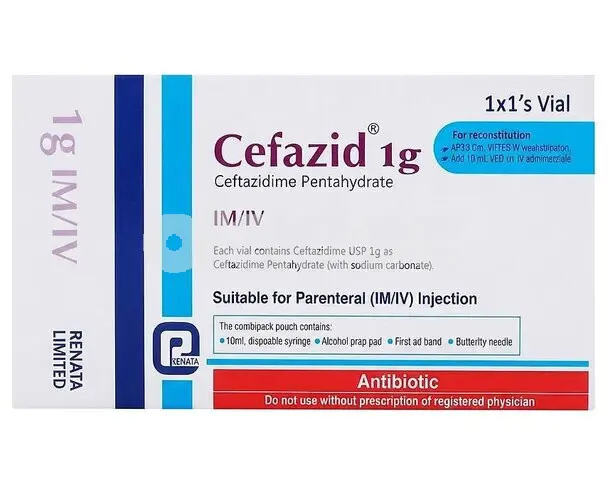
About BioMed Injection 1gm
A cephalosporin antibiotic injection used in hospitals to treat serious bacterial infections.
BioMed Injection 1gm Uses
- Severe pneumonia and other lower respiratory tract infections
- Complicated urinary tract infections
- Skin and soft tissue infections
- Bone and joint infections
- Intra abdominal infections, often combined with another antibiotic
- Bacterial meningitis caused by susceptible organisms
- Bloodstream infections known as septicemia
Drug Class
- Third generation cephalosporin antibiotic
What Experts Say
Ceftazidime belongs to the third generation cephalosporin family of antibiotics. Its structure gives strong activity against Pseudomonas aeruginosa, a tough bacterium that resists many other antibiotics. This makes the 1gm injection a preferred choice for serious infections picked up inside hospitals, where resistant bacteria are more common.
Doctors usually reserve this strength for infections that are moderate to severe, since lower doses often suit milder cases. The injection works only against bacteria, so it has no role in viral illnesses like the flu or common cold. A full course, even after symptoms improve, lowers the chance of the infection coming back or turning resistant.
Kidney function guides the dosing schedule for this medicine, since the body clears ceftazidime mainly through the kidneys. Patients with reduced kidney function often need a lower dose or a longer gap between injections to avoid a buildup in the blood. Anyone with a known penicillin allergy should tell their doctor before starting this injection, since a small percentage of people react to both drug groups.
BioMed Injection 1gm Uses in Urdu
- سانس کی نالی اور پھیپھڑوں کے شدید انفیکشن کے علاج کے لیے
- پیشاب کی نالی کے پیچیدہ انفیکشن کے لیے
- جلد اور نرم بافتوں کے انفیکشن کے لیے
- ہڈیوں اور جوڑوں کے انفیکشن کے لیے
- پیٹ کے اندرونی حصوں کے انفیکشن کے لیے
- خون میں انفیکشن یعنی سیپٹی سیمیا کے علاج میں
BioMed Injection 1gm formula
How to use BioMed Injection 1gm?
- This injection is given only by a doctor or trained healthcare staff, usually in a hospital or clinic.
- The dose is mixed with sterile water or saline just before it is given.
- Administration is usually through a vein or a deep muscle, depending on the infection being treated.
- A typical adult dose is repeated every eight to twelve hours, based on the infection and kidney function.
- The full course should be completed even if symptoms improve within a day or two.
Drug Interactions
- Aminoglycosides: Combined use raises the risk of kidney damage, so kidney function needs close monitoring.
- Furosemide and other loop diuretics: Kidney toxicity risk increases when these are combined with this injection.
- Chloramphenicol: This antibiotic can reduce the bactericidal effect of ceftazidime.
- Probenecid: This drug can raise ceftazidime levels in the blood by slowing its clearance.
- Blood thinners: A higher bleeding risk is possible when cephalosporins are combined with anticoagulants.
Risks and warnings
- Penicillin allergy: Cross reaction is possible in people allergic to penicillin or other cephalosporins.
- Kidney disease: A lower dose or longer gap between doses is often needed in kidney impairment.
- Seizure risk: High doses in patients with poor kidney function have been linked to seizures.
- Pregnancy and breastfeeding: This injection should only be used if a doctor confirms it is necessary.
- Superinfection: Prolonged use can allow resistant bacteria or fungi to overgrow.
- Severe diarrhea: A serious bowel infection called C. difficile colitis can develop during or after treatment.
BioMed Injection 1gm Side Effects
- Pain, redness or swelling at the injection site
- Nausea or vomiting
- Diarrhea
- Rash or itching
- Vein inflammation with intravenous use
- Headache
- Severe allergic reaction such as facial swelling, throat tightness or difficulty breathing (rare)
- Severe watery or bloody diarrhea from C. difficile colitis (rare)
- Unusual bleeding or bruising (rare)
Storage Conditions
- The unopened vial should be stored below 25°C, away from direct sunlight.
- A reconstituted solution should be used within the time stated on the pack insert, usually within a few hours at room temperature or up to 24 hours if refrigerated.
- This medicine should be kept out of reach of children.
- A vial with discolored or cloudy solution after mixing should not be used.