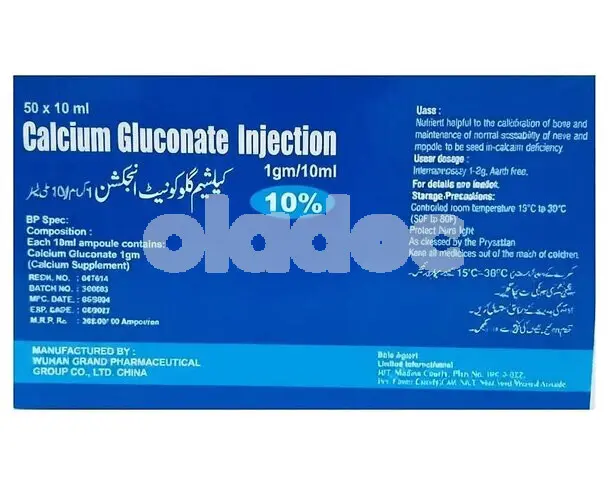
About Calcium Gluconate Injection 10%
Calcium Gluconate, an electrolyte replacement injection used to treat acute hypocalcemia and hyperkalemia.
Calcium Gluconate Injection 10% Uses
- Treatment of acute symptomatic hypocalcemia (low blood calcium)
- Emergency management of hyperkalemia with cardiac toxicity, to stabilize heart rhythm
- Antidote for magnesium sulfate toxicity, commonly seen during eclampsia treatment
- Treatment of hypocalcemic tetany, including muscle cramps and spasms
- Calcium supplementation during exchange transfusion with citrated blood
Calcium Gluconate Injection 10% Benefits
- Rapidly restores calcium levels in emergency settings
- Protects the heart from dangerous rhythm changes caused by high potassium
- Works quickly when given intravenously under medical supervision
- Relieves calcium related muscle tetany and spasm within minutes
What Experts Say
Calcium plays a central role in nerve conduction, muscle contraction and blood clotting. When blood calcium drops sharply, nerve and muscle cells become abnormally excitable. This can trigger tetany, muscle spasms or low blood pressure. Calcium gluconate injection raises ionized calcium quickly, correcting this excitability at the cellular level.
In hyperkalemia, high potassium destabilizes the electrical activity of heart muscle cells, widening the QRS complex and raising arrhythmia risk. Calcium gluconate does not lower potassium itself. It raises the threshold potential of cardiac cells, restoring the safety margin between resting and threshold potentials while other treatments lower potassium.
Because this injection is given intravenously, clinicians monitor heart rhythm, blood pressure and the injection site closely during administration. Slow infusion rates reduce cardiac disturbance risk, and careful line placement avoids leakage into surrounding tissue, which can cause serious local damage. This monitoring reflects standard hospital protocol for electrolyte emergencies.
Drug Class
- Electrolyte replenisher
- Calcium salt
- Antidote (for magnesium sulfate toxicity)
Calcium Gluconate Injection 10% Uses in Urdu
- خون میں کیلشیم کی کمی کا علاج
- پوٹاشیم کی زیادتی سے دل کی حفاظت
- میگنیشیم سلفیٹ کے زہریلے اثرات کا تدارک
- پٹھوں کی اکڑن اور کھنچاؤ کا علاج
- ایمرجنسی میں کیلشیم کی فوری فراہمی
Calcium Gluconate Injection 10% formula
How to use Calcium Gluconate Injection 10%?
- Administered only by a doctor or trained healthcare provider, typically through slow intravenous injection or infusion
- Usual adult dose for hypocalcemia ranges from 500 mg to 2 grams (5 to 20 mL of 10% solution) given at a rate not exceeding 0.5 to 2 mL per minute
- Given with continuous heart rhythm monitoring during intravenous administration
- Never self injected or given at home without medical supervision
- Dose and rate are adjusted based on the condition being treated and response to therapy
Drug Interactions
- Digoxin: Calcium gluconate can increase digoxin toxicity and the risk of serious heart rhythm disturbances
- Ceftriaxone: Can form insoluble precipitates when mixed or given close together, particularly risky in neonates, so lines are flushed separately
- Thiazide Diuretics: Can raise blood calcium levels further, increasing hypercalcemia risk when combined
- Other Calcium Salts: Concurrent use raises the risk of excessive calcium levels
Risks and warnings
- Extravasation Risk: Leakage into surrounding tissue can cause severe irritation, tissue necrosis and calcification, so the injection site is monitored closely
- Cardiac Arrhythmia Risk: Rapid intravenous push can cause bradycardia, arrhythmias or cardiac arrest, so slow controlled administration is required
- Hypercalcemia Risk: Overcorrection can raise blood calcium too high, causing nausea, weakness and confusion
- Kidney Disease Caution: Requires careful dose adjustment and monitoring in patients with impaired kidney function
- Digoxin Use Caution: Increases risk of dangerous heart rhythm changes in patients taking digoxin
Calcium Gluconate Injection 10% Side Effects
- Warmth, tingling or a heavy sensation at the injection site
- Chalky or metallic taste during infusion
- Nausea, vomiting or constipation
- Flushing or low blood pressure with rapid administration
- Injection site pain, redness or swelling
- Irregular heartbeat or slow heart rate
- Signs of hypercalcemia such as confusion, excessive thirst or muscle weakness
Storage Conditions
- Store at room temperature, generally between 15 and 30 degrees Celsius
- Protect from light and keep the ampoule in its original packaging until use
- Avoid freezing the solution
- Discard the ampoule if the solution appears cloudy, discolored or contains particles
- Keep out of reach of children
- Use immediately after opening, since ampoules do not contain a preservative