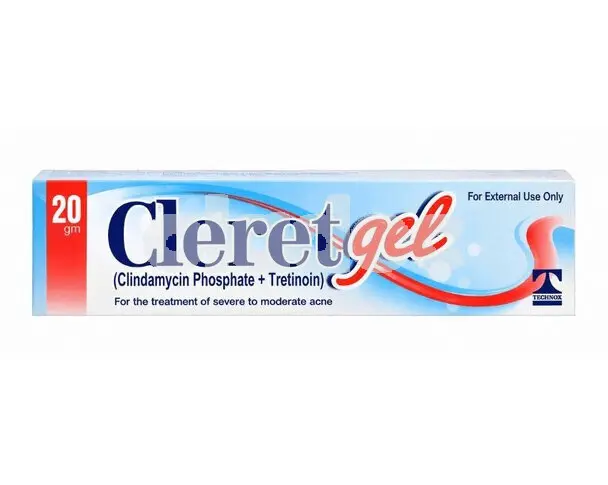
About Cleret Gel
Cleret Gel treats acne by fighting bacteria, unclogging pores, and helping clear pimples on the face.
Cleret Gel Uses
- Used for acne vulgaris, including pimples, blackheads, and whiteheads
- Effective against inflamed and non-inflamed acne lesions on the face
- Helpful in managing severe nodular acne in patients aged 12 and above
- Treats bacterial acne caused by excess oil and blocked hair follicles
- Approved for reducing the formation of new acne lesions over time
- Given to patients with persistent facial acne that has not responded to basic care
- Supports treatment of early-stage acne by keeping pores clear
Cleret Gel Uses in Urdu
- یہ دوا چہرے کے مہاسوں اور پھنسیوں کے علاج میں استعمال کی جاتی ہے۔
- جلد کے بند مساموں کو کھولنے اور نئے دانوں کو بننے سے روکنے کے لیے تجویز کی جاتی ہے۔
- سیاہ دھبوں اور سفید دھبوں کے علاج میں بھی مؤثر ہے۔
- جلد پر بیکٹیریا کی وجہ سے پیدا ہونے والی سوزش کو کم کرنے کے لیے استعمال کی جاتی ہے۔
- شدید اور مسلسل مہاسوں کے علاج میں بارہ سال اور اس سے زیادہ عمر کے مریضوں کو دی جاتی ہے۔
Cleret Gel formula
Clindamycin Phosphate 1.2% + Tretinoin 0.025%
How to use Cleret Gel?
- Cleret gel is applied to the face at night, after washing and drying the skin.
- Use only a pea-sized amount and dot it onto the chin, cheeks, nose, and forehead.
- Spread gently over the entire face, avoiding the eyes, lips, and nostrils
- Do not apply to broken, sunburned, or damaged skin
- Do not stop this medicine suddenly without consulting your doctor
Contraindications
- Known allergy to clindamycin, tretinoin, or any ingredient in the gel
- History of ulcerative colitis, Crohn's disease, or chronic bowel inflammation
- History of colitis or severe diarrhoea associated with past antibiotic use
- Pregnancy or planning a pregnancy
- Known allergy to lincomycin or related antibiotics
Drug Interactions
- Erythromycin (topical or oral): combined use may reduce the antibacterial effect of clindamycin
- Benzoyl peroxide: using together can increase skin dryness, peeling, and irritation
- Salicylic acid or sulphur-based products: may worsen skin irritation when used with Cleret gel
- Aminoglycosides: combined use of clindamycin with aminoglycoside antibiotics may increase the risk of side effects
- Corticosteroids: concurrent use may increase skin sensitivity and reduce tolerance to tretinoin
Risks and warnings
- Sun sensitivity: tretinoin increases the skin's sensitivity to sunlight, so sunscreen must be used daily
- Bowel disease history: patients with a history of antibiotic-related colitis must not use this gel
- Worsening acne: skin may look worse during the first few weeks before improvement begins
- Eye and mucous membrane contact: avoid applying near the eyes, mouth, nostrils, or any open skin
- Skin irritation: if severe burning, blistering, or peeling occurs, stop use and contact your doctor
- Pregnancy: this gel is contraindicated in pregnancy and must not be used if pregnant
- Breastfeeding: consult your doctor before using Cleret gel during breastfeeding
- Elderly patients: no specific data exists, but elderly patients with sensitive skin should use with caution
- Driving and machinery: Cleret gel is a topical product and does not affect the ability to drive
Cleret Gel Side Effects
- Skin dryness and flakiness at the application site
- Redness or irritation of the treated skin
- Itching or burning sensation after applying the gel
- Peeling or scaling of the skin, especially in the first few weeks
- Increased sensitivity to sunlight and easier sunburning
- Stuffy nose or sore throat in some patients
- Severe skin blistering, crusting, or stinging (stop use and contact a doctor)
- Swelling of the face, lips, or throat (signs of a serious allergic reaction)
Storage Conditions
- Store at room temperature, below 25°C
- Keep away from direct sunlight, heat, and moisture
- Keep out of reach of children and pets