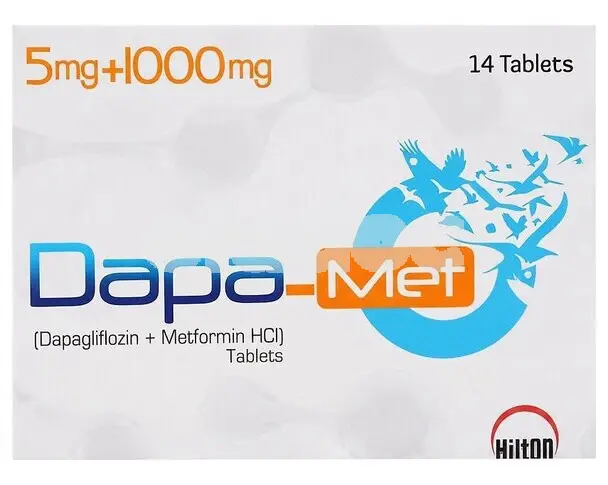
About Dapa-Met Tablet 5mg / 1000mg
Dapa-Met Tablet 5mg/1000mg contains Dapagliflozin and Metformin, an SGLT2/biguanide combo for type 2 diabetes.
Dapa-Met Tablet 5mg / 1000mg Uses
- Management of blood sugar levels in type 2 diabetes mellitus
- Used alongside diet and exercise when a single antidiabetic agent is not enough
- Used in patients who need combined SGLT2 inhibitor and biguanide therapy
- Helps reduce the number of daily tablets compared to taking each medicine separately
Dapa-Met Tablet 5mg / 1000mg Benefits
- Lowers blood sugar through two complementary mechanisms
- May support modest weight reduction compared to some other diabetes medicines
- Lower risk of hypoglycemia when used without insulin or a sulfonylurea
- Convenient fixed dose combination that improves treatment adherence
- May offer added cardiovascular and kidney protective benefits associated with SGLT2 inhibitors
What Experts Say
Dapagliflozin and metformin target type 2 diabetes through two separate pathways, which is why fixed dose combinations are prescribed once diet and single agent therapy no longer control blood sugar well enough. Metformin lowers liver glucose output and improves insulin sensitivity, while dapagliflozin blocks glucose reabsorption in the kidney.
The 1000mg metformin component is the maximum commonly used daily strength, chosen for patients who need stronger glycemic control but still tolerate metformin without significant gastrointestinal upset. Endocrinologists often start at a lower metformin dose and titrate upward to reduce the diarrhea and nausea that can occur early in treatment.
Because dapagliflozin works independent of insulin, this combination lowers blood sugar without a high risk of hypoglycemia on its own, though caution is still needed if the patient also takes insulin or a sulfonylurea. Regular kidney function monitoring is recommended since dapagliflozin's effect depends on adequate renal filtration.
Drug Class
- SGLT2 inhibitor and biguanide combination antidiabetic
Dapa-Met Tablet 5mg / 1000mg Uses in Urdu
- ٹائپ ٹو ذیابیطس میں خون میں شوگر کی سطح کو کنٹرول کرنے کے لیے
- جب اکیلی دوا سے شوگر کنٹرول نہ ہو رہی ہو تو استعمال کی جاتی ہے
- خوراک اور ورزش کے ساتھ ملا کر شوگر کے بہتر انتظام کے لیے
- ایک ہی گولی میں دو مختلف اثرات والی ادویات کا فائدہ حاصل کرنے کے لیے
Dapa-Met Tablet 5mg / 1000mg formula
- Dapagliflozin + Metformin Hydrochloride
How to use Dapa-Met Tablet 5mg / 1000mg?
- Take exactly as prescribed by a doctor, usually once daily with the evening meal
- Swallow the tablet whole with a full glass of water
- Do not crush or chew the tablet
- Take at the same time each day for consistent blood sugar control
- Do not skip meals after taking this medicine
- Continue regular blood sugar monitoring as advised by your doctor
Drug Interactions
- Insulin and sulfonylureas: Combined use increases the risk of low blood sugar
- Diuretics: May increase the risk of dehydration and low blood pressure
- Contrast dye used in imaging: Metformin is usually paused around procedures using iodinated contrast due to kidney related risk
- Alcohol: Increases the risk of lactic acidosis and low blood sugar
- Corticosteroids: Can raise blood sugar and reduce the effectiveness of this medicine
Risks and warnings
- Kidney function: Not recommended in patients with significantly reduced kidney function due to a higher risk of lactic acidosis
- Dehydration risk: Stay well hydrated, since dapagliflozin increases urination and fluid loss
- Ketoacidosis warning: Seek immediate medical help for unusual tiredness, nausea, stomach pain or breathing difficulty, even with normal blood sugar
- Surgery precaution: Usually stopped a few days before major surgery on a doctor's advice
- Pregnancy and breastfeeding: Not generally recommended, discuss safer alternatives with your doctor
- Genital infection risk: Maintain good hygiene, as SGLT2 inhibitors increase the chance of yeast infections
Dapa-Met Tablet 5mg / 1000mg Side Effects
- Nausea
- Diarrhea
- Stomach upset or discomfort
- Loss of appetite
- Genital fungal infections
- Urinary tract infections
- Increased urination
- Low blood pressure or dizziness on standing, especially in dehydrated patients
- Vitamin B12 deficiency with long term use
- Metallic taste in the mouth
- Rare risk of lactic acidosis, more likely with kidney impairment
- Rare risk of diabetic ketoacidosis even with normal blood sugar levels
Storage Conditions
- Store below 30°C in a cool dry place away from moisture
- Keep the tablets in their original blister pack until ready to use
- Keep away from the reach of children
- Protect from direct sunlight and excess heat