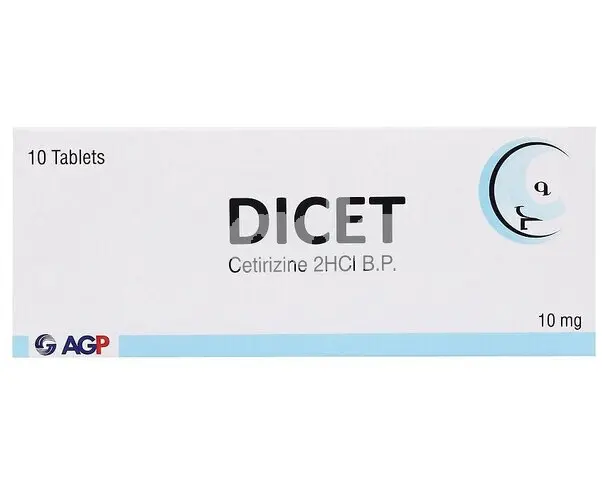
About Dicet Tablet 10mg
A daily allergy tablet for sneezing, itchy eyes, runny nose and skin allergies.
Dicet Tablet 10mg Uses
- Seasonal allergic rhinitis (hay fever)
- Year round allergic rhinitis caused by dust or pet dander
- Chronic idiopathic urticaria (skin hives)
- Allergic conjunctivitis with itchy, watery eyes
- Itching and skin rash from mild allergic reactions
Dicet Tablet 10mg Benefits
- Fast relief from sneezing, runny nose, and nasal itching
- Reduced eye redness, itching, and watering from allergies
- Once daily dosing for convenient allergy control
- Lower tendency to cause drowsiness compared with older antihistamines
- Effective relief for chronic hives and skin itching
What Experts Say
Cetirizine hydrochloride is classified as a second generation antihistamine, meaning it blocks histamine receptors without crossing into the brain as easily as older allergy medicines. Allergy specialists frequently recommend it as a first line treatment for common allergic conditions. Its long duration of action allows once daily dosing for most adults and children.
Pediatricians and family physicians generally consider cetirizine one of the safer antihistamine options for long term allergy control. Clinical studies show a lower rate of sedation compared with first generation antihistamines like diphenhydramine. Even so, some individuals may still feel mild drowsiness, particularly at higher doses.
Allergists usually advise patients to take the tablet consistently during allergy season for the best results rather than only after symptoms appear. Dose adjustment is often recommended for people with reduced kidney function. Overall, medical experts view cetirizine as an effective, well studied option for managing everyday allergic symptoms.
Drug Class
- Second generation antihistamine
- H1 receptor antagonist
- Piperazine derivative
Dicet Tablet کے استعمالات
- موسمی الرجی جیسے چھینکیں اور ناک بہنا
- دھول مٹی یا جانوروں کے بالوں سے ہونے والی الرجی
- جلد پر خارش اور چھپاکی
- آنکھوں میں خارش اور پانی آنا
- الرجی کی وجہ سے ہونے والی جلن اور سوزش
Dicet Tablet 10mg formula
How to use Dicet Tablet 10mg?
- Dicet tablet is usually taken once daily, with or without food.
- The tablet is swallowed whole with a glass of water.
- A consistent time each day is generally recommended for best allergy control.
- Lower doses are typically advised for children and people with reduced kidney function.
- A missed dose is best taken as soon as remembered on the same day.
- Doubling the dose to make up for a missed one is not recommended.
Drug Interactions
- CNS Depressants (Alcohol, Sedatives): Combined use may increase drowsiness and impair alertness.
- Theophylline: High doses combined with cetirizine may slightly reduce the clearance of cetirizine from the body.
- Other Antihistamines: Combining with additional antihistamines is generally avoided due to increased sedation risk.
- Ritonavir: This medicine may increase cetirizine levels, raising the chance of drowsiness.
- Central Nervous System Depressant Medicines: Combined use with sleep aids or muscle relaxants may increase sedation.
Risks and warnings
- Kidney Impairment: A lower dose is usually needed in people with reduced kidney function to prevent drug buildup.
- Liver Impairment: Dose adjustment may be required in people with significant liver disease.
- Drowsiness Risk: Mild sedation is possible in some individuals, so caution is advised before driving or operating machinery.
- Elderly Patients: Older adults may be more sensitive to drowsiness and should use the lowest effective dose.
- Pregnancy and Breastfeeding: Use during pregnancy or breastfeeding should be discussed with a doctor beforehand.
- Allergic Reaction: A known allergy to cetirizine, hydroxyzine, or other piperazine antihistamines is a reason to avoid this medicine.
Dicet Tablet 10mg Side Effects
Dicet tablet is generally well tolerated, with most side effects being mild and temporary.
- Drowsiness or tiredness
- Dry mouth
- Headache
- Stomach discomfort
- Sore throat
Serious side effects are rare but need prompt medical attention if they occur.
- Difficulty breathing or swallowing
- Swelling of the face, lips, or tongue
- Severe skin rash or blistering
- Irregular heartbeat
- Signs of severe allergic reaction such as hives with dizziness
Storage Conditions
- Store below 30°C in a cool, dry place away from direct sunlight.
- Keep the tablet in its original blister pack until use.
- Keep out of reach of children.
- Discard any remaining tablets after the expiry date on the pack.