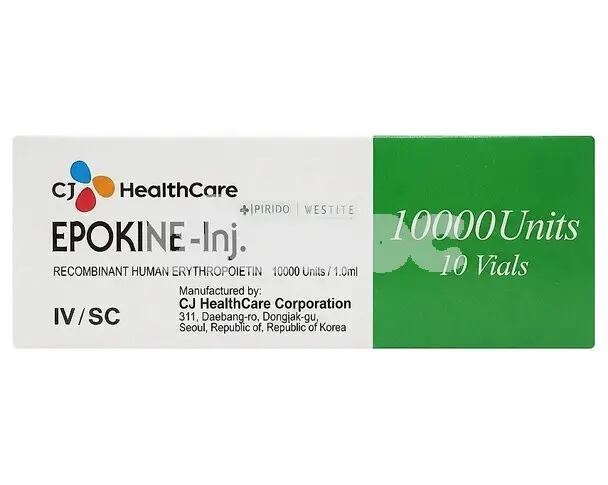
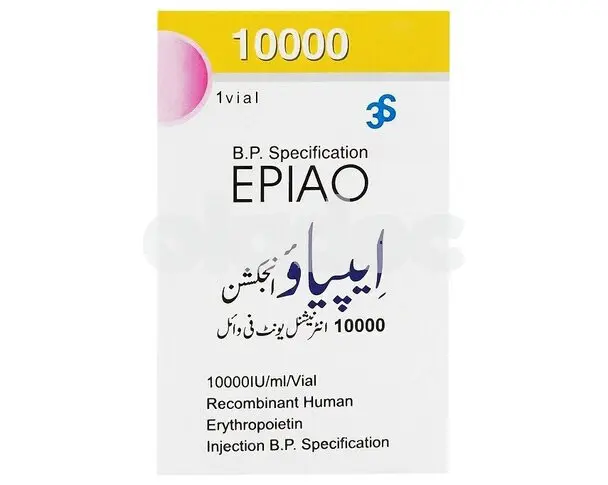
About Epokine Injection 10000IU
Epoetin alfa injection for anaemia in chronic kidney disease and chemotherapy patients, dosed weekly.
Epokine Injection 10000IU Uses
- Treatment of anaemia associated with chronic kidney disease in adults, both on and not yet on dialysis
- Anaemia caused by chemotherapy in patients with non-myeloid cancers
- Reduction of the need for blood transfusion in select surgical patients
- Management of anaemia in adults on maintenance haemodialysis who need a stable, less frequent dosing schedule
- Correction of anaemia when switching a patient from a lower strength, more frequent dosing plan to a once or twice weekly regimen
Epokine Injection 10000IU Benefits
- Raises haemoglobin and red blood cell count without repeated blood transfusions
- Once or twice weekly dosing suits patients who cannot tolerate frequent injections
- Improves energy levels and reduces fatigue linked to chronic anaemia
- Supports better tolerance of chemotherapy schedules by keeping haemoglobin stable
- Higher unit strength means fewer injection visits for dialysis patients
- Helps patients maintain daily activity and quality of life during long term kidney or cancer treatment
What Experts Say
Doctors often move a patient from the 2000IU strength to 10000IU once the calculated weekly erythropoietin dose is large enough that one or two injections are more practical than three smaller doses. This strength keeps the weekly dose equivalent while reducing injection frequency.
Dose selection still follows haemoglobin response rather than a fixed number. Physicians check haemoglobin every two to four weeks after any dose change, since a rapid rise above target range raises cardiovascular risk. Adequate iron stores are confirmed before starting, since epoetin alfa cannot build red cells efficiently in an iron deficient patient.
This higher strength suits patients on maintenance haemodialysis and those receiving chemotherapy for non-myeloid cancers, where treatment continues for months. Pakistan carries a substantial burden of chronic kidney disease requiring long term dialysis, and physicians favour less frequent dosing to improve adherence over an extended course.
Drug Class
- Erythropoiesis-Stimulating Agent
- Recombinant Human Erythropoietin
Epokine Injection 10000IU Uses in Urdu
- گردوں کی دائمی بیماری کی وجہ سے خون کی کمی کا علاج
- کیموتھراپی کے دوران خون کی کمی کو دور کرنا
- ڈائیلاسز کے مریضوں میں ہفتہ وار انجیکشن کی تعداد کم کرنا
- سرجری سے پہلے خون کی منتقلی کی ضرورت کم کرنا
- ہیموگلوبن کی سطح کو مستحکم رکھنا
Epokine Injection 10000IU formula
How to use Epokine Injection 10000IU?
- Given as an injection under the skin or into a vein by a healthcare professional, usually once or twice a week
- Do not shake the vial or pre-filled syringe vigorously, as this can damage the protein
- Let a refrigerated dose warm to room temperature briefly before injection only if your doctor advises it
- Attend scheduled blood tests so your doctor can adjust the dose based on your haemoglobin level
- Take iron supplements if prescribed alongside this injection, since epoetin needs enough iron to work
- Do not switch between brands or strengths of erythropoietin without your doctor's approval
- Keep a record of every injection date and dose given at home or at the clinic
Drug Interactions
- ACE Inhibitors or ARBs: These blood pressure medicines may need dose adjustment as haemoglobin rises.
- Cyclosporine: Epoetin alfa can raise cyclosporine levels, requiring closer blood monitoring.
- Iron Supplements: Iron is usually needed alongside this injection for it to work effectively, so timing should be coordinated with your doctor.
- Anticoagulants: Blood thinners used during dialysis may need dose changes as red cell counts increase.
- Other Erythropoiesis Stimulating Agents: Combining with other ESAs is not recommended and can increase cardiovascular risk.
Risks and warnings
- Blood Pressure: This injection can raise blood pressure, so regular monitoring is needed, especially in the first weeks of treatment.
- Cardiovascular Risk: Raising haemoglobin too quickly or above the target range increases the risk of heart attack, stroke and blood clots.
- Pure Red Cell Aplasia: Rare cases of the body no longer responding to epoetin therapy have been reported with long term use.
- Kidney or Liver Disease: Patients with existing kidney or liver impairment need closer monitoring and possible dose adjustment.
- Seizure History: Patients with a history of seizures should be monitored closely since this therapy has been linked to a small increased risk.
- Cancer Patients: In some tumour types this medicine may worsen outcomes, so it is used only when clearly indicated by an oncologist.
- Pregnancy and Breastfeeding: Use only if the benefit clearly outweighs the risk, and under direct medical supervision.
- Injection Site Reaction: Pain, redness or swelling can occur at the injection site and usually resolves on its own.
Epokine Injection 10000IU Side Effects
- Headache
- Nausea
- Joint pain
- Fever
- High blood pressure
- Injection site pain or redness
- Fatigue
- Swelling in the hands or feet
- Skin rash
- Dizziness
- Cough
- Diarrhea
Storage Conditions
- Store in the refrigerator between 2°C and 8°C, away from the freezer compartment
- Keep the vial or pre-filled syringe in its original carton to protect it from light
- Do not freeze or shake the injection at any point
- If travelling, carry the injection in a cool box and avoid direct sunlight or heat
- Discard any unused portion after opening; do not reuse a partially used vial