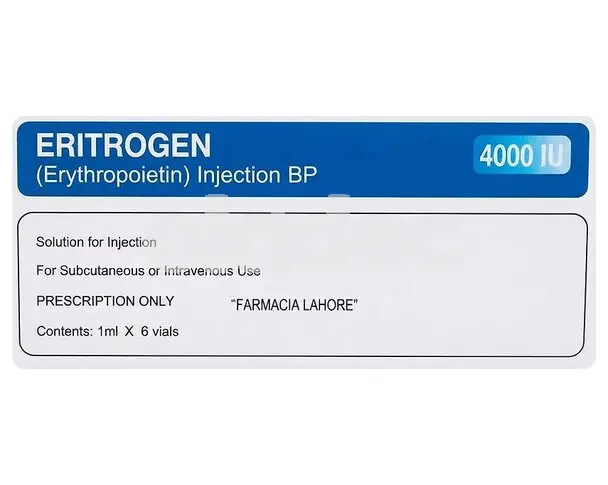
About Eritrogen Injection 4000IU
Epoetin Alfa injection used to treat anemia linked to chronic kidney disease and dialysis.
Eritrogen Injection 4000IU Uses
- Anemia caused by chronic kidney disease, including patients on dialysis
- Anemia linked to nephropathic diabetes
- Anemia caused by chemotherapy in cancer patients
- Reduced need for blood transfusions before major surgery
- Red blood cell support for patients with kidney failure
Drug Class
- Erythropoiesis Stimulating Agent (ESA)
- Recombinant human erythropoietin
What Experts Say
Epoetin Alfa is a lab made version of erythropoietin, a hormone your kidneys naturally produce. Healthy kidneys use this hormone to signal bone marrow to make more red blood cells. In chronic kidney disease, the kidneys often cannot make enough erythropoietin, and anemia develops as a result.
Nephrologists prescribe this injection for patients on hemodialysis because kidney failure leaves the body short on oxygen carrying red blood cells. Clinical studies show that Epoetin Alfa raises hemoglobin levels steadily over several weeks, which reduces fatigue and lowers the need for frequent blood transfusions. Many patients also report better energy and exercise tolerance once hemoglobin stabilizes.
Specialists stress that dosing must stay individualized, since raising hemoglobin too fast can raise blood pressure and increase clotting risk. Regular blood tests guide dose adjustments, and doctors usually pair this injection with iron supplements for the best response.
Eritrogen Injection 4000IU Uses in Urdu
- گردوں کی دائمی بیماری کی وجہ سے خون کی کمی کا علاج
- ڈائیلاسز کے مریضوں میں خون کے سرخ خلیات بڑھانے میں مدد
- ذیابیطس سے متاثرہ گردوں کی بیماری میں خون کی کمی کا علاج
- کیموتھراپی کے دوران ہونے والی خون کی کمی کو کم کرنا
- بڑی سرجری سے پہلے خون کی منتقلی کی ضرورت کو کم کرنا
Eritrogen Injection 4000IU formula
- Epoetin Alfa (Erythropoietin) 4000IU
Available forms
- Injection (Vial)
- Injection (Prefilled Syringe)
How to use Eritrogen Injection 4000IU?
- Administration by a doctor or trained healthcare worker, through a subcutaneous or intravenous injection
- Dosing schedule of one to three times a week, based on hemoglobin response
- Blood tests before each dose change, to confirm the correct amount is being used
- Regular iron level checks, since low iron can reduce how well this injection works
- Missed doses need discussion with the treating doctor rather than doubling up later
Drug Interactions
- Blood Pressure Medicines: Combining these can make it harder to keep blood pressure controlled during treatment.
- Anticoagulants: Using blood thinners alongside this injection needs closer monitoring because of the added clotting risk.
- Cyclosporine: This injection can change how the body handles cyclosporine, so transplant patients need regular level checks.
- Iron Supplements: Iron is often needed alongside this injection, since low iron stores can reduce its effectiveness.
- ACE Inhibitors: Some patients on these blood pressure medicines may see a smaller response to treatment.
Risks and warnings
- Blood Pressure: This injection can raise blood pressure, so readings need regular monitoring during treatment.
- Clotting Risk: Raising hemoglobin too quickly increases the chance of blood clots, stroke, and heart attack.
- Uncontrolled Hypertension: This injection is not recommended for patients whose blood pressure is not well controlled.
- Pure Red Cell Aplasia: Rarely, long term use can trigger a severe form of anemia where the body stops making red blood cells.
- Pregnancy And Breastfeeding: Medical supervision is required during pregnancy and breastfeeding, since safety data in these groups is limited.
- Kidney Function: Dialysis patients need close monitoring of vascular access, since clotting can occur at the access site.
Eritrogen Injection 4000IU Side Effects
- Headache
- Nausea and vomiting
- Joint and muscle pain
- Fever
- High blood pressure
- Swelling in the hands, ankles, or feet
- Pain or redness at the injection site
- Fatigue
- Blood clots or vascular access clotting in dialysis patients
- Seizures in rare cases
- Allergic reactions such as rash or itching
Storage Conditions
- Refrigerator storage between 2 and 8 degrees Celsius
- No freezing, and protection from direct light
- No shaking of the vial or syringe, since this can damage the medicine
- Safe storage out of reach of children
- Expiry date check before every use