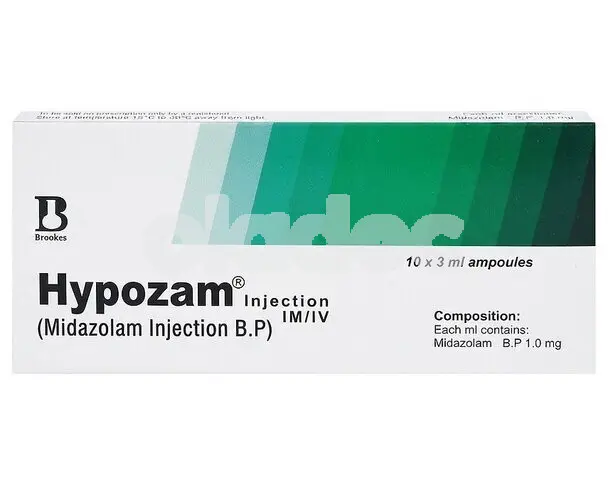
About Hypozam Injection
A fast acting sedative injection given before surgery or procedures under medical supervision.
Hypozam Injection Uses
- Sedation before surgery or diagnostic procedures
- Induction and maintenance of general anesthesia
- Conscious sedation during endoscopy or minor procedures
- Continuous sedation for patients on ventilator support in intensive care
- Control of acute seizures in emergency settings
Hypozam Injection Benefits
- Works within minutes when given intravenously
- Reduces anxiety and awareness before a procedure
- Short acting profile allows faster recovery than older sedatives
- Widely used in ICU and operation theatre settings across Pakistan
Hospitals and surgical centers in Lahore, Karachi, Islamabad and Rawalpindi use Hypozam Injection routinely before endoscopy, minor surgery and ICU sedation.
Midazolam binds to GABA receptors in the brain and enhances their calming effect. This slows nerve activity and produces sedation, muscle relaxation and short term memory loss.
A doctor or anesthetist controls the dose and injection site strictly. Never self administer Hypozam Injection since it can slow breathing dangerously.
Drug Class
- Benzodiazepine
- Short acting sedative hypnotic
Hypozam Injection Uses in Urdu
- سرجری یا کسی طبی طریقہ کار سے پہلے بے ہوشی کے لیے
- مکمل بے ہوشی شروع کرنے اور برقرار رکھنے کے لیے
- انڈوسکوپی یا معمولی طریقہ کار کے دوران آرام دہ کیفیت کے لیے
- آئی سی یو میں مریض کو مسلسل سکون بخشنے کے لیے
- ایمرجنسی میں دورے کنٹرول کرنے کے لیے
Hypozam Injection formula
How to use Hypozam Injection?
- Given only by a doctor, anesthetist or trained healthcare staff in a hospital or clinic setting.
- Administered slowly through an intravenous line or as an intramuscular injection based on the procedure.
- Dose depends on age, weight, health condition and the procedure being performed.
- Patient vital signs including breathing and oxygen levels are monitored closely during and after the injection.
- Never self inject Hypozam or use it outside a supervised medical setting.
Drug Interactions
- Opioids: Combining Midazolam with opioid painkillers sharply raises the risk of severe breathing depression.
- Other Sedatives or Alcohol: Taking it alongside other CNS depressants deepens sedation and slows breathing further.
- Azole Antifungals: Drugs like ketoconazole or itraconazole raise Midazolam blood levels and prolong its effect.
- Erythromycin and Similar Antibiotics: These slow the breakdown of Midazolam in the liver, extending its sedative effect.
Risks and warnings
- Breathing Problems: Midazolam can slow or stop breathing, especially when combined with opioids or given too fast.
- Elderly Patients: Older adults need lower doses since they clear the drug more slowly and face higher fall and confusion risk.
- Pregnancy: Use only if clearly needed since Midazolam crosses the placenta and can affect the newborn near delivery.
- Dependence Risk: Repeated use can lead to tolerance and withdrawal symptoms, so hospitals limit continuous ICU sedation duration.
- Liver or Kidney Disease: Reduced organ function slows drug clearance and raises the risk of prolonged sedation.
Side Effects
- Drowsiness
- Low blood pressure
- Slowed or shallow breathing
- Headache
- Nausea
- Confusion
- Injection site pain
- Memory lapses after the procedure
Storage Conditions
Store Hypozam Injection at room temperature between 15 and 30 degrees Celsius, away from direct light. Keep ampoules in their original packaging and out of reach of children. Do not use if the solution looks discolored or contains particles.