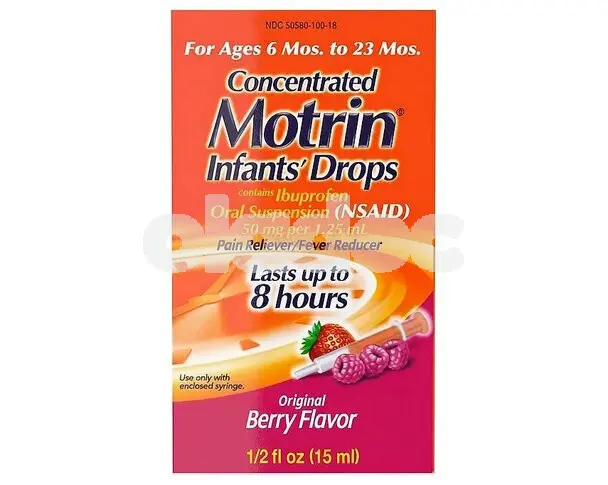
About Ibuprofen Drops
Ibuprofen Oral Drops contain ibuprofen, an NSAID used to reduce fever and pain in young children.
Ibuprofen Oral Drops Uses
- Lowers fever in infants and young children caused by common infections such as flu, cold or throat infections.
- Relieves pain linked to teething in babies.
- Eases discomfort and mild fever that can follow routine vaccinations.
- Helps with earache and minor pain from small injuries or bumps.
- Reduces inflammation associated with fever and minor pain episodes.
Ibuprofen Oral Drops Benefits
- Fever control usually begins within 30 to 60 minutes of a dose.
- The calibrated dropper allows accurate, weight based dosing for small infants.
- Effects tend to last around 6 to 8 hours, so fewer doses are needed through the day.
- It works on both fever and pain at the same time, reducing the need for separate medicines.
- The liquid form is easier for infants and toddlers to take compared to tablets.
What Experts Say
Pediatricians across Pakistan commonly manage childhood fever with either paracetamol or ibuprofen, and drops formulations are preferred for infants because they allow small, precise doses through a dropper. Ibuprofen belongs to the NSAID group, which works by reducing the chemical signals in the body that trigger fever and inflammation, and this gives it a slightly longer acting effect than paracetamol in many children.
In Pakistan's hot climate, fever in infants is often accompanied by fluid loss, so doctors usually stress that a child keeps taking fluids alongside any fever reducing medicine. NSAIDs like ibuprofen are generally avoided when a child is dehydrated or has ongoing vomiting, since this raises the load on the kidneys. This is one reason physicians recommend a proper weight check before every dose rather than estimating by age alone.
During high fever seasons linked to viral illnesses, doctors across Pakistan often alternate paracetamol and ibuprofen in specific situations, but this is only done under medical direction. Self medicating an infant with repeated doses of ibuprofen without a clear reason is discouraged, since prolonged use in young children needs monitoring for stomach and kidney effects.
Drug Class
- Nonsteroidal Anti-Inflammatory Drug (NSAID)
Ibuprofen Oral Drops Uses in Urdu
- بچوں میں بخار کو کم کرنے کے لیے
- دانت نکلنے کے دوران ہونے والے درد میں آرام کے لیے
- ویکسینیشن کے بعد ہونے والی تکلیف میں سکون کے لیے
- کان کے درد یا معمولی چوٹ کی وجہ سے ہونے والے درد میں
- ہلکی سے درمیانے نوعیت کی سوزش کم کرنے کے لیے
How to use Ibuprofen Drops?
- The dropper included in the pack should be used to measure each dose accurately.
- Dosing is based on the child's weight, so a pediatrician or the dosing chart on the pack should be checked first.
- The dropper tip is placed along the inner cheek, not the back of the throat, and the dose is released slowly.
- A small amount of milk, water or juice can follow the dose to help with the taste.
- The bottle should be shaken gently before each use to mix the suspension evenly.
- Doses are generally spaced 6 to 8 hours apart, with no more than 4 doses in 24 hours unless a doctor advises otherwise.
- The dropper should be rinsed with clean water after each use and dried before it is placed back in the bottle.
Drug Interactions
- Paracetamol: Combined or alternating use with paracetamol is common for fever, but the timing and dose of each should follow a doctor's guidance to avoid overdosing.
- Other NSAIDs: This medicine should not be given alongside aspirin or other NSAID based products, since it raises the risk of stomach irritation and bleeding.
- Diuretics or blood pressure medicines: Ibuprofen can reduce the effect of these medicines and is relevant in households where a child is also on other prescribed treatment.
- Corticosteroids: Using this medicine with steroid medications increases the chance of stomach upset and bleeding.
- Blood thinners: Ibuprofen can increase bleeding risk when used with anticoagulant medicines, so medical advice is needed in such cases.
Risks and warnings
- Infants under 6 months: This product should not be given to infants below 6 months of age unless a doctor has specifically advised it.
- Dehydration: Ibuprofen should be avoided in children who are vomiting, have diarrhea or show signs of dehydration, since it can affect kidney function in this state.
- Kidney concerns: Children with existing kidney problems need medical guidance before this medicine is used, as NSAIDs are processed through the kidneys.
- Chickenpox: Ibuprofen use during chickenpox has been linked to a higher risk of serious skin and soft tissue infections, so paracetamol is usually preferred in this case unless a doctor advises otherwise.
- Asthma history: Children with asthma or a history of wheezing after taking pain relievers should use this medicine only under medical supervision.
- Persistent high fever: A doctor should be consulted if fever lasts more than 3 days or crosses 104°F, since this can point to a condition needing separate treatment.
- Stomach sensitivity: This medicine works best when given with milk or food, since it can irritate an empty stomach.
Ibuprofen Oral Drops Side Effects
- Upset stomach or mild stomach pain
- Nausea or occasional vomiting
- Loose stools
- Drowsiness or unusual sleepiness
- Mild skin rash or itching
- Reduced urine output if the child is not drinking enough fluids
- Signs of an allergic reaction such as swelling of the face, lips or throat, which need immediate medical attention
- Black or bloody stools, which point to stomach bleeding and need urgent medical care
- Unusual bruising or bleeding
Storage Conditions
- The bottle should be stored at room temperature, below 30°C, away from direct sunlight.
- During Pakistan's hot summer months, the bottle should be kept away from car dashboards, windowsills or any warm surface.
- The cap should be tightly closed after each use to keep the dropper clean and the liquid protected from air.
- The medicine should be kept out of reach and sight of children, ideally in a locked cabinet.
- Once opened, the bottle is generally best used within 4 weeks, after which any remaining liquid should be discarded.
- The drops should never be stored in the refrigerator or freezer unless the label specifically states otherwise.