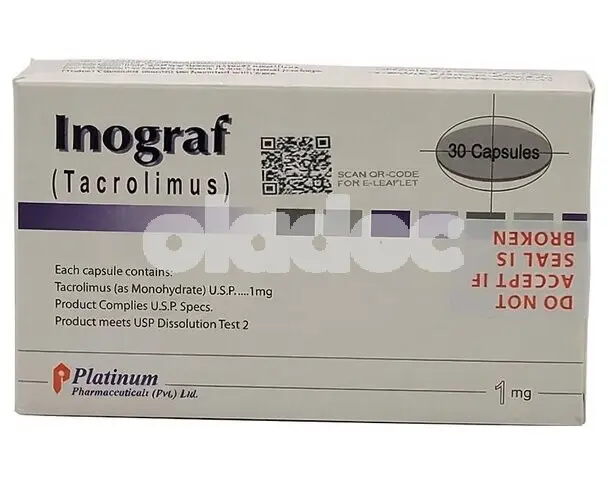
About Inograf Capsule 1 mg
Tacrolimus 1mg capsule, an immunosuppressant used to prevent kidney, liver and heart transplant rejection.
Inograf Capsule 1 mg Uses
- Prevents rejection after kidney transplant
- Prevents rejection after liver transplant
- Prevents rejection after heart transplant
- Used in combination with other immunosuppressants post-transplant
- Sometimes used off-label for severe autoimmune skin conditions
- Helps maintain long-term graft survival
Inograf Capsule 1 mg Benefits
- Lowers the body's immune response to a transplanted organ
- Reduces the risk of acute organ rejection episodes
- Supports long-term function of the transplanted organ
- Allows lower doses of steroids to be used alongside it
- Available in a convenient oral capsule form
What Experts Say
Tacrolimus works by inhibiting calcineurin, a protein that activates T-cells responsible for organ rejection. This mechanism makes it one of the most effective immunosuppressants used after solid organ transplantation, and it forms the backbone of most modern anti-rejection protocols worldwide.
Because tacrolimus has a narrow therapeutic index, physicians rely on regular trough level monitoring to keep blood concentrations within a safe and effective range. Small dose changes can significantly affect drug levels, so dosing is individualized based on body weight, transplant type, kidney function and how the patient metabolizes the drug over time.
Pakistan carries a growing transplant burden, particularly for kidney and liver recipients, and physicians recommend strict adherence to dosing schedules. Missed or delayed doses raise rejection risk, which is why patient counselling on consistent timing, food intake and follow-up lab monitoring is considered essential in long-term post-transplant care.
Drug Class
- Calcineurin inhibitor
- Immunosuppressant
Inograf Capsule 1 mg Uses in Urdu
- گردے کی پیوندکاری کے بعد رد عمل روکنے کے لیے
- جگر کی پیوندکاری کے بعد رد عمل روکنے کے لیے
- دل کی پیوندکاری کے بعد رد عمل روکنے کے لیے
- دیگر ادویات کے ساتھ مدافعتی نظام کو کمزور کرنے کے لیے استعمال
- پیوند شدہ عضو کی طویل مدتی کارکردگی برقرار رکھنے کے لیے
Inograf Capsule 1 mg formula
How to use Inograf Capsule 1 mg?
- Take Inograf Capsule 1 mg exactly as prescribed by your transplant physician
- Take at the same time every day, usually 12 hours apart
- Take consistently either on an empty stomach or with food, not switching between the two
- Swallow the capsule whole with water, do not open or crush it
- Do not skip or double up on a missed dose, contact your doctor instead
- Attend all scheduled blood tests to monitor drug levels
- Never stop this medicine suddenly without medical advice
Drug Interactions
- Ketoconazole and other azole antifungals: Can significantly raise tacrolimus blood levels.
- Rifampin: Can lower tacrolimus levels and reduce its effectiveness.
- Cyclosporine: Combining with tacrolimus increases the risk of kidney toxicity.
- NSAIDs: May worsen kidney function when taken together.
- Potassium-sparing diuretics: Can raise the risk of high potassium levels.
- CYP3A4 inhibitors like clarithromycin: Can increase tacrolimus concentration and toxicity risk.
Risks and warnings
- Narrow therapeutic index: Blood levels must be monitored closely to avoid toxicity or under-dosing.
- Kidney function: Tacrolimus can be toxic to the kidneys, especially with long-term use.
- Infection risk: Immune suppression increases vulnerability to bacterial, viral and fungal infections.
- Blood pressure: This medicine may raise blood pressure and needs regular monitoring.
- Blood sugar: It can cause new-onset diabetes after transplant in some patients.
- Pregnancy: Use only if clearly needed and under specialist supervision.
- Grapefruit products: Avoid grapefruit juice as it can raise tacrolimus levels significantly.
- Live vaccines: Avoid live vaccines while taking this medicine due to immune suppression.
Inograf Capsule 1 mg Side Effects
- Tremors or shakiness in the hands
- Headache
- Diarrhea
- Nausea and vomiting
- High blood pressure
- Elevated blood sugar levels
- Kidney function changes
- Difficulty sleeping
- Numbness or tingling sensations
- Increased risk of infections
- Fatigue
- Loss of appetite
Storage Conditions
- Store the capsule blister pack at room temperature, below 30°C
- Keep away from direct sunlight and moisture
- Keep the strip inside its original box until use
- Keep out of reach of children