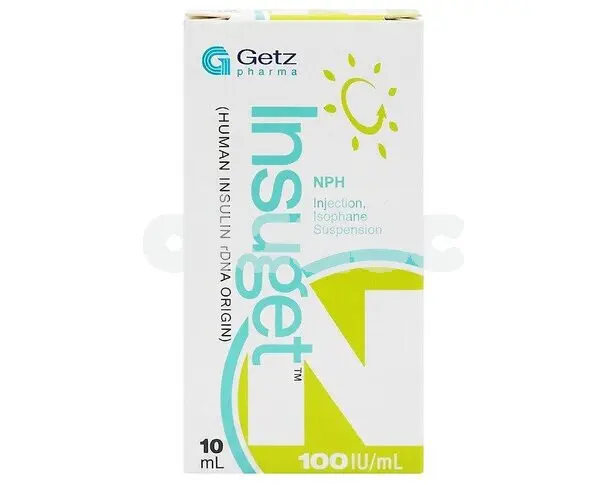
About Insuget-N Injection 100IU 10ml
Isophane (NPH) human insulin, an intermediate-acting insulin for blood sugar control in type 1 and type 2 diabetes.
Insuget-N Injection 100IU 10ml Uses
- Blood sugar control in type 1 diabetes
- Type 2 diabetes when oral medicines alone are not enough
- Basal (background) insulin coverage between meals and overnight
- Management of persistently high blood sugar (hyperglycemia)
- Combination regimens with short-acting insulin at mealtimes
- Diabetes management during pregnancy when advised by a doctor
Insuget-N Injection 100IU 10ml Benefits
- Provides steady, intermediate-acting glucose control for up to 24 hours
- Allows convenient once or twice daily dosing
- Human insulin made by recombinant DNA technology with low risk of impurity reactions
- Can be mixed with soluble (regular) insulin in the same syringe when a doctor advises
- Helps lower the long-term risk of diabetes complications through consistent control
What Experts Say
Diabetes is among the fastest growing health challenges in Pakistan, and many adults eventually need insulin to keep blood glucose within a safe range. Endocrinologists describe isophane insulin, the active ingredient in Insuget-N, as a dependable intermediate-acting option that covers the body's background insulin requirement.
After injection under the skin, isophane insulin typically starts working within 1 to 2 hours, reaches its peak effect between 4 and 12 hours, and can last up to 24 hours. This profile suits once or twice daily basal dosing, and doctors often pair it with a short-acting insulin at mealtimes for tighter overall control.
Specialists emphasize that insulin doses must be individualized through regular blood glucose monitoring rather than fixed schedules. They counsel every patient to recognize early symptoms of hypoglycemia, including sweating, shakiness, and sudden hunger, and to keep a fast-acting sugar source within reach at all times.
Drug Class
- Intermediate-Acting Insulin (Isophane or NPH Human Insulin)
Insuget-N Injection 100IU 10ml Uses in Urdu
- ٹائپ 1 ذیابیطس میں خون میں شکر کی سطح قابو میں رکھنے کے لیے
- ٹائپ 2 ذیابیطس میں جب گولیوں سے شوگر کنٹرول نہ ہو
- جسم کی بنیادی یعنی بیسل انسولین کی ضرورت پوری کرنے کے لیے
- خون میں شکر کی زیادتی یعنی ہائپرگلائسیمیا کے علاج کے لیے
- ڈاکٹر کے مشورے سے تیز اثر انسولین کے ساتھ ملا کر شوگر کنٹرول کے لیے
Insuget-N Injection 100IU 10ml formula
- Isophane Insulin Human (rDNA) 100 IU/ml
How to use Insuget-N Injection 100IU 10ml?
- Use Insuget-N exactly as prescribed; your dose is individualized based on your blood sugar readings.
- Gently roll the vial between your palms until the suspension looks uniformly cloudy and white; do not shake it hard.
- Inject under the skin of the abdomen, thigh, buttock, or upper arm, and rotate the site with every injection.
- Never inject Insuget-N into a vein or muscle; it is for subcutaneous use only.
- Inject at the same time each day, usually once or twice daily as directed by your doctor.
- Do not use the vial if clumps remain after mixing or if white particles stick to the glass.
- Check your blood sugar regularly and keep a record to share with your doctor.
Drug Interactions
- Beta-blockers: These can mask warning signs of low blood sugar such as tremor and a fast heartbeat.
- Oral diabetes medicines: Combined use lowers blood sugar further and may require dose adjustment.
- ACE inhibitors: These blood pressure medicines can enhance the glucose-lowering effect of insulin.
- Salicylates: High-dose aspirin increases the risk of hypoglycemia during insulin therapy.
- Corticosteroids: Steroids raise blood sugar and can increase your insulin requirement.
- Oral contraceptives: Hormonal pills may raise insulin requirements and weaken control.
- Alcohol: Drinking can cause unpredictable rises or dangerous falls in blood sugar.
Risks and warnings
- Hypoglycemia: Low blood sugar is the most common risk, so learn warning signs such as sweating, trembling, and sudden hunger.
- Wrong route: This cloudy insulin suspension must never be given into a vein or used in an insulin pump.
- Illness and stress: Infection, fever, surgery, or emotional stress can change your insulin requirement.
- Switching insulins: Any change in insulin brand, type, or strength requires medical supervision and dose review.
- Skipped meals: Delaying or missing a meal after your injection increases the risk of a hypoglycemic episode.
- Kidney or liver disease: These conditions can lower insulin requirements and may need dose adjustment.
- Driving caution: Avoid driving or operating machinery if you feel symptoms of low blood sugar.
Insuget-N Injection 100IU 10ml Side Effects
- Low blood sugar (hypoglycemia)
- Redness at the injection site
- Swelling or itching at the injection site
- Lipodystrophy, meaning skin thickening or pitting from repeated same-site injections
- Weight gain
- Temporary blurred vision when treatment starts
- Mild swelling of the hands or feet
- Headache
- Generalized allergic rash (rare)
- Low potassium levels causing muscle cramps or weakness
- Severe allergic reaction (anaphylaxis, very rare)
Storage Conditions
- Store unopened vials in a refrigerator at 2°C to 8°C, away from the freezer compartment and cooling element.
- Never freeze Insuget-N, and discard the vial if it has been frozen.
- An opened, in-use vial can be kept at room temperature up to 25°C and used within 6 weeks.
- Keep the vial in its outer carton to protect it from light and heat.
- Keep out of the reach of children.