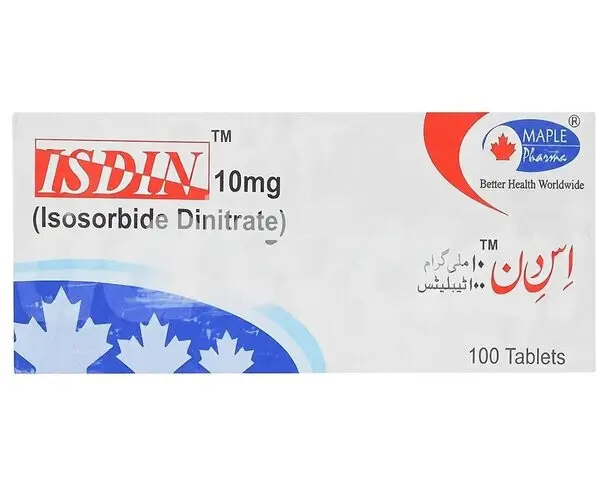
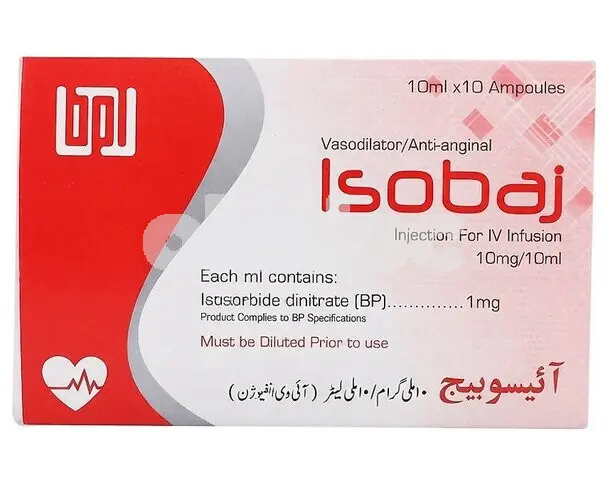
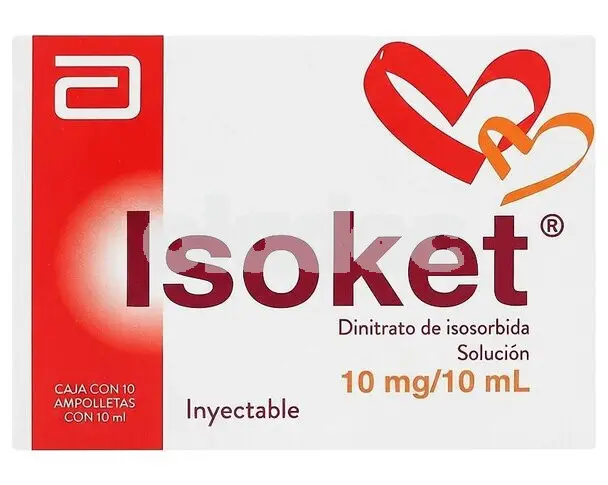
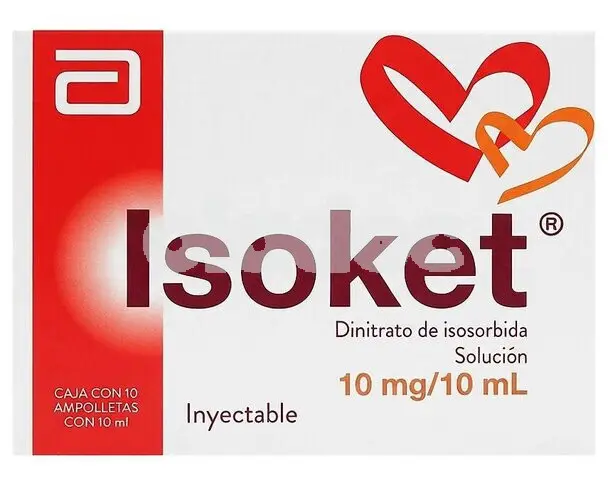
About Isoket Injection 10mg
Isoket Injection 10mg contains Isosorbide Dinitrate, a nitrate vasodilator used IV for acute cardiac emergencies.
Isoket Injection 10mg Uses
- Treats acute unstable angina that has not responded to sublingual or oral nitrates
- Manages acute left ventricular failure and acute pulmonary edema
- Controls blood pressure during and after cardiac surgery
- Used for controlled hypotension in selected surgical procedures
- Given in coronary care units for ongoing chest pain despite standard oral treatment
Isoket Injection 10mg Benefits
- Allows minute-by-minute dose titration against blood pressure and symptom response
- Reaches effect far faster than oral or sublingual nitrate forms
- Supports careful blood pressure control during high-risk cardiac procedures
- Used under continuous monitoring, allowing rapid dose adjustment if side effects appear
Drug Class
- Organic nitrate vasodilator
What Experts Say
Isoket Injection 10mg is reserved for situations where oral or sublingual nitrates are not enough or not practical, such as ongoing unstable angina in a coronary care unit or acute left ventricular failure with pulmonary congestion. Doctors increasingly rely on IV isosorbide dinitrate because it allows minute-by-minute dose titration against blood pressure and symptom response, something a tablet cannot offer.
Cardiologists typically start the infusion at a low rate and increase it gradually while watching for a drop in systolic blood pressure below a safe threshold, since venodilation from nitrates can quickly reduce cardiac preload. Continuous ECG and blood pressure monitoring is considered mandatory for the full duration of the infusion, not optional.
Doctors also plan for nitrate tolerance during prolonged infusions, often building in a nitrate-free window once the acute event is controlled, before transitioning the patient back to oral isosorbide dinitrate. Pakistan's high burden of coronary artery disease keeps IV nitrate therapy a frontline emergency tool.
Isoket Injection 10mg Uses in Urdu
- شدید انجائنا یعنی سینے کی شدید تکلیف کے علاج میں جب زبان کے نیچے رکھی جانے والی یا زبانی دوائیں کارگر نہ ہوں
- دل کی شدید ناکامی اور پھیپھڑوں میں پانی جمع ہونے کی حالت میں
- دل کی سرجری کے دوران بلڈ پریشر کو قابو میں رکھنے کے لیے
- ہسپتال کی نگرانی میں مسلسل ڈرپ کے ذریعے دی جاتی ہے
Isoket Injection 10mg formula
How to use Isoket Injection 10mg?
- Administered only by IV infusion in a hospital or emergency setting, never self-injected at home
- Diluted in normal saline or 5% dextrose before infusion, exactly as prepared by hospital staff
- Dose adjusted gradually while monitoring blood pressure and heart rate continuously
- Infusion usually starts at a low rate and is titrated upward based on response and tolerability
- Requires continuous cardiac monitoring for the full duration of the infusion
Drug Interactions
- PDE5 Inhibitors: Sildenafil, tadalafil, vardenafil and other PDE5 inhibitors risk a dangerous blood pressure drop.
- Riociguat: And other soluble guanylate cyclase stimulators.
- Blood Pressure Medicines: Other antihypertensives and diuretics can add to the hypotensive effect.
- Alcohol: Increases the risk of severe dizziness and fainting.
- Heparin: Anticoagulant effect may be reduced during high-dose IV nitrate infusion.
Risks and warnings
- PDE5 Inhibitors: Must not be combined with sildenafil, tadalafil or other PDE5 inhibitors, since this combination can cause a severe, life-threatening drop in blood pressure.
- Cardiogenic Shock: Avoided in patients with cardiogenic shock, severe hypotension or uncorrected low blood volume.
- Raised Intracranial Pressure: Used with caution, along with severe anaemia and closed-angle glaucoma.
- Elderly Or Renal Impairment: Requires slower, more careful dose titration.
- Nitrate Tolerance: Can develop during continuous infusion, so many hospitals plan a nitrate-free interval.
Isoket Injection 10mg Side Effects
- Headache, often the most common early side effect of nitrate infusion
- Flushing, dizziness and low blood pressure
- Fast heart rate (reflex tachycardia)
- Nausea and vomiting
- Fainting or lightheadedness on standing up
- Injection site irritation or discomfort
- Rare risk of methemoglobinemia with prolonged high-dose infusion
Storage Conditions
- Store ampoules at room temperature, below 25°C, away from direct sunlight
- Do not freeze
- Once diluted for infusion, use immediately and discard any unused solution
- Keep ampoules in their original packaging until ready for use
- Keep out of reach of children, since this is a hospital-administered medicine