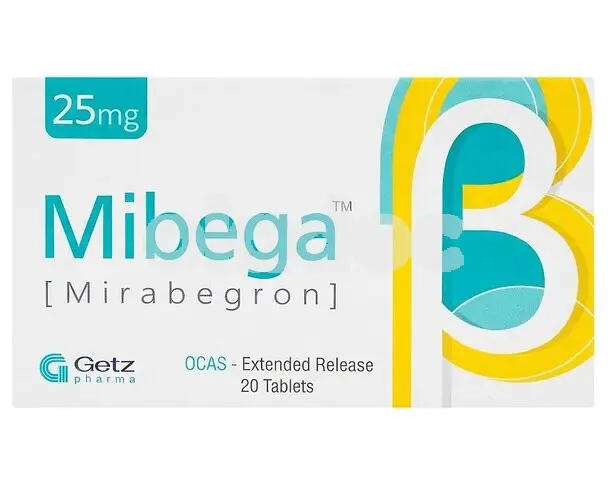
About Mibega Tablet 25 mg
Mirabegron 25 mg tablet, the usual starting dose for overactive bladder treatment.
Mibega Tablet 25 mg Uses
- Initial treatment for overactive bladder (OAB) in adults
- Reduces urinary urgency and frequency
- Helps control urge incontinence episodes
- Used when starting bladder therapy for the first time
- Suitable starting dose for elderly or renally impaired patients
- Reduces nighttime bathroom trips caused by OAB
Mibega Tablet 25 mg Benefits
- Lower starting dose reduces the risk of a blood pressure rise
- Once daily dosing is easy to follow
- Does not cause the dry mouth typical of anticholinergic bladder drugs
- Often the preferred first choice in elderly or frail patients
- Can be stepped up to 50mg later if response is inadequate
What Experts Say
The 25mg strength is the standard starting dose recommended before any dose increase is considered for overactive bladder treatment. It allows physicians to judge how well an individual patient tolerates the beta-3 agonist mechanism before exposing them to higher systemic drug levels.
Because mirabegron avoids the muscarinic blockade seen with older bladder medicines, this starting dose is often favoured in elderly patients or those already taking multiple anticholinergic-sensitive drugs, where cognitive slowing, dry mouth and constipation are a bigger clinical concern than a modest blood pressure change.
Clinicians usually reassess response after four to eight weeks at 25mg, checking both symptom diaries and blood pressure readings. If urgency and frequency remain troublesome and pressure stays well controlled, the dose is stepped up to 50mg rather than switched to a different drug class outright.
Drug Class
- Beta-3 adrenergic receptor agonist
Mibega Tablet 25 mg Uses in Urdu
- مثانے کی زیادہ سرگرمی کے علاج کی ابتدائی خوراک
- پیشاب کی بار بار حاجت کو کم کرنا
- پیشاب کی اچانک شدید طلب پر قابو پانا
- پیشاب رک نہ سکنے کی شکایت میں کمی
- بزرگ مریضوں کے لیے محفوظ ابتدائی خوراک
Mibega Tablet 25 mg formula
How to use Mibega Tablet 25 mg?
- Take one tablet by mouth once daily, with or without food
- Swallow the tablet whole, do not crush or chew
- Take it at roughly the same time every day
- Allow four to eight weeks to judge the full effect before any dose change
- Do not stop suddenly without discussing it with your doctor
- Skip a missed dose and take the next one as scheduled, do not double up
- Keep follow up visits to check blood pressure and response
Drug Interactions
- Digoxin: Levels can rise when taken together, so monitoring is advised.
- CYP2D6-metabolised drugs (e.g., metoprolol, flecainide): Mirabegron may increase their blood levels.
- Other bladder medicines (anticholinergics): Combination may need closer monitoring for urinary retention.
- Antihypertensive medicines: Blood pressure control may need review since mirabegron can raise pressure.
- Warfarin: Use together cautiously and monitor the clotting response.
Risks and warnings
- Hypertension: Blood pressure should be checked before starting and periodically during treatment.
- Renal impairment: Caution is advised, and dose limits apply in patients with reduced kidney function.
- Hepatic impairment: Use cautiously in patients with liver disease.
- Bladder outlet obstruction: Avoid in patients with a significant urinary retention risk.
- Cardiac arrhythmia history: Use with caution due to a small risk of heart rhythm changes.
- Angioedema: Stop the medicine and seek care if facial or throat swelling develops.
- Pregnancy and breastfeeding: Only use if a doctor considers it clearly necessary.
Mibega Tablet 25 mg Side Effects
- Mild rise in blood pressure
- Headache
- Common cold like symptoms (nasopharyngitis)
- Urinary tract infection
- Fast heartbeat (tachycardia)
- Dizziness
- Nausea
- Diarrhoea
- Dry mouth (uncommon)
- Back pain
- Skin rash
Storage Conditions
- Store below 30°C, away from direct heat
- Keep tablets in the blister pack until ready to take
- Protect from moisture and sunlight
- Keep out of reach of children