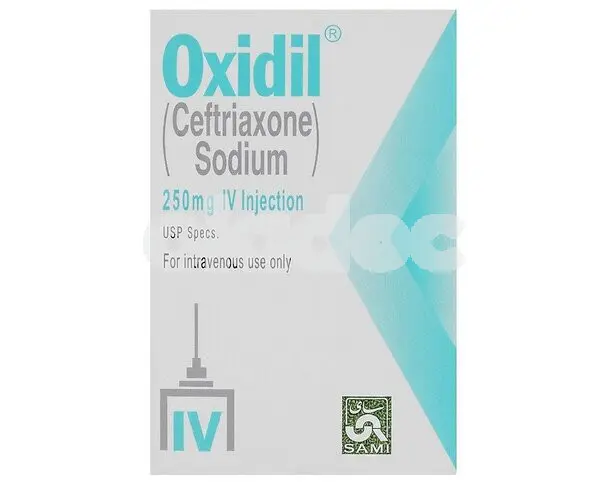
About Oxidil IV Injection 250mg
Ceftriaxone based IV antibiotic injection used to treat moderate to severe bacterial infections.
Oxidil Injection Uses
- Treats community acquired pneumonia and other respiratory tract infections
- Used for complicated and uncomplicated urinary tract infections
- Treats bacterial meningitis
- Used for skin and soft tissue infections
- Treats bone and joint infections
- Used as a single dose treatment for uncomplicated gonorrhea
- Used for intra abdominal infections
- Treats sepsis and bloodstream infections
Oxidil Injection Benefits
- Broad spectrum activity against many gram positive and gram negative bacteria
- Convenient once daily dosing reduces the number of injections needed
- Reaches therapeutic blood levels quickly through IV administration
- Effective for infections that resist other common antibiotics
- Suitable for both hospital and outpatient parenteral antibiotic therapy
What Experts Say
Ceftriaxone Sodium belongs to the third generation cephalosporin class of antibiotics. It is valued by clinicians for broad spectrum coverage against gram positive and gram negative bacteria. Its long half-life allows once daily dosing in most infections.
This antibiotic works by stopping bacteria from building their protective cell wall, which leads to bacterial cell death. Doctors often choose it for serious infections such as pneumonia, meningitis and complicated urinary tract infections because IV administration allows fast absorption into the bloodstream. Hospitals frequently rely on it when patients need rapid and reliable antibiotic coverage.
Ceftriaxone is generally well tolerated when given correctly by trained healthcare staff. Patients with a known allergy to penicillins or other cephalosporins need close monitoring due to the risk of cross reactivity. It should never be mixed with calcium containing IV fluids in newborns because of a risk of dangerous precipitation.
Drug Class
- Third Generation Cephalosporin Antibiotic
Oxidil Injection Uses in Urdu
- نمونیا اور سانس کی نالی کے دیگر انفیکشن کے علاج کے لیے
- پیشاب کی نالی کے انفیکشن کے علاج کے لیے
- دماغی جھلی کی سوزش یعنی میننجائٹس کے علاج کے لیے
- جلد اور نرم بافتوں کے انفیکشن کے لیے
- ہڈیوں اور جوڑوں کے انفیکشن کے لیے
- سوزاک کے فوری علاج کے لیے
- پیٹ کے اندرونی انفیکشن کے لیے
- خون میں پھیلنے والے شدید انفیکشن یعنی سیپسس کے لیے
Oxidil IV Injection 250mg formula
How to use Oxidil IV Injection 250mg?
- Administered only by a doctor or trained healthcare professional through slow intravenous infusion
- Dose and duration depend on the type and severity of the infection being treated
- Reconstituted and diluted strictly per manufacturer instructions before infusion
- Never mixed with calcium containing IV solutions in the same line
- Given at the same time each day for the full prescribed course
- Never self administered at home without medical supervision
Drug Interactions
- Calcium Containing IV Solutions: Co-administration risks fatal precipitation and must be avoided, especially in newborns.
- Warfarin and other Anticoagulants: May increase bleeding risk, requiring closer monitoring of clotting parameters.
- Aminoglycosides: Combined use may raise the risk of kidney toxicity even though the combination is sometimes used for severe infections.
- Live Typhoid Vaccine: Antibiotic therapy can reduce vaccine effectiveness, so dosing should be spaced apart.
- NSAIDs: May increase the risk of bleeding when used together with ceftriaxone.
Risks and warnings
- Allergic Reactions: Serious hypersensitivity including anaphylaxis can occur, especially in patients allergic to penicillins or other cephalosporins.
- Calcium Interaction: Must not be given with calcium containing solutions, particularly in neonates, due to risk of fatal precipitation in the lungs and kidneys.
- Biliary Sludging: Prolonged use may cause gallbladder sludge or pseudolithiasis that usually resolves after stopping treatment.
- Clostridioides difficile Infection: Prolonged or repeated use may lead to antibiotic associated diarrhea or colitis.
- Kidney or Liver Impairment: Dose adjustment may be needed in patients with significant kidney or liver disease.
- Pregnancy and Breastfeeding: Should only be used under medical supervision when clearly needed.
Oxidil Injection Side Effects
- Pain, redness or swelling at the injection site
- Nausea or vomiting
- Diarrhea
- Skin rash or itching
- Elevated liver enzymes on blood tests
- Headache or dizziness
- Severe allergic reaction with breathing difficulty or facial swelling
- Severe or bloody diarrhea suggesting colitis
- Unusual bleeding or bruising
- Dark urine or yellowing of the skin and eyes
Storage Conditions
- Store unopened vials at room temperature below 25°C, away from direct sunlight
- Protect from excess moisture and heat
- Keep out of reach of children
- Use the reconstituted solution within the time specified by the manufacturer
- Discard any leftover reconstituted solution, do not reuse or store for later