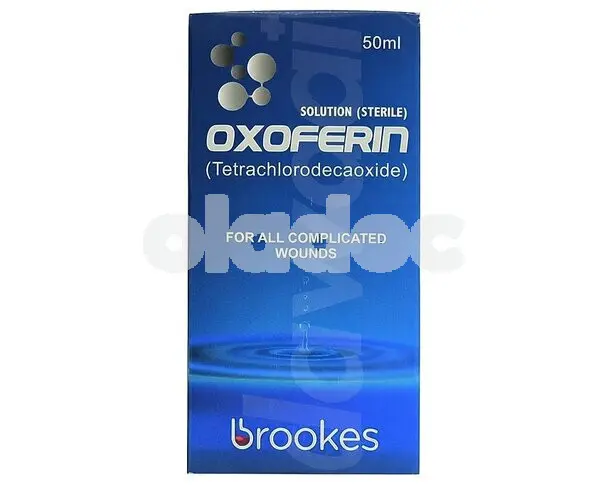
About Oxoferin Solution
A stabilized oxygen based antiseptic solution for chronic wounds, ulcers, bed sores and infected skin injuries.
Oxoferin Solution Uses
- Treating infected and non healing wounds
- Managing chronic leg ulcers linked to poor circulation
- Speeding up healing of diabetic foot ulcers
- Caring for bed sores and pressure ulcers
- Supporting healing after surgery in complicated wounds
- Managing burns and post traumatic wounds
Oxoferin Solution Benefits
- Delivers active oxygen directly to damaged tissue
- Cleans wounds without harsh chemical irritation
- Supports faster granulation and tissue repair
- Can be used alone without extra topical medicines
- Suitable for long term use in slow healing wounds
What Experts Say
Wound care specialists describe tetrachlorodecaoxide as a stable, active oxygen donor that cleans the wound bed without harsh chemical action. It works by supporting the body's own healing signals rather than simply killing bacteria on contact, which makes it gentler on surrounding healthy skin.
Clinical studies on tetrachlorodecaoxide report faster healing rates in chronic leg ulcers, pressure sores and diabetic wounds compared to standard dressings alone. Some trials found it as effective as superoxidised wound solutions, with fewer complaints of stinging or discomfort during application, making it easier for patients to tolerate long courses of treatment.
Doctors in Pakistan often recommend Oxoferin Solution for patients with diabetes related foot wounds, since poor circulation and nerve damage can slow healing and raise infection risk. Regular follow up with a physician is still advised so the wound's progress and dressing routine can be adjusted as needed.
Drug Class
- Topical wound healing agent
- Oxidising antiseptic solution
Oxoferin Solution Uses in Urdu
- زخموں کے انفیکشن کا علاج
- ذیابیطس کے پاؤں کے زخموں کی دیکھ بھال
- بستر پر پڑے مریضوں کے زخموں کا علاج
- ٹانگوں کے پرانے زخموں کی صفائی اور شفا
- آپریشن کے بعد پیچیدہ زخموں کی دیکھ بھال
Oxoferin Solution formula
How to use Oxoferin Solution?
- Clean the wound gently before applying the solution.
- Soak a sterile gauze piece with Oxoferin Solution and place it over the wound.
- Use about 5ml of solution for a 4 inch by 4 inch dressing.
- Apply twice a day unless a doctor advises a different schedule.
- Dilute with normal saline for larger wounds such as burns, as directed by a doctor.
- Discard the bottle 30 days after it has been opened.
Drug Interactions
- Topical Antiseptics: Avoid combining with other wound antiseptics or antibiotics on the same dressing, since Oxoferin Solution is meant to be used alone.
- Occlusive Ointments: Heavy oil based ointments applied over the solution may reduce its contact with the wound bed.
- No Known Systemic Interactions: Since Oxoferin Solution works only on the skin surface, it has not been shown to interact with oral or injectable medicines.
Risks and warnings
- Mild Itching Or Burning: This can occur during early use and often signals the wound is healing.
- Temporary Discoloration: Overuse may cause a greenish tint on the wound, which fades once the amount applied is reduced.
- Spontaneous Bleeding: Slight bleeding can occur as new blood vessels form in healing tissue.
- Not For Internal Use: Oxoferin Solution is meant for external wound application only.
- Medical Supervision: Deep, large or infected wounds should be assessed by a doctor before self treatment.
Oxoferin Solution Side Effects
- Mild stinging or burning sensation at the site of application
- Slight itching around the wound edges
- Temporary greenish discoloration of the wound with frequent use
- Minor spontaneous bleeding from healing tissue
- Increased moisture or wetness around the dressing
- Rare skin sensitivity in people prone to allergies
- Delayed irritation if used on very sensitive skin
Storage Conditions
- Store between 15°C and 30°C, away from direct light.
- Keep the bottle tightly closed when not in use.
- Do not use the solution more than 30 days after opening.
- Keep out of reach of children.