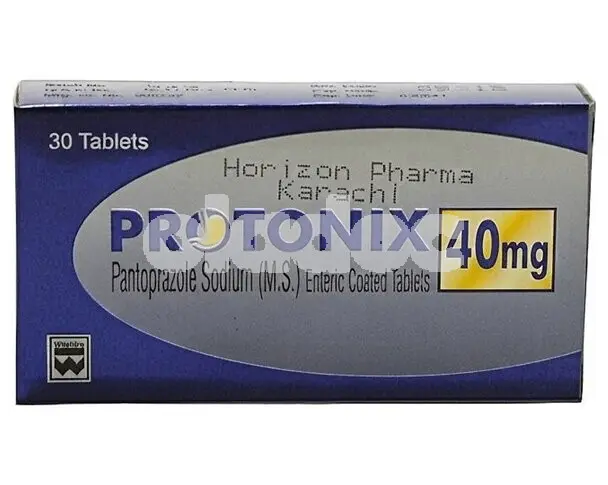
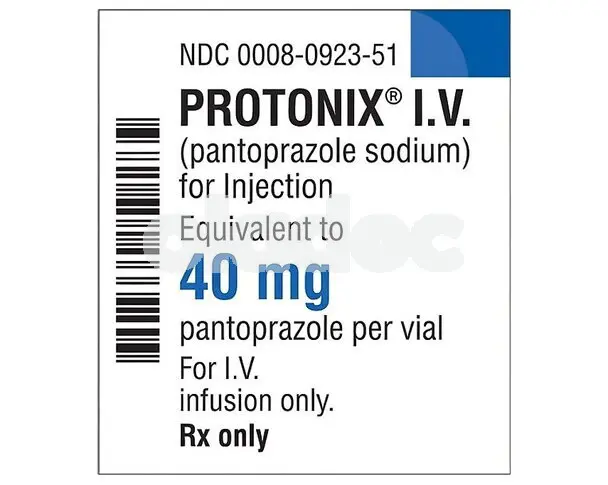
About Protonix Tablet 40mg
Protonix Tablet 40mg is a proton pump inhibitor used to reduce stomach acid and treat acid reflux in Pakistani patients.
What is Protonix Tablet 40mg used for
- Treating gastroesophageal reflux disease (GERD)
- Healing erosive esophagitis caused by stomach acid
- Preventing stomach ulcers linked to long-term NSAID use
- Supporting Helicobacter pylori eradication therapy
- Managing excess acid production in conditions like Zollinger-Ellison syndrome
How does Protonix Tablet 40mg work
Protonix Tablet 40mg contains pantoprazole sodium, a proton pump inhibitor.
It blocks the acid-producing pump in the stomach lining, lowering acid levels and allowing irritated tissue to heal.
Who should not use Protonix Tablet 40mg
- Patients with known hypersensitivity to pantoprazole or other benzimidazole-based medicines
- People taking certain HIV medicines like rilpivirine
- Patients with a history of unexplained chronic diarrhea until evaluated by a doctor
- Patients with liver disease, who should use this medicine only under close medical supervision
Protonix Tablet 40mg Dosage and Duration of Treatment
For GERD, doctors typically prescribe one tablet daily for four to eight weeks depending on symptom severity.
For H. pylori treatment, it is combined with antibiotics for one to two weeks.
Long-term use should always be reviewed periodically with a doctor.
- معدے کی تیزابیت کم کرنے کے لیے
- سینے کی جلن اور ایسڈ ریفلکس کے علاج میں
- معدے کے السر کو ٹھیک کرنے میں مددگار
- ہیلی کوبیکٹر پائلوری انفیکشن کے مکمل علاج میں معاون
- غذائی نالی کی سوزش کے علاج کے لیے
Protonix Tablet 40mg formula
How to use Protonix Tablet 40mg?
- Usually taken once daily in the morning, about an hour before a meal.
- Should be swallowed whole with water, without crushing, chewing, or splitting it.
- The full course prescribed for conditions like H. pylori infection should be completed.
- Skipping doses is best avoided.
- A doctor's advice is recommended before combining with other acid-reducing products.
Drug Interactions
- Atazanavir and Certain HIV Medicines: Reduced stomach acid lowers their absorption, decreasing effectiveness.
- Methotrexate: High-dose methotrexate levels can rise, increasing toxicity risk.
- Warfarin: Combined use may affect blood clotting control.
- Clopidogrel: May slightly reduce clopidogrel's antiplatelet effect.
Risks and warnings
- Long-Term Use Risks: Extended use beyond a few months can weaken bones and raise fracture risk.
- Self-Medication Concern: Many patients buy acid-reducing tablets without a prescription, which can mask symptoms of a more serious stomach condition.
- Low Magnesium Levels: Long-term therapy can lower blood magnesium, leading to muscle cramps or an irregular heartbeat.
- Vitamin B12 Deficiency: Prolonged use may reduce vitamin B12 absorption.
- Kidney Health: Rare cases of kidney inflammation have been linked to prolonged PPI use.
- Headache
- Diarrhea or loose stools
- Nausea
- Abdominal pain or bloating
- Dizziness
- Severe or persistent diarrhea (may signal C. difficile infection)
- Signs of low magnesium such as muscle spasms or irregular heartbeat
- Unusual bone pain or fractures with long-term use
- Severe skin rash, blistering, or peeling
Storage Conditions
- Should stay in a cool, dry place away from Pakistan's high summer humidity.
- Room temperature storage below 30°C keeps the tablet stable until the labeled expiry date.
- Keeping the strip inside its original carton protects it from light exposure.
- Store well out of reach of children and pets.
- Bathroom cabinets are best avoided due to moisture buildup.