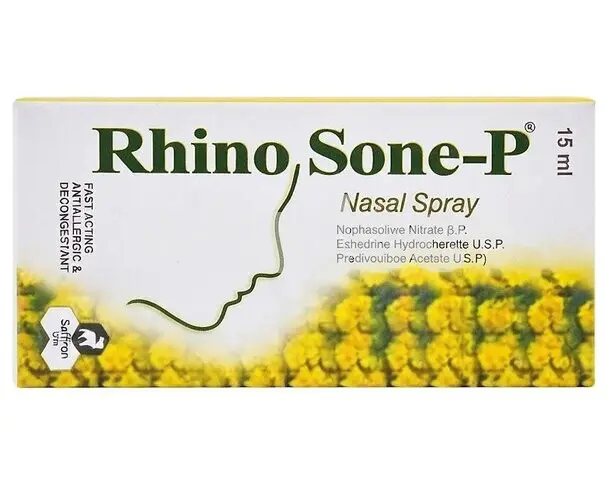
About Rhinosone-P Nasal Spray
Rhinosone-P Nasal Spray combines a decongestant and corticosteroid to relieve nasal congestion and allergic rhinitis.
Rhinosone-P Nasal Spray Uses
- Allergic rhinitis (hay fever) with sneezing, itching and a blocked nose
- Nasal congestion caused by the common cold or flu
- Sinusitis related nasal blockage and pressure
- Vasomotor rhinitis with persistent nasal stuffiness
- Short term relief of a blocked nose before ENT examination or minor nasal procedures
Rhinosone-P Nasal Spray Benefits
- Combines a fast acting decongestant with a mild corticosteroid in one spray
- Naphazoline and Ephedrine shrink swollen nasal blood vessels within minutes
- Fluprednisolone Acetate reduces local inflammation and nasal lining swelling
- Restores easier nasal breathing and reduces sinus pressure
- Compact spray bottle allows targeted dosing directly into the nostril
What Experts Say
Allergic rhinitis and chronic nasal congestion are common across Pakistan, driven by dust, pollen and seasonal changes in air quality. ENT specialists often see patients whose stuffy nose does not settle with a plain decongestant alone, especially when allergic inflammation is also present.
Rhinosone-P Nasal Spray works through two complementary mechanisms. Naphazoline and Ephedrine act on nasal blood vessels to cause quick vasoconstriction, shrinking swollen mucosa and opening the airway within minutes. Fluprednisolone Acetate, a topical corticosteroid, calms the underlying inflammation that keeps the lining swollen, so the combination addresses both the blockage and its cause.
Because the spray contains a decongestant, ENT specialists generally advise short courses only, usually not beyond five to seven days. Longer use can cause rebound congestion, also called rhinitis medicamentosa, where the nose becomes more blocked once the spray is stopped. Patients with high blood pressure, heart disease or thyroid disorders are usually monitored more closely.
Drug Class
- Nasal decongestant, an imidazoline and sympathomimetic amine combination (Naphazoline and Ephedrine)
- Topical corticosteroid (Fluprednisolone Acetate)
- Combination nasal decongestant and anti inflammatory spray
Rhinosone-P Nasal Spray Uses in Urdu
- ناک کی الرجی اور چھینکوں میں افاقہ
- زکام یا فلو کی وجہ سے ناک بند ہونے میں کمی
- سائنوسائٹس کی وجہ سے ناک میں دباؤ اور بندش کا علاج
- موسمی تبدیلی سے ہونے والی ناک کی سوزش میں سکون
- ناک کے راستے آسانی سے سانس لینے میں مدد
Rhinosone-P Nasal Spray formula
- Naphazoline Nitrate + Ephedrine Hydrochloride + Fluprednisolone Acetate
How to use Rhinosone-P Nasal Spray?
- Blow the nose gently to clear the nostrils before use
- Tilt the head slightly forward and insert the nozzle into one nostril
- Close the other nostril with a finger and spray while breathing in gently
- Repeat in the other nostril as directed by the doctor
- Use two to three times a day, and avoid using for more than five to seven consecutive days unless a doctor advises otherwise
- Wipe the nozzle clean after each use and keep the cap closed
- Avoid sharing the bottle with other people to prevent infection
Drug Interactions
- Monoamine Oxidase Inhibitors: Combining with MAOIs can cause a dangerous rise in blood pressure due to the Ephedrine component
- Other Decongestants or Stimulants: Using alongside oral decongestants like Pseudoephedrine can increase the risk of high blood pressure and rapid heartbeat
- Beta Blockers: Ephedrine may reduce the effectiveness of beta blocker medicines used for blood pressure or heart conditions
- Tricyclic Antidepressants: May increase the cardiovascular stimulant effects of Ephedrine
- Other Nasal or Topical Steroids: Using multiple steroid containing products together can increase total steroid exposure
Risks and warnings
- Rebound Congestion: Using this spray for longer than five to seven days can cause the nose to become more blocked once the spray is stopped, known as rhinitis medicamentosa
- Nasal Irritation: Burning, stinging, dryness or sneezing inside the nose can occur, especially with frequent use
- Heart and Blood Pressure Effects: Ephedrine and Naphazoline can raise heart rate and blood pressure, so caution is needed in patients with hypertension or heart disease
- Long Term Steroid Use: Prolonged or excessive use of the corticosteroid component may cause thinning of the nasal lining or, rarely, systemic steroid effects
- Children: Not recommended for young children without a doctor's advice, since decongestant nasal sprays carry a higher risk of side effects in this age group
- Pregnancy and Breastfeeding: Use only if advised by a doctor, since safety data in pregnancy is limited
- Thyroid Disorders: Use with caution in patients with an overactive thyroid because of the stimulant effect of Ephedrine
Rhinosone-P Nasal Spray Side Effects
- Burning or stinging sensation inside the nose
- Nasal dryness or crusting
- Sneezing after application
- Headache
- Rapid heartbeat or palpitations
- Increased blood pressure
- Nervousness, restlessness or difficulty sleeping
- Nausea
- Rebound nasal congestion with prolonged use
- Nosebleeds with frequent or long term use
Storage Conditions
- Store below 25°C in a cool, dry place away from direct sunlight
- Keep the spray bottle tightly closed when not in use
- Keep out of reach of children
- Do not freeze
- Discard the bottle after the printed expiry date or once opened for more than three months