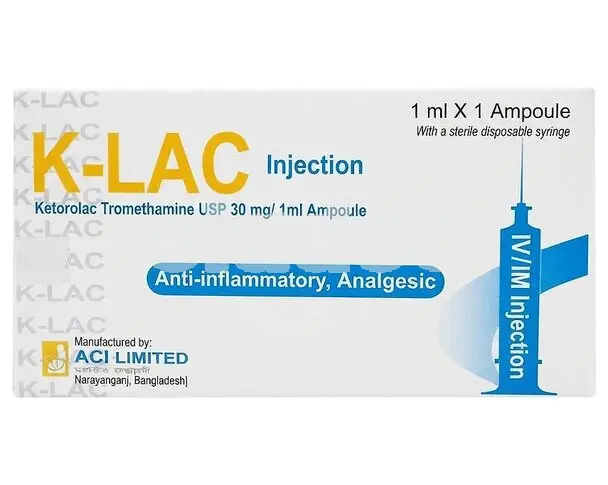
About Toralac injection 30mg
A fast acting injectable pain reliever typically given after surgery for a short, limited period only.
Toralac Uses
- Post-operative pain
- Pain after orthopedic procedures
- Renal colic (kidney stone pain)
- Acute musculoskeletal pain
- Severe pain when oral medicines are not practical
Toralac Benefits
- Provides strong pain relief without opioid related sedation
- Acts quickly, often within 30 minutes of injection
- Useful bridge for pain control before switching to oral painkillers
- Does not carry the dependence risk associated with opioids
What Experts Say
Ketorolac works by blocking cyclooxygenase enzymes, which reduces the production of prostaglandins responsible for pain and inflammation. It is considerably more potent than common oral NSAIDs, which is why it is reserved for short, closely monitored courses rather than routine everyday pain relief.
Surgeons and anesthetists in Pakistan often use ketorolac injections in the immediate post-operative period to reduce the need for opioid painkillers, since it does not cause the same drowsiness or breathing concerns. Its use is generally limited to a maximum of a few days before switching patients to oral pain relief.
Because ketorolac carries a real risk of stomach bleeding and kidney strain, especially with repeated dosing, doctors keep close watch on hydration status and avoid it in patients with peptic ulcer disease, active bleeding, or significant kidney impairment. It is not intended for long term or unsupervised use.
Drug Class
- Non-steroidal anti-inflammatory drug (NSAID)
Toralac Uses in Urdu
- یہ انجیکشن آپریشن کے بعد شدید درد کو مختصر عرصے کے لیے کم کرنے کے لیے استعمال ہوتا ہے۔
- یہ گردے کی پتھری کے درد میں بھی دیا جا سکتا ہے۔
- اسے صرف ڈاکٹر کی نگرانی میں اور مختصر مدت کے لیے استعمال کریں۔
Toralac injection 30mg formula
How to use Toralac injection 30mg?
- This injection is given by a doctor or nurse, either into a muscle or a vein.
- Treatment is usually limited to a maximum of 5 days in total, including any oral ketorolac given afterward.
- Do not use this injection alongside other NSAIDs such as ibuprofen or diclofenac.
- Inform your doctor if you have a history of stomach ulcers, kidney disease, or bleeding problems.
- Report any black stools, severe stomach pain, or reduced urination immediately.
Drug Interactions
- Other NSAIDs: Combining with aspirin, ibuprofen, or diclofenac significantly raises the risk of stomach bleeding and should be avoided.
- Blood thinners: Using ketorolac with warfarin or other anticoagulants increases bleeding risk.
- ACE inhibitors and diuretics: Combined use can reduce kidney function and blunt the effect of some blood pressure medicines.
- Corticosteroids: Taking steroids alongside ketorolac further raises the risk of stomach ulcers.
Risks and warnings
- Gastrointestinal bleeding: Ketorolac carries a higher risk of stomach ulcers and bleeding compared to most other NSAIDs, especially with prolonged use.
- Kidney impairment: It can reduce blood flow to the kidneys, which is particularly risky in dehydrated or elderly patients.
- Bleeding risk during surgery: It affects platelet function and is generally avoided before major surgery or in patients at risk of bleeding.
- Not for prolonged use: Treatment beyond the recommended short duration significantly raises the risk of serious side effects.
- Not for children or in pregnancy: It is not recommended for use in children, or during late pregnancy.
Toralac Side Effects
- Injection site pain
- Nausea
- Stomach discomfort
- Headache
- Dizziness
- Fluid retention or swelling
- Drowsiness
Storage Conditions
- Store below 25°C, protected from light.
- Do not use if the solution appears discolored or contains particles.
- Keep out of reach of children.