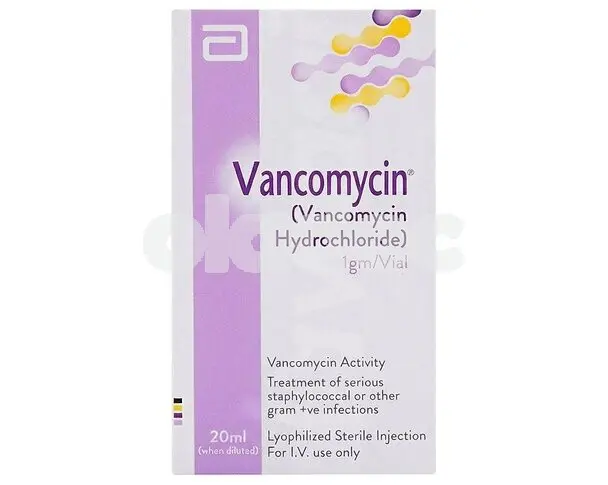
About Vancomycin Injection IV 1gm
Hospital administered IV antibiotic used for serious infections including MRSA and bloodstream infections.
Uses
- Treatment of severe MRSA infections
- Bloodstream infections (bacteremia)
- Endocarditis (heart valve infections)
- Bone and joint infections (osteomyelitis)
- Severe skin and soft tissue infections
Benefits
- Effective against most strains of MRSA and other resistant gram positive bacteria
- Works when other antibiotics fail due to resistance
- Rapid bactericidal action against gram positive organisms
- Well established safety profile when used with proper monitoring
What Experts Say
Vancomycin treats serious infections caused by MRSA and other resistant gram positive bacteria. Doctors use it when common antibiotics fail to control an infection. It works by damaging the bacterial cell wall, stopping bacteria from multiplying. This injection is reserved for hospital use in severe or life threatening infections.
Since vancomycin has a narrow safety margin, doctors monitor blood levels during treatment. Trough level testing before each dose confirms the drug stays in a safe range. Kidney function tests are repeated regularly since vancomycin is cleared through the kidneys, and doses are adjusted accordingly.
The main risks are kidney damage and hearing related problems, especially with prolonged or high dose use. Infusing it too fast can trigger red man syndrome, with flushing, itching, and low blood pressure. This is why vancomycin is always given as a slow infusion, never as a rapid injection.
Drug Class
Vancomycin Injection IV 1gm Uses in Urdu
- مرسا (MRSA) جیسے مزاحم بیکٹیریا کے شدید انفیکشن کے علاج کے لیے
- خون میں انفیکشن (بیکٹریمیا) کے علاج کے لیے
- دل کے والوز کے انفیکشن (اینڈوکارڈائٹس) کے لیے
- ہڈیوں اور جوڑوں کے انفیکشن کے لیے
- جلد اور نرم بافتوں کے شدید انفیکشن کے لیے
Vancomycin Injection IV 1gm formula
- Vancomycin Hydrochloride 1gm
How to use Vancomycin Injection IV 1gm?
- Given only by a doctor or nurse in a hospital or clinical setting
- Administered as a slow intravenous infusion over at least 60 minutes
- Never given as a rapid injection due to the risk of red man syndrome
- Dose and frequency are based on body weight, kidney function, and infection severity
- Blood tests are done regularly to monitor vancomycin levels during treatment
Drug Interactions
- Aminoglycosides: Combined use increases the risk of kidney damage and hearing loss.
- Other Nephrotoxic Drugs: NSAIDs, amphotericin B, and certain diuretics can add to kidney related risks.
- Anesthetic Agents: May increase the chance of infusion related reactions when given together.
- Neuromuscular Blocking Drugs: Vancomycin may prolong their effect during surgery.
Risks and warnings
- Nephrotoxicity: Vancomycin can damage the kidneys, especially with high doses, prolonged use, or existing kidney disease.
- Ototoxicity: High blood levels of vancomycin may affect hearing and balance, particularly with long term use.
- Infusion Reaction: Rapid infusion can cause red man syndrome, marked by flushing, rash, and low blood pressure.
- Therapeutic Drug Monitoring: Regular blood level checks are required to keep the dose safe and effective.
- Allergic Reactions: Rare but serious allergic reactions can occur during or after infusion.
Vancomycin Injection IV 1gm Side Effects
- Redness or pain at the injection site
- Flushing or redness of the face and upper body
- Nausea
- Chills or fever
- Kidney function changes
- Hearing changes or ringing in the ears
- Low blood pressure during infusion
- Skin rash or itching
Storage Conditions
- Store unopened vials at room temperature, below 25 degrees Celsius
- Protect from light and keep away from moisture
- Reconstituted solution should be used immediately or stored in a refrigerator for a limited time as directed
- Keep out of reach of children
- Do not use if the solution is discolored or contains particles