




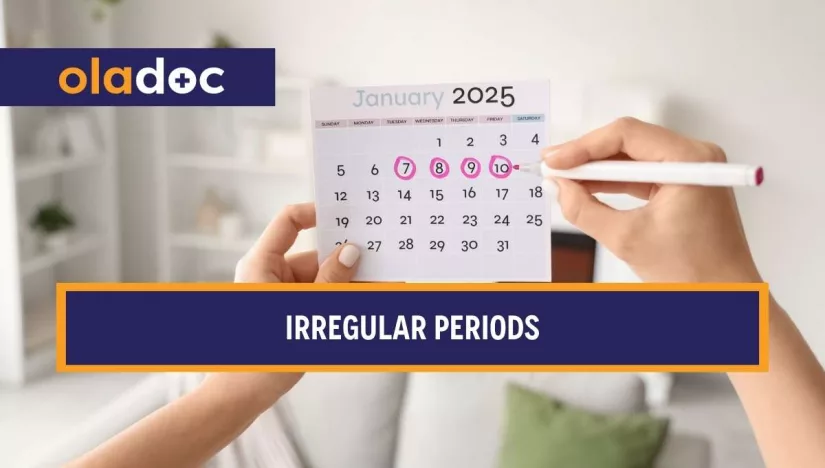
Your period does not always follow a perfect 28-day clock. Some variation is completely normal. But when your cycle is consistently late, arrives too early, or skips months without explanation, that is worth paying attention to.
Irregular periods are one of the most common reasons women visit a gynecologist in Pakistan. They can be a standalone issue or a sign of something going on beneath the surface. Either way, understanding what is happening in your body is the first step.
Table of Contents
Key Takeaways
- Irregular periods are often caused by hormonal imbalance, PCOS, stress, or thyroid issues
- Missing three or more periods without pregnancy always warrants a medical evaluation
- Many causes are treatable once identified through a simple blood test and ultrasound
- Lifestyle changes can restore cycle regularity in some cases, but not all
What Are Irregular Periods?
A menstrual cycle is considered irregular when the gap between periods is consistently shorter than 21 days or longer than 35 days.
Missing periods for three or more months in a row without pregnancy is also classified as irregular. Hormonal signals between your brain and ovaries control when your period arrives, and any disruption to that system can throw off your cycle.
Common Causes of Irregular Periods
Polycystic Ovary Syndrome (PCOS)
PCOS is the most common hormonal disorder affecting women of reproductive age in Pakistan. It disrupts ovulation, which means your uterus does not receive the hormonal signal to shed its lining on schedule. Many women with PCOS go months between periods, or experience very light and unpredictable bleeding.
Weight gain, acne, and excess facial hair often accompany the cycle changes.
Thyroid Disorders
Your thyroid gland regulates metabolism and plays a direct role in reproductive hormones. An underactive thyroid (hypothyroidism) can cause periods to become heavy and infrequent. An overactive thyroid (hyperthyroidism) tends to make periods lighter and less frequent or stop them altogether.
Thyroid problems are frequently missed because their symptoms can look like general fatigue or stress.
Stress and Cortisol Overload
When your body is under significant stress, whether physical or emotional, cortisol levels rise. High cortisol interferes with the hormones that trigger ovulation. Your cycle can become delayed, shortened, or absent during periods of intense stress.
This is especially common during exam periods, major life changes, or prolonged emotional difficulty.
Significant Weight Changes
Dropping weight rapidly or being significantly underweight reduces the body fat needed to produce estrogen. Without enough estrogen, ovulation slows or stops. Periods can become very irregular or disappear entirely.
Gaining weight quickly, particularly around the abdomen, is also linked to hormonal imbalance and cycle disruption.
Perimenopause
Women in their late 30s and 40s often begin experiencing irregular cycles as estrogen and progesterone levels start to fluctuate naturally. This transition phase, called perimenopause, can last several years. Periods may come further apart, closer together, or change in flow before they stop entirely.
Other Contributing Factors
Several other conditions can disrupt your cycle:
- Prolactinoma (a benign pituitary tumor) raises prolactin levels and suppresses ovulation
- Premature ovarian insufficiency causes the ovaries to stop functioning normally before age 40
- Uterine fibroids or polyps can alter bleeding patterns without affecting the timing of ovulation
- Certain medications, including antipsychotics and some blood pressure drugs, list cycle changes as a side effect
Symptoms to Watch For
Irregular periods themselves are a symptom, but certain patterns signal a more urgent need for evaluation:
- Periods that suddenly become very heavy or very light compared to your normal
- Bleeding that lasts longer than 7 days
- Spotting between periods or after intercourse
- Pelvic pain that is new or worsening
- Periods that stop for three months or more without a known cause
Any of these patterns warrants a proper assessment, not a wait-and-see approach.
How Are Irregular Periods Diagnosed?
A gynecologist will typically start with a detailed menstrual history. You will be asked how long your cycles usually last, when the irregularity started, and whether anything else has changed in your health or lifestyle.
From there, investigations usually include:
- Blood tests to check hormone levels (FSH, LH, estrogen, prolactin, TSH for thyroid)
- Pelvic ultrasound to look at the ovaries and uterus for structural causes such as PCOS or fibroids
- AMH (Anti-Mullerian Hormone) test if premature ovarian insufficiency is suspected
Most cases are diagnosed through this basic combination of history, bloodwork, and imaging.
Treatment Options for Irregular Periods
Treatment depends entirely on the underlying cause. There is no single fix that works for every case.
Hormonal Therapy
For women not trying to conceive, combined oral contraceptive pills are often prescribed to regulate the cycle and manage symptoms. Progesterone-only therapy is used in cases where estrogen is not suitable.
Hormonal therapy manages symptoms but does not treat the root cause once stopped.
PCOS Management
Managing PCOS involves a combination of approaches. Lifestyle changes, particularly weight loss of even 5 to 10 percent of body weight, can restore ovulation in some women. Metformin is often prescribed to address insulin resistance. Letrozole or clomiphene may be used for women who want to conceive.
Thyroid Treatment
If thyroid disease is the cause, treating it with appropriate medication typically restores cycle regularity within a few months. This is one of the more straightforward fixes once the diagnosis is confirmed.
Lifestyle Adjustments
For stress-related irregularity or mild cycle disruption, structured lifestyle changes often make a measurable difference:
- Consistent sleep of 7 to 8 hours each night
- Regular moderate exercise without over-training
- Adequate caloric intake, particularly for women who are underweight
- Reducing chronic stressors where possible
These changes work best when the underlying cause is lifestyle-driven rather than structural or hormonal.
When to See a Doctor
Some irregularities resolve on their own. Others do not. A gynecologist should be consulted if:
- Your periods have been irregular for three months or longer
- You are trying to conceive and your cycles are unpredictable
- You have pain, unusual discharge, or unexpected weight changes alongside cycle irregularity
- You are over 35 and noticing new changes in your cycle
Early evaluation prevents small issues from becoming harder to manage.
Getting Support in Pakistan
Women across Pakistan are getting accurate diagnoses and effective treatment for cycle irregularities every day. Qualified gynecologists in Lahore, Karachi, Islamabad, and Rawalpindi can run the right investigations and build a treatment plan around your specific situation.
A booking can be made directly through oladoc to see a verified gynecologist near you, without a long wait.
Irregular periods are not something to dismiss or push through indefinitely. Most causes are identifiable with basic investigations, and most are treatable. The sooner the cause is found, the sooner your cycle can stabilize.
Frequently Asked Questions
How many days late is considered an irregular period?
A period is generally considered late if it arrives more than 7 days after the expected date based on your typical cycle length. If your cycle is consistently shorter than 21 days or longer than 35 days, that pattern qualifies as irregular.
Can stress really stop your period?
Yes. High levels of cortisol, the primary stress hormone, suppress the hormonal signals that trigger ovulation. Without ovulation, the uterine lining does not shed on schedule. Periods can become significantly delayed or absent during prolonged stress.
Is it normal to have irregular periods at 40?
Cycle changes in the late 30s and early 40s can be a normal sign of perimenopause as estrogen levels begin to shift. That said, new irregularity at any age should be evaluated to rule out thyroid disease, fibroids, or other treatable causes.
Can irregular periods affect fertility?
Yes, particularly if the irregularity is caused by infrequent or absent ovulation. Conditions like PCOS are a leading cause of ovulation-related infertility. However, many women with irregular cycles do conceive successfully once the underlying cause is identified and treated.
What is the fastest way to regulate periods naturally?
There is no reliable shortcut. For lifestyle-related irregularity, consistent sleep, adequate nutrition, moderate exercise, and reduced stress can restore regularity over several months. Women with structural or hormonal causes need medical treatment to see improvement.
Can irregular periods go away on their own?
Sometimes. Irregularity caused by temporary stress, sudden weight change, or travel often resolves once the trigger is removed. Irregularity that persists for three or more months, or that comes with other symptoms, is unlikely to self-resolve and needs investigation.
