




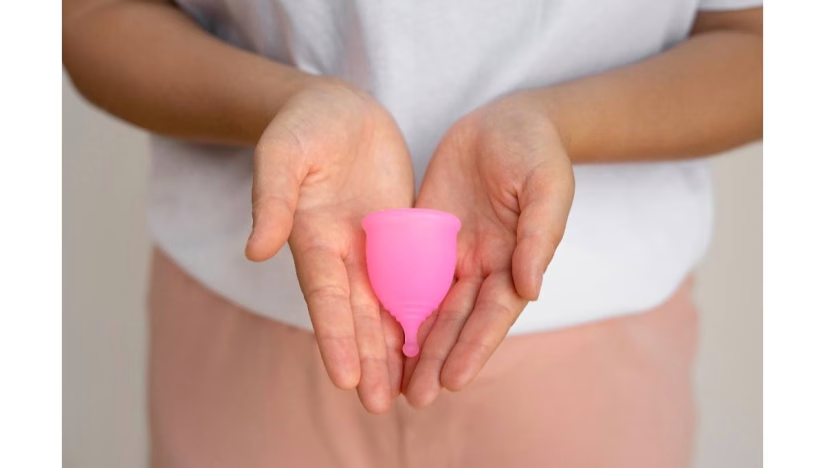
A menstrual cup is a small, flexible cup made of medical grade silicone. You fold it, insert it, and it collects your period flow instead of absorbing it.
More women in Pakistan are switching to cups because they last for years, cost less over time, and cut down on plastic waste. This guide walks through sizing, insertion, removal, cleaning, and where to buy one locally.
Table of Contents
Quick Answer
A menstrual cup sits low in the vagina and forms a light seal against the walls. It can hold flow for up to 12 hours before it needs emptying.
To use one, fold the rim, insert it at a slight backward angle, and let it pop open. Empty it by pinching the base to break the seal, then rinse or wipe before reinserting.
Most beginners get comfortable with the process within one or two cycles.
What Is a Menstrual Cup and How Does It Work?
A menstrual cup is a bell shaped cup that sits inside the vaginal canal and catches menstrual blood. Unlike a pad or tampon, it does not absorb anything.
It works through a gentle suction seal. Once opened fully inside, air pressure holds it in place so it does not shift or leak during normal movement.
One cup can be reused for three to ten years with proper care. Many households in Pakistan now treat it as a one time purchase rather than a monthly expense.
Is a Menstrual Cup Safe to Use in Pakistan?
Yes, a menstrual cup is safe for most women and girls once they have started their periods, including those who are unmarried. Medical grade silicone does not react with the body the same way absorbent materials do.
A common worry among unmarried women in Pakistan is whether cup use affects virginity. Doctors are clear on this. Virginity is not a medical or physical marker, and using a cup correctly does not change a woman’s body in any way that matters medically.
A systematic review published in The Lancet Public Health looked at cup use across dozens of studies. It found leakage rates similar to or better than pads and tampons, with no rise in safety concerns among regular users.
Cultural hesitation is common, but it usually fades once someone tries the cup and sees how it fits into daily routine. Talking to a gynecologist beforehand can also ease first time nerves.
How to Choose the Right Menstrual Cup Size
The right size depends mainly on age, whether you have given birth vaginally, and your flow. Most brands sell two sizes.
- Size 1 (small): Suited for those under 30 who have not given birth vaginally, and for lighter flow.
- Size 2 (large): Suited for those over 30, or anyone who has delivered vaginally, and for heavier flow.
Cervix height also matters. A low cervix usually needs a shorter cup, while a high cervix can comfortably fit a longer one. If unsure, a gynecologist can help during a routine visit.
How to Use a Menstrual Cup: Step by Step
Using a cup correctly comes down to three parts: insertion, wear time, and removal. Each step gets easier with practice.
How to Insert a Menstrual Cup
- Wash your hands well before touching the cup.
- Fold the cup using the C fold or punch down fold, whichever feels easier to hold.
- Relax your body and find a comfortable position, such as squatting or standing with one leg raised.
- Insert the folded cup at a backward angle, aiming toward the lower back rather than straight up.
- Once inside, rotate it gently or run a finger around the base to confirm it has fully opened.
A properly opened cup should feel smooth with no wrinkles pressing against the vaginal wall.
How to Remove a Menstrual Cup
- Wash your hands first.
- Relax and bear down slightly, the way you would during a bowel movement.
- Reach in and pinch the base of the cup to release the seal. Never pull on the stem alone.
- Slowly tilt the cup upright while easing it out to avoid spilling.
- Empty the contents into the toilet, rinse the cup, and reinsert if needed.
If it feels stuck, staying calm and breathing normally usually loosens the muscles enough to remove it comfortably.
How to Clean and Sterilize a Menstrual Cup
Rinse the cup with water between each use during your cycle. A mild, fragrance free soap works fine for a deeper clean.
Before your period starts and right after it ends, boil the cup in water for five to ten minutes to fully sterilize it. Let it cool and dry completely before storing it in a breathable cotton pouch.
How Long Can You Wear a Menstrual Cup?
A menstrual cup can stay in for up to 12 hours, depending on how heavy your flow is. Heavier days may need emptying every four to six hours.
It should never be left in for longer than 12 hours at a stretch, even overnight. Setting a phone reminder helps, especially in the first few cycles.
Menstrual Cup vs Pads and Tampons
| Feature | Menstrual Cup | Pads | Tampons |
| Wear time | Up to 12 hours | 4 to 6 hours | 4 to 8 hours |
| Reusability | Reusable for years | Single use | Single use |
| Cost over time | Low after initial purchase | Ongoing monthly cost | Ongoing monthly cost |
| Leak protection | Strong, seal based | Moderate | Moderate |
| Environmental impact | Low waste | High waste | High waste |
Where to Buy a Menstrual Cup in Pakistan and Price Range
Menstrual cups are sold through pharmacies in major cities and through online marketplaces like Daraz. Brands available locally include Sirona, MomDaughts, and a few imported silicone cup options.
Prices generally fall between PKR 800 and PKR 3,500. The range depends on the brand, size pack, and whether it ships from a local or international seller. Checking seller reviews before ordering online is a good habit, since quality can vary between listings.
Possible Side Effects and Safety Tips
Mild cramping, spotting, or slight irritation can happen in the first few cycles as your body adjusts. These usually settle down once insertion technique improves.
Toxic shock syndrome, or TSS, is rare with menstrual cups but not impossible. A review of documented TSS cases linked to cup use found a pattern. Most involved the cup being left in far longer than recommended, or reused without proper cleaning.
To lower risk, always wash your hands before handling the cup, stick to the 12 hour limit, and sterilize between cycles as described above.
Tracking your cycle alongside cup use also helps you notice changes early. If your periods become unpredictable, it may be worth reading about why your period might be running late to understand what could be going on.
Signs It’s Time to Consult a Gynecologist at oladoc
See a doctor if you notice ongoing pain during insertion or removal, unusual discharge, fever, or a rash after using the cup. These are not things to wait out on your own.
A gynecologist in Lahore can check your fit, rule out infection, and guide you toward the right cup size for your body. It’s a quick visit that saves weeks of guessing.
The Takeaway
A menstrual cup is a safe, reusable option once you learn the basic steps of sizing, insertion, and cleaning. Most discomfort in the first cycle or two comes down to technique, not the product itself.
If pain, irritation, or unusual symptoms show up, get it checked rather than pushing through it.
FAQs
Yes. A cup is safe for anyone who has started their period, regardless of marital status.
It shouldn’t, once folded and angled correctly. Mild pressure is normal, sharp pain is not.
Every 8 to 12 hours for most people, or more often on heavy flow days.
No. The vaginal canal is a closed space, so the cup cannot travel further into the body.
No. Rinsing between uses during your period is enough. Boiling is needed before and after each cycle.
Frequent leaking, difficulty opening fully, or a feeling of the cup sitting too low or too high are signs to try a different size.
