


Book Appointment with the best "Gynecologists"
Book AppointmentA routine check late in pregnancy sometimes ends with the doctor saying, “Your baby is breech.” For many mothers that sounds alarming, and the next thing they hear is that an operation may be needed. The reality is calmer. Breech position only means the baby is lying bottom or feet first instead of head first, and in most pregnancies the baby changes position without any help.
This guide explains what a breech position baby means, why it happens, whether the baby can still turn, and which options you have if it does not. It also covers what to arrange at 36 weeks and the warning signs that need a hospital visit straight away.
Key Takeaways
- A breech baby lies with the bottom or feet near the cervix. About 3 to 4 in 100 babies are still breech at full term.
- Breech is common before 32 to 36 weeks and usually needs no action until then.
- Many babies turn on their own, but the chance drops after 36 weeks.
- Exercises and home tricks have little proof behind them. Never let an untrained person press on your belly to turn the baby.
- External cephalic version (ECV) is a hospital procedure that turns the baby from outside. It works in roughly 6 out of 10 attempts.
- If the baby stays breech, your gynecologist will discuss a planned C-section or a carefully selected vaginal breech birth.
What Is Breech Position In Pregnancy?
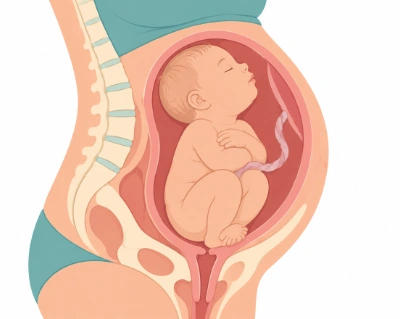
Breech position, also called breech presentation, means the baby’s bottom or feet sit lower in the womb, close to the cervix, while the head stays near your ribs. The usual head-down position is called cephalic presentation.
Until about 32 to 36 weeks this is common and harmless, because the baby still has room to somersault. The label matters only when the baby is still breech near the end of pregnancy. In Urdu, families often say bacha ulta hai (بچہ الٹا ہے), while doctors use the word breech.
Types Of Breech Position
Not every breech baby lies the same way. Your gynecologist will name the type on the ultrasound report, and it affects the delivery advice.
| Type | How The Baby Lies | Good To Know |
|---|---|---|
| Frank breech | Bottom down, legs straight up with the feet near the head | The most common type at full term |
| Complete breech | Bottom down, hips and knees bent, like sitting cross-legged | Can be delivered vaginally in selected cases |
| Footling breech | One or both feet point down toward the cervix | Higher chance of cord problems if the waters break |
How Common Is A Breech Baby?
Around 3 to 4 in every 100 babies are still breech at full term. Earlier in pregnancy the number is far higher, which is why many women hear the word at the 20 week scan and spend weeks worrying. At that stage the baby is small, floats in plenty of fluid and will change position many times. A breech result at 20 weeks says nothing about how the baby will lie at birth.
What Causes A Breech Baby?
Most of the time no cause is found, and nothing you did or skipped made the baby breech. Some situations make it more likely:
- A baby born before 37 weeks, since early babies have not finished turning
- Too much or too little amniotic fluid
- A low-lying placenta (placenta previa)
- Fibroids or an unusually shaped uterus
- Twins or other multiples sharing the space
- A previous breech baby
- Rare conditions that limit the baby’s movement
Having one of these does not mean your baby will stay breech. It only means your gynecologist will watch the position more closely.
Signs Of A Breech Baby And How It Is Confirmed
Most women feel nothing different. Some notice kicks low near the bladder or a firm, round lump under the ribs, which is the baby’s head. These feelings are not reliable, so only an examination can confirm the position.
From about 36 weeks your gynecologist feels the abdomen to find the head and the bottom, then confirms the position with an ultrasound. The scan also checks the amount of fluid, the placenta and the baby’s size, all of which shape the next decision.

Can A Breech Baby Turn On Its Own?
Yes. Most babies settle head down between 32 and 36 weeks, and a few turn even closer to labour. After 36 weeks the chance gets smaller because there is less room, less fluid and the baby is bigger. One Australian government pregnancy guide describes breech as common and normal until about 35 or 36 weeks, and notes that ECV, while an option, cannot be guaranteed to work.
If your baby is breech before 36 weeks, the usual advice is to wait and re-check, not to rush into any procedure.
Do Exercises And Home Methods Turn A Breech Baby?
Many websites suggest the knee-chest position, pelvic tilts, swimming, certain sleeping positions, cold packs, music near the lower belly and moxibustion. Most of these are harmless, but good evidence that they work is missing. Treat them as something to try, not as a plan.
If you want to try the knee-chest position, ask your gynecologist first, keep each session short and stop if you feel dizzy or have pain. Avoid steep inversions, and skip any oil, tablet or herbal mix sold as a baby-turning remedy.
One rule matters more than all the others. Do not let a dai, a relative or a massage worker push on your belly to turn the baby. Forceful pressure from an untrained person can separate the placenta or twist the cord. Turning a baby safely needs an ultrasound, heart rate monitoring and a team that can operate quickly if something changes.
External Cephalic Version (ECV): Turning The Baby From Outside
External cephalic version is a procedure in which an obstetrician uses both hands on your abdomen to guide the baby into a head-down position. It is usually offered from about 36 weeks in a first pregnancy and 37 weeks after earlier births.
It is done in a hospital with an ultrasound and a heart rate monitor. You may receive a medicine to relax the uterus, and some units add a spinal or epidural to ease the discomfort. The attempt takes only a few minutes, and the baby is monitored for a while afterwards. If your blood group is Rh negative, you will usually get an anti-D injection too.
On average ECV works in roughly 6 out of 10 attempts. It tends to work better in a second or later pregnancy and when there is enough fluid around the baby. A Cochrane review of randomised trials found that trying ECV at term lowers the chance of a breech birth and of a caesarean section.
The risks are low when the procedure is done with monitoring. They include a temporary change in the baby’s heart rate, contractions, minor bleeding and, rarely, a placental separation or cord problem that leads to an emergency C-section. A baby can also turn back to breech afterwards.
ECV is usually avoided when:
- The waters have already broken
- The placenta covers the cervix or has partly separated
- There is vaginal bleeding
- The baby’s heart rate tracing is not reassuring
- A C-section is needed anyway for another reason
- You are carrying more than one baby
Delivery Options For A Breech Baby
If ECV fails, is not suitable or is not your choice, you and your gynecologist will decide between a planned C-section and a planned vaginal breech birth. The guideline from the Royal College of Obstetricians and Gynaecologists advises that a planned caesarean slightly lowers the risk of death and early complications for the baby, and that the final decision belongs to the mother after proper counselling.
| Option | Who It Suits | Main Points |
|---|---|---|
| Planned C-section | Most women with a breech baby at term, and anyone with a footling breech or a low-lying placenta | Slightly safer for the baby than a vaginal breech birth. It means a longer recovery and affects how future births are planned. |
| Planned vaginal breech birth | Carefully selected women with a frank or complete breech, an average-sized baby and no other complications | Needs an experienced team, continuous monitoring and an operating theatre ready. Some labours still end in an emergency C-section. |
In Pakistan, the practical question is who will be on duty when labour starts. If you want to consider a vaginal breech birth, ask the hospital whether a doctor with real breech experience is available around the clock, and whether the theatre and newborn unit can respond immediately. If the answer is unclear, a planned C-section is the safer route.
Plans can also change. Some normal labours convert into a C-section on the day, so read about that possibility ahead of time. If you choose or need a surgical birth, these gynecologist-recommended recovery tips help you prepare, and a look at the pain relief options during labour helps if you hope to labour first.
Risks If A Baby Stays Breech
Most breech babies are healthy and do well after birth. The extra risks come mainly from the way the baby is born:
- Cord prolapse, where the cord slips below the baby when the waters break and squeezes shut, mostly with footling breech
- A trapped head or birth injury during a difficult vaginal breech delivery
- Labour starting or the waters breaking before you reach the hospital
- A higher chance of hip problems, so breech babies are usually offered a hip check in the first weeks of life
- The usual surgical risks and a longer recovery if a C-section is needed
What To Do If Your Baby Is Breech At 36 Weeks
- Book a visit with a gynecologist who offers ECV and can discuss breech delivery. If you live near Lahore, compare gynecologists in Lahore by experience, hospital and fee.
- Get an ultrasound that confirms the position, the fluid level and the placenta site.
- Ask about ECV, the type of breech, and the hospital’s plan if labour begins early.
- Choose a hospital with a newborn unit that is close to home, and keep your bag and papers ready by 36 weeks.
- Learn the warning signs below, and keep a driver or transport on call.
Not sure how far along you are? A pregnancy week calculator helps you work out how many weeks you are.
Go to the hospital straight away if your waters break, you feel regular contractions, you notice vaginal bleeding or the baby moves much less than usual. With a breech baby, do not wait at home for the morning.
Finding A Gynecologist For A Breech Baby In Pakistan
Look for a gynecologist or obstetrician who handles high-risk pregnancies, has done ECV before and works at a hospital with a newborn care unit. Ask three plain questions at the first visit. How often does the team deliver breech babies? Is ECV offered here? What happens if I come in labour at night?
Frequently Asked Questions About Breech Position
Can A Breech Baby Turn At 36 Weeks?
Yes, it can, although the chance is lower than before 36 weeks. Some babies turn between 36 weeks and labour, and ECV can help if the baby stays breech.
Is Breech Position Dangerous For The Baby?
The position itself is not harmful, and most breech babies are born healthy. The risk comes from the delivery, which is why doctors plan the birth carefully.
Can I Have A Normal Delivery With A Breech Baby?
In some cases, yes. A vaginal breech birth can be an option for carefully selected women when the baby is a frank or complete breech, the baby is an average size and an experienced team is available. Many hospitals recommend a C-section instead.
Does A Breech Baby Always Mean A C-section?
No. The baby may turn by itself, ECV may work, or a vaginal breech birth may be possible. A C-section is the most common plan when the baby stays breech at term.
Does ECV Hurt, And Is It Safe?
It can feel uncomfortable and firm pressure is normal. Pain relief is available, and the procedure is considered safe when it is done in a hospital with monitoring.
Can The Baby’s Gender Be Seen If The Baby Is Breech?
Usually yes. Position does not block the view, but a baby curled up with the legs crossed can hide the genitals. If the sonographer cannot tell at the 20 week scan, a repeat scan a few weeks later often solves it.
What Does Breech Mean In Urdu?
Breech is often explained as bacha ulta hona (بچے کا الٹا ہونا), meaning the baby lies bottom or feet first. The medical term remains breech presentation.
Which Doctor Should I See For A Breech Baby?
See a gynecologist and obstetrician. For a first opinion you can also ask your regular antenatal doctor to arrange an ultrasound and refer you to a hospital that performs ECV.
Disclaimer: The contents of this article are intended to raise awareness about common health issues and should not be viewed as sound medical advice for your specific condition. You should always consult with a licensed medical practitioner prior to following any suggestions outlined in this article or adopting any treatment protocol based on the contents of this article.