




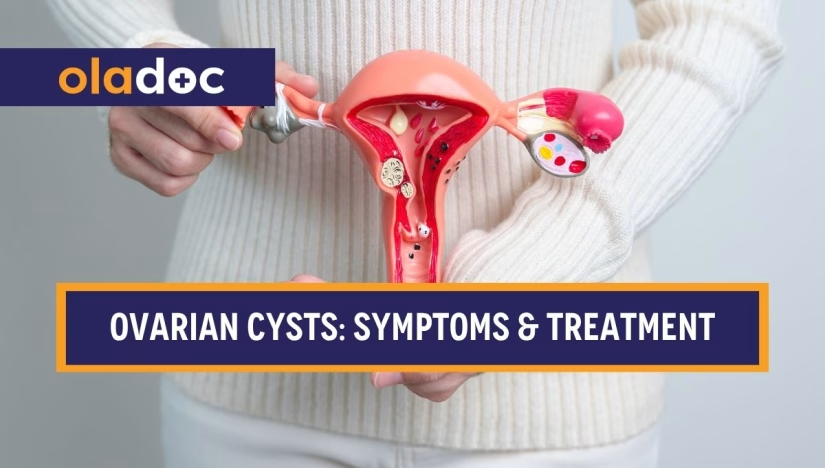
Most ovarian cysts are harmless and clear up on their own.
But some grow larger, cause pain, or need treatment, so the details matter.
Here is what to know about the symptoms, sizes, and warning signs.
Ovarian Cyst Pain? Talk to a Gynecologist at oladoc
Table of Contents
Key Takeaways
- Most are harmless: The common types form during your cycle and go away without treatment.
- Symptoms are often mild: Bloating, pelvic pressure, and period pain are the usual signs.
- Size guides the plan: Small cysts are usually watched, while larger ones may need a scan or surgery.
- Some need urgent care: Sudden, severe pelvic pain with faintness or fever can mean a cyst has burst or twisted.
- They rarely affect fertility: Most cysts do not stop you from getting pregnant.
What Is an Ovarian Cyst?
An ovarian cyst is a fluid-filled sac that forms on or inside an ovary. Most are small, painless, and harmless.
Ovaries make cysts as a normal part of the monthly cycle. These are called functional cysts, and they are the most common kind.
Other types are less common:
- Dermoid cysts: These form from cells that are present from birth.
- Cystadenomas: These grow from the surface of the ovary.
- Endometriomas: These are linked to endometriosis.
- Hemorrhagic cysts: These form when a cyst bleeds inside.
Common Symptoms of Ovarian Cysts
Many ovarian cysts cause no symptoms at all. When they do, the signs are usually mild and easy to miss.
Common symptoms include:
- Bloating or fullness: A feeling of pressure or swelling in the lower belly.
- Pelvic pain: A dull ache on one side, or pain during periods or sex.
- Frequent urination: A large cyst can press on the bladder.
- Changes in your cycle: Periods may become heavier, lighter, or irregular.
Where Is Ovarian Cyst Pain Felt?
Ovarian cyst pain is usually felt low in the belly, on the side of the cyst. It can be a dull ache or a sharp twinge.
The pain may come and go. It can feel worse during periods or physical activity.
How Are Ovarian Cysts Diagnosed?
Doctors find most ovarian cysts with a pelvic exam and an ultrasound. The scan shows the size, shape, and type of the cyst.
A pregnancy test may be done, since some cysts form in early pregnancy. After menopause, a blood test called CA-125 can help review a cyst.
One scan is often enough. For a cyst that needs watching, the doctor repeats the scan a little later.
What Size of Ovarian Cyst Is Dangerous?
Size alone does not decide the danger, but larger cysts get watched more closely. As a general guide, cysts above 5 cm get more attention, and those above 10 cm often need surgery.
The type, symptoms, and look of the cyst on a scan matter just as much. Age also plays a role, since cysts after menopause need closer review.
The table below shows a general approach by size.
| Cyst size | General approach |
| Under 5 cm | Often watched with a repeat scan, as many shrink on their own |
| 5 cm to 10 cm | Reviewed more closely, may need follow-up scans or surgery |
| Over 10 cm | More likely to need surgery, especially with symptoms |
This is a general guide only. A specialist decides based on your full picture.
What Causes Ovarian Cysts?
Most ovarian cysts form as a normal part of the menstrual cycle. Others are linked to hormones or health conditions.
Common causes and links include:
- The monthly cycle: Functional cysts form when an egg is released or when a follicle does not open.
- Hormone changes: Shifts in hormones can trigger new cysts.
- PCOS: This condition causes many small cysts on the ovaries.
- Endometriosis: This can cause cysts called endometriomas.
- Pregnancy: A cyst can form and stay during early pregnancy.
PCOS is a common cause, and it comes with its own concerns about periods and fertility. Our article on how to get pregnant with PCOS explains this in detail.
Can You Get Pregnant With an Ovarian Cyst?
Most ovarian cysts do not affect your chances of getting pregnant. The common functional cysts have no effect on fertility.
Some cyst-related conditions can make it harder to conceive. PCOS and endometriosis are the main examples.
Cysts can affect women and girls of any age, married or not. Having one says nothing about your lifestyle or future fertility.
How Are Ovarian Cysts Treated?
Treatment depends on the size, type, symptoms, and your age. Many cysts need no treatment at all.
Common approaches include:
- Watchful waiting: The doctor repeats a scan after a few weeks to check if the cyst clears.
- Hormonal birth control: The pill can help prevent new cysts, though it does not shrink current ones.
- Surgery: Keyhole surgery removes a cyst that is large, painful, lasting, or unusual on a scan.
A large or suspicious cyst is more likely to need surgery. Most small cysts simply fade over a few cycles.
Do Ovarian Cysts Come Back?
Functional cysts can come back, since they form with the cycle. This is normal and usually harmless.
Hormonal birth control can lower how often new cysts form. Your doctor can guide you if cysts keep returning.
Warning Signs You Should Not Ignore
Sudden, severe pelvic pain is the main warning sign of a cyst problem. It can mean a cyst has burst or the ovary has twisted.
Get urgent care if you have:
- Sudden, sharp pelvic pain: Especially on one side and severe.
- Faintness or dizziness: A sign of internal bleeding.
- Fever with pelvic pain: This can point to an infection.
- Fast breathing or a racing heart: Signs your body is under stress.
Ovarian torsion, where the ovary twists, is a surgical emergency. Quick care helps save the ovary.
Signs It’s Time to Consult a Gynecologist at oladoc
If pelvic pain keeps coming back, or a scan has found a cyst, it is worth getting a specialist’s view. Sudden, severe pain with faintness is an emergency, so go to a hospital right away.
A qualified women’s health specialist in Lahore can check the size and type of your cyst and explain what it means for you.
A gynecologist can tell a harmless cyst from one that needs action, which saves you needless worry. You can book a consultation on oladoc and see a trusted specialist quickly.
Conclusion
Most ovarian cysts are harmless and pass without treatment. Still, it helps to know your symptoms and the warning signs.
Trust ongoing pain or a large cyst as a reason to get checked. A short scan and a specialist’s advice can settle your mind.
Frequently Asked Questions
What size of ovarian cyst is dangerous?
There is no fixed cutoff. Cysts above 5 cm get watched closely, and those above 10 cm often need surgery.
Can ovarian cysts go away on their own?
Yes. Most functional cysts clear within a few menstrual cycles without any treatment.
Can you get pregnant with an ovarian cyst?
Usually yes. Common cysts do not affect fertility, though PCOS and endometriosis can.
Are ovarian cysts cancerous?
Most are benign. The small risk of cancer rises with age, especially after menopause.
Can a young or unmarried woman get an ovarian cyst?
Yes. Ovarian cysts can happen at any age and are not linked to marriage or lifestyle.
What are the signs of a burst ovarian cyst?
Sudden, severe pelvic pain, dizziness, and sometimes fever or a racing heart.
Do ovarian cysts cause weight gain?
A very large cyst can add pressure or slight bloating. Cysts do not usually cause real weight gain.
