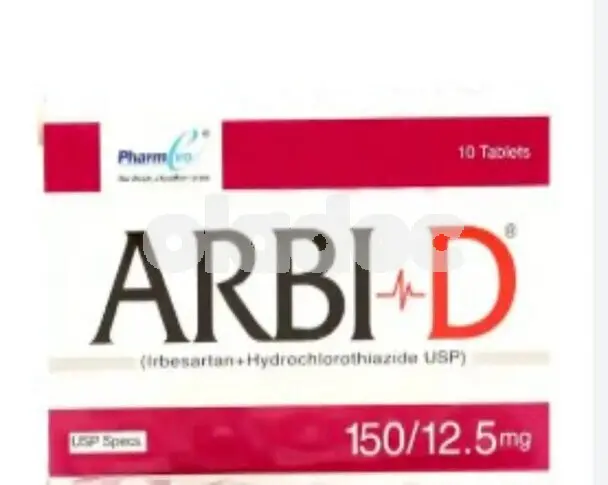
About Arbi D Tablet 150/12.5mg
Arbi D 150/12.5mg is a combination blood pressure tablet containing an ARB and a thiazide diuretic.
Arbi D Tablet 150/12.5mg Uses
- Treats hypertension in adults whose blood pressure is not adequately controlled by irbesartan or hydrochlorothiazide alone.
- Used as a starting combination dose for patients initiating dual-mechanism antihypertensive therapy.
- Reduces the risk of stroke and cardiovascular events in hypertensive adults.
- Used in hypertensive patients with Type 2 diabetes who require both blood pressure control and early renal protection.
Arbi D Tablet 150/12.5mg Benefits
- Combines two complementary mechanisms: irbesartan blocks the renin-angiotensin system while hydrochlorothiazide reduces blood volume through increased urine output.
- The 150/12.5mg dose serves as an entry-level combination dose that can be escalated based on blood pressure response.
- Single daily tablet improves adherence compared to taking two separate antihypertensive medications.
- Irbesartan confers renal-protective benefits independent of blood pressure lowering in diabetic patients.
- Well-established clinical safety record at the 150/12.5mg combination dose.
What Experts Say
Cardiologists recognize the Irbesartan-Hydrochlorothiazide combination as a clinically validated strategy for patients with hypertension not controlled by a single agent. At the 150/12.5mg dose, Arbi D represents the starting point of combination therapy, providing initial dual-mechanism blood pressure reduction while maintaining a manageable side-effect profile.
Irbesartan blocks angiotensin II receptors, preventing vasoconstriction and aldosterone release, while hydrochlorothiazide promotes sodium and water excretion through the kidney, reducing circulating blood volume. These two pathways are complementary, and combining them at lower individual doses often achieves better blood pressure control than maximizing either drug alone.
Nephrologists favor irbesartan specifically in diabetic hypertensive patients because ARBs have demonstrated renal-protective effects independent of blood pressure lowering, particularly in slowing the progression of diabetic nephropathy. The 150/12.5mg dose makes Arbi D an appropriate early-intervention option in hypertensive diabetic patients with signs of early renal involvement.
Drug Class
- Angiotensin II receptor blocker (ARB) and thiazide diuretic combination
Arbi D Tablet 150/12.5mg Uses in Urdu
Arbi D 150/12.5mg ایک مشترکہ بلڈ پریشر ٹیبلٹ ہے جو ہائی بلڈ پریشر کے علاج کے لیے استعمال ہوتی ہے۔
- ہائی بلڈ پریشر کو کنٹرول کرتی ہے
- ذیابیطسی گردے کی بیماری سے بچاتی ہے
Arbi D Tablet 150/12.5mg formula
- Irbesartan + Hydrochlorothiazide
How to use Arbi D Tablet 150/12.5mg?
- Take one Arbi D 150/12.5mg tablet once daily, with or without food.
- Take the tablet at the same time each day to maintain consistent blood levels. Morning dosing is preferred to minimize nighttime diuresis from the hydrochlorothiazide component.
- Swallow the tablet whole. Do not crush or split it.
- If a dose is missed, take it as soon as you remember on the same day. Skip the missed dose if the next dose is due. Do not double the dose.
- Continue taking Arbi D even if you feel well. Stopping antihypertensive therapy without medical advice can cause a rebound rise in blood pressure.
Drug Interactions
Arbi D 150/12.5mg may interact with several drug classes. Inform your doctor of all medications you are taking before starting this combination.
- NSAIDs (ibuprofen, diclofenac, naproxen): Reduce the antihypertensive effect of irbesartan and increase the risk of renal impairment. Avoid regular NSAID use during therapy.
- Potassium-sparing diuretics and potassium supplements: Concurrent use with irbesartan significantly raises the risk of hyperkalemia. Avoid unless specifically prescribed.
- Lithium: Hydrochlorothiazide reduces lithium excretion, increasing lithium toxicity risk. Close monitoring of lithium levels is required.
- Antidiabetic agents (insulin, metformin, glipizide): Hydrochlorothiazide may impair glucose tolerance. Monitor blood sugar more frequently if you have diabetes.
Risks and warnings
- Pregnancy: Arbi D is strictly contraindicated during the second and third trimesters of pregnancy. ARBs can cause fetal kidney damage and neonatal death. Switch to a safe alternative immediately upon confirmed pregnancy.
- Hyperkalemia: Irbesartan can raise potassium levels. Avoid potassium supplements or potassium-sparing diuretics unless monitored by a physician.
- Renal impairment: Use with caution in patients with kidney disease. Dual blockade of the renin-angiotensin system increases the risk of acute kidney injury.
- Electrolyte imbalance: Hydrochlorothiazide can lower potassium and sodium levels. Monitor electrolytes periodically.
- Allergy to sulfonamide drugs: Patients allergic to sulfonamide antibiotics may also have cross-sensitivity to hydrochlorothiazide. Inform your physician of any sulfa drug allergy.
Arbi D Tablet 150/12.5mg Side Effects
Arbi D 150/12.5mg is well tolerated in most patients. Side effects at the starter combination dose are generally mild and often transient.
- Dizziness or lightheadedness, especially when standing up quickly (orthostatic hypotension)
- Increased frequency of urination from the diuretic component, more noticeable in the first few weeks
- Mild fatigue or headache during early treatment
- Muscle cramps related to changes in electrolyte balance
The following effects are less common and require medical review.
- Hypokalemia (low potassium): muscle weakness, cramping, or irregular heartbeat
- Elevated blood urea or creatinine indicating renal stress
- Angioedema (swelling of the face, lips, or throat) — stop use immediately and seek emergency care
Storage Conditions
- Store below 25°C in a dry location. Protect the tablet pack from moisture, as the hydrochlorothiazide component is particularly sensitive to humidity and can degrade when exposed to damp conditions.
- Store in the original sealed box. Do not transfer tablets to an unsealed pill organizer for extended periods.
- Keep away from heat and direct sunlight.
- Keep out of reach of children.
- Check the expiry date on the packaging before use and do not use any tablets from a pack that has expired.