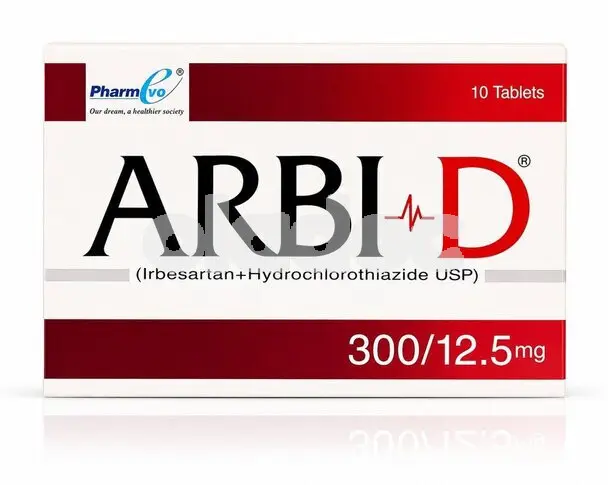
About Arbi D Tablet 300/12.5mg
Arbi D 300/12.5mg is a combination tablet for hypertension and diabetic nephropathy with a higher ARB dose.
Arbi D Tablet 300/12.5mg Uses
- Treats moderate to severe hypertension in adults who require the maximum dose of irbesartan combined with a diuretic.
- Indicated for Type 2 diabetic patients with hypertension and nephropathy, where higher-dose irbesartan provides additional renal protection.
- Reduces the risk of progression to end-stage renal disease in patients with diabetic nephropathy.
- Used when blood pressure control is not achieved with irbesartan 150mg plus hydrochlorothiazide 12.5mg.
Arbi D Tablet 300/12.5mg Benefits
- Irbesartan 300mg represents the maximum ARB dose, delivering the strongest angiotensin II receptor blockade in this drug class.
- The 300mg irbesartan dose has specific evidence from the IDNT clinical trial for slowing progression of Type 2 diabetic nephropathy.
- Hydrochlorothiazide 12.5mg provides complementary volume reduction without excessive electrolyte disturbance at this dose.
- Single once-daily tablet simplifies a complex antihypertensive regimen for better long-term adherence.
- Proven cardiovascular risk reduction in hypertensive diabetic patients with established or early-stage renal involvement.
What Experts Say
Cardiologists prescribe Arbi D 300/12.5mg for patients who have not achieved target blood pressure on the lower 150mg dose or on monotherapy. Irbesartan 300mg is the maximum recommended dose, delivering the strongest ARB-class blood pressure reduction in this drug combined with the sustained diuretic effect of hydrochlorothiazide 12.5mg.
The 300mg dose of irbesartan is specifically indicated for patients with Type 2 diabetic nephropathy, where clinical trials including the IDNT study demonstrated significant reduction in the risk of progression to end-stage renal disease. Maintaining blood pressure targets in this population serves the dual goal of protecting both cardiovascular and renal function simultaneously.
Cardiologists emphasize that patients on irbesartan 300mg require periodic monitoring of serum potassium and renal function, as higher-dose ARB therapy can elevate potassium levels, particularly in patients with reduced kidney function or those taking potassium-sparing diuretics. Blood tests at treatment initiation and at regular intervals are standard clinical practice.
Drug Class
- Angiotensin II receptor blocker (ARB) and thiazide diuretic combination
Arbi D Tablet 300/12.5mg Uses in Urdu
Arbi D 300/12.5mg ایک زیادہ طاقت والی مشترکہ ٹیبلٹ ہے جو شدید ہائی بلڈ پریشر اور ذیابیطسی گردے کی بیماری کے علاج کے لیے استعمال ہوتی ہے۔
- درمیانے سے شدید ہائی بلڈ پریشر کو کنٹرول کرتی ہے
- ذیابیطسی نیفروپیتھی کا علاج کرتی ہے
- گردے کو مزید نقصان سے بچاتی ہے
Arbi D Tablet 300/12.5mg formula
- Irbesartan + Hydrochlorothiazide
How to use Arbi D Tablet 300/12.5mg?
- Take one Arbi D 300/12.5mg tablet once daily, with or without food, at the same time each day.
- Morning dosing is preferred to avoid disruption from increased urination caused by the diuretic component during the night.
- Swallow the tablet whole with water. Do not crush, break, or chew.
- Do not miss doses — consistent daily intake is essential for maintaining blood pressure control and the renal-protective effect of irbesartan in diabetic patients.
- Attend all scheduled blood pressure checks, blood tests, and physician reviews during treatment to monitor renal function and electrolyte levels.
Drug Interactions
Arbi D 300/12.5mg shares the same interaction profile as lower-dose combinations but requires closer monitoring due to the higher irbesartan dose. Inform your physician of all medications you are taking.
- NSAIDs (ibuprofen, naproxen, celecoxib): Attenuate the antihypertensive effect and increase the risk of acute kidney injury when combined with higher-dose ARBs.
- Potassium supplements, salt substitutes, and potassium-sparing diuretics: At the 300mg irbesartan dose, the risk of dangerous hyperkalemia from concurrent potassium-raising agents is significantly higher.
- Allopurinol: Hydrochlorothiazide can raise uric acid levels, potentially worsening gout in patients on allopurinol therapy.
- Antidiabetic medications: Monitor blood glucose carefully, as hydrochlorothiazide may impair glucose tolerance.
Risks and warnings
- Pregnancy: Strictly contraindicated in the second and third trimester. Irbesartan 300mg can cause fetal harm and must be discontinued immediately if pregnancy is confirmed.
- Hyperkalemia: At the 300mg dose, monitoring of serum potassium is essential. Risk is higher in patients with renal impairment or those taking potassium-containing products.
- Renal function: Monitor kidney function before and periodically during treatment. Dose adjustment may be required if renal function deteriorates.
- Dehydration and low sodium: The diuretic component can reduce blood volume. Ensure adequate hydration, particularly during hot weather, fever, or vomiting.
- Hypotension: Starting this dose in volume-depleted patients may cause excessive blood pressure lowering. Correct volume depletion before initiating treatment.
Arbi D Tablet 300/12.5mg Side Effects
Arbi D 300/12.5mg is generally well tolerated but carries a slightly higher side-effect profile than the lower 150/12.5mg dose due to the increased irbesartan component.
- Dizziness, especially with the first dose or after a missed dose is resumed
- Increased urination from the diuretic, typically most noticeable in the first month of treatment
- Fatigue or back pain, reported more commonly with the 300mg irbesartan dose
- Dry cough — less common with ARBs than ACE inhibitors but reported in some patients
The following effects are less common but clinically significant.
- Elevated serum potassium (hyperkalemia) requiring dietary potassium restriction or dose review
- Deterioration in kidney function, particularly in patients with pre-existing renal disease
- Angioedema (swelling of the face, tongue, or throat) — stop immediately and seek emergency care
Storage Conditions
- Store below 30°C away from direct sunlight. Exposure to heat can degrade both active components over time, especially in the Pakistani climate during summer months.
- Keep in the original blister packaging. The blister material protects each tablet individually from both light and ambient humidity.
- Do not leave the medicine in a vehicle, as car interiors can reach temperatures far above 30°C when parked in the sun.
- Keep out of reach of children.
- Inspect the blister before use. Do not take a tablet from a blister that appears swollen, discolored, or has been exposed to moisture.