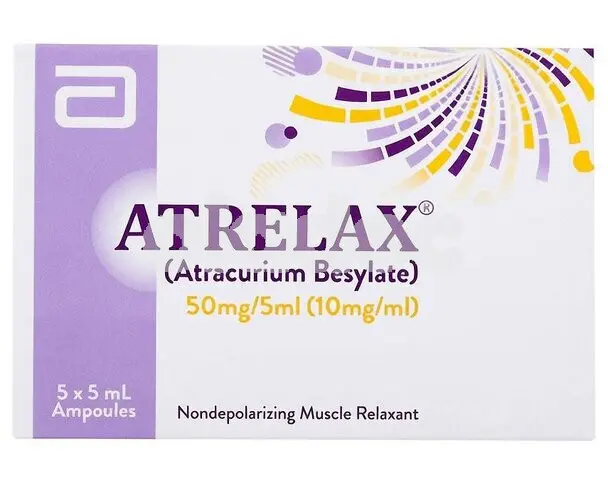
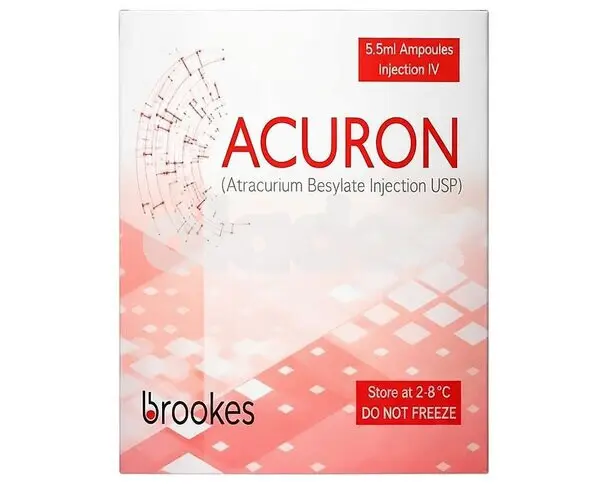
About Atrelax injection 50mg
Anesthesia muscle relaxant injection given by doctors during surgery.
Atrelax Injection Uses
- Muscle relaxation during general anesthesia
- Helps with tracheal intubation before surgery
- Maintains paralysis during ICU ventilation
Atrelax Injection Benefits
- Acts quickly for smooth intubation
- Wears off in a predictable time
- Allows precise dosing control in long surgeries
Atrelax injection is given only in hospitals by anesthesiologists. Major hospitals in Lahore, Karachi, Islamabad, and Rawalpindi use it for surgery.
Atracurium besylate blocks nerve signals to muscles for a short time, letting the surgical team place a breathing tube safely.
Its effect wears off on its own, and anesthesiologists monitor breathing and heart rate throughout the procedure.
Drug Class
- Neuromuscular blocking agent
- Nondepolarizing muscle relaxant
Atrelax Injection Uses in Urdu
- سرجری کے دوران عام بے ہوشی میں پٹھوں کو ڈھیلا کرنے کے لیے
- آپریشن سے پہلے سانس کی نالی میں ٹیوب لگانے میں مدد کے لیے
- آئی سی یو میں مصنوعی تنفس کے دوران پٹھوں کو ساکت رکھنے کے لیے
- لمبی سرجریوں میں جسم کو ساکت رکھنے کے لیے
Atrelax injection 50mg formula
How to use Atrelax injection 50mg?
- Given only by a doctor or anesthesiologist as an intravenous injection
- Dose is calculated based on body weight and the length of surgery
- Administered inside a hospital or operating theater with monitoring equipment in place
- Never self administered or used outside a supervised medical setting
- Additional doses may be given during longer procedures as needed
Drug Interactions
- Volatile anesthetics: Agents like isoflurane and sevoflurane can prolong the muscle relaxing effect of atracurium.
- Aminoglycoside antibiotics: Drugs like gentamicin can increase neuromuscular blockade when given together.
- Other neuromuscular blockers: Combining with other muscle relaxants can intensify or unpredictably alter the effect.
- Magnesium sulfate: Can enhance and prolong the muscle relaxing effect of atracurium.
Risks and warnings
- Breathing support required: Atrelax injection paralyzes the muscles used for breathing, so mechanical ventilation is needed until the effect wears off.
- Allergic reactions: Rare but serious allergic reactions, including bronchospasm and low blood pressure, have been reported with atracurium.
- Not for use without anesthesia monitoring: This injection must only be given alongside anesthesia and full patient monitoring.
- Caution in asthma: Patients with a history of asthma may be more prone to histamine related reactions.
- Electrolyte imbalance risk: Conditions like low potassium or magnesium can change how the body responds to the drug.
Side Effects
- Low blood pressure
- Flushing of the skin
- Slow or fast heart rate
- Wheezing or bronchospasm
- Skin rash or hives
- Prolonged muscle weakness after surgery
- Injection site reaction
Storage Conditions
Store Atrelax injection in a refrigerator between 2 and 8 degrees Celsius. Keep the ampoules in their original box away from light. Do not freeze and discard any unused solution once opened.