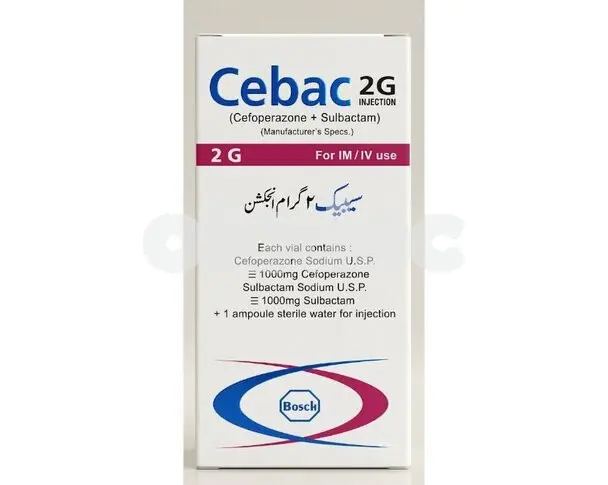
About Cebac Injection 2gm
Cebac Injection 2gm is a combination antibiotic containing cefoperazone and sulbactam. It is used in hospitals to treat moderate
Cebac Injection 2gm Uses
- Treatment of lower respiratory tract infections such as pneumonia and bronchitis
- Treatment of urinary tract infections
- Treatment of intra abdominal infections including peritonitis and abscesses
- Treatment of skin and soft tissue infections
- Treatment of bone and joint infections
- Treatment of gynecological infections including endometritis and pelvic inflammatory disease
- Treatment of septicemia and bloodstream infections
- Prevention of infection during and after certain surgical procedures
Cebac Injection 2gm Benefits
- Combines a broad spectrum cephalosporin with a beta lactamase inhibitor for wider bacterial coverage
- Effective against many resistant bacterial strains that produce beta lactamase enzymes
- Works against both gram positive and gram negative bacteria
- Suitable for fast treatment of serious hospital acquired infections
- Reduces the risk of treatment failure in mixed bacterial infections
What Experts Say
Doctors often combine cefoperazone with sulbactam because many bacteria have become resistant to plain cephalosporins. Sulbactam blocks the beta lactamase enzyme that bacteria use to break down antibiotics, which allows cefoperazone to keep destroying the bacterial cell wall.
Clinicians usually reserve this combination for infections that need strong hospital based treatment. It is common in intensive care units and surgical wards where the risk of resistant bacteria is higher, and it is given only after checking kidney and liver function.
Experts stress that antibiotics like this one should never be used without a proper diagnosis. Overuse or incomplete dosing can encourage antibiotic resistance, which is a growing concern in Pakistan. Completing the full prescribed course gives the best chance of full recovery.
Drug Class
- Third generation cephalosporin antibiotic combined with a beta lactamase inhibitor
Cebac Injection 2gm Uses in Urdu
- سانس کی نالی کے انفیکشن جیسے نمونیا کے علاج کے لیے
- پیشاب کی نالی کے انفیکشن کے علاج کے لیے
- پیٹ کے اندرونی انفیکشن جیسے پیریٹونائٹس کے علاج کے لیے
- جلد اور نرم بافتوں کے انفیکشن کے علاج کے لیے
- ہڈیوں اور جوڑوں کے انفیکشن کے علاج کے لیے
- خواتین کے تولیدی نظام کے انفیکشن کے علاج کے لیے
- خون میں بیکٹیریا کے پھیلاؤ یعنی سیپسس کے علاج کے لیے
- سرجری کے دوران یا بعد میں انفیکشن سے بچاؤ کے لیے
Cebac Injection 2gm formula
- Cefoperazone Sodium 1000mg + Sulbactam Sodium 1000mg
How to use Cebac Injection 2gm?
- Cebac Injection 2gm is given only by a doctor or trained healthcare staff in a hospital or clinic setting
- The powder is reconstituted with sterile water or a compatible IV fluid before use
- It can be given as a slow intravenous injection, an intravenous infusion, or a deep intramuscular injection
- Dose and frequency depend on the severity of infection, patient weight, and kidney function
- Typical adult dosing ranges from 2 to 4 grams per day divided into two doses, adjusted by the treating doctor
- The full prescribed course should be completed even if symptoms improve early
- This injection should never be self administered at home
Drug Interactions
- Alcohol: Can cause flushing, headache, and a rapid heartbeat when consumed during treatment.
- Anticoagulants: Combined use with warfarin or heparin can increase the risk of bleeding.
- Aminoglycosides: Mixing in the same IV line can reduce the effectiveness of both drugs and should be avoided.
- Probenecid: May increase blood levels of cefoperazone by slowing its elimination.
- Live Bacterial Vaccines: Antibiotic therapy can reduce the effectiveness of vaccines such as the typhoid vaccine.
- Other Nephrotoxic Drugs: Using it alongside other kidney affecting medicines can raise the risk of kidney injury.
Risks and warnings
- Allergy Risk: People with a known allergy to penicillin or cephalosporin antibiotics may have a serious allergic reaction to this injection.
- Kidney Or Liver Disease: Dose adjustment is needed in patients with reduced kidney or liver function, since the drug is cleared through these organs.
- Bleeding Risk: Cefoperazone can lower vitamin K levels and increase bleeding tendency, especially in malnourished or critically ill patients.
- Pregnancy And Breastfeeding: This injection should only be used in pregnancy or while breastfeeding if the doctor considers it clearly necessary.
- Superinfection: Prolonged use can lead to overgrowth of resistant bacteria or fungal infections such as oral thrush.
- Alcohol Use: Consuming alcohol during and shortly after treatment may cause flushing, nausea, and a fast heartbeat.
Cebac Injection 2gm Side Effects
- Pain, redness, or swelling at the injection site
- Nausea or vomiting
- Diarrhea
- Skin rash or itching
- Mild fever
- Abnormal taste in the mouth
- Elevated liver enzymes on blood tests
- Low white blood cell count
- Vaginal itching or yeast infection
- Severe allergic reaction with swelling of the face, lips, or throat
- Severe watery or bloody diarrhea from Clostridioides difficile infection
- Unusual bleeding or bruising
Storage Conditions
- Unopened vials of Cebac Injection 2gm should be stored at room temperature below 30 degrees Celsius, away from direct sunlight, which is important during Pakistan's hot summer months.
- Keep the vial in its original carton to protect it from light and moisture.
- Once reconstituted with sterile water or a compatible fluid, the solution should be used promptly and any leftover discarded as per hospital protocol.
- Reconstituted solution can be kept refrigerated between 2 and 8 degrees Celsius for a limited time if not used immediately, as advised by the hospital pharmacy.
- The reconstituted solution should never be frozen.
- This injection must be stored out of reach of children and handled only within a clinical setting.