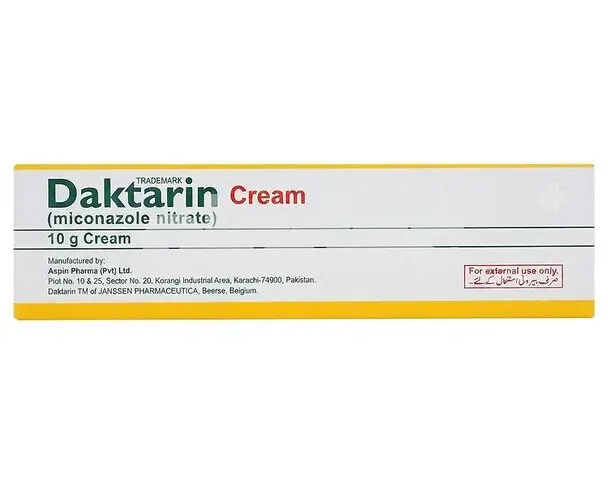
About Daktarin Cream 2%
An antifungal cream with miconazole nitrate that treats ringworm, athlete's foot and yeast skin infections.
Uses
- Treats ringworm infections on the skin, including tinea corporis, tinea cruris and tinea pedis
- Manages athlete's foot caused by fungal overgrowth between the toes
- Controls jock itch and other fungal rashes in warm, moist body folds
- Treats pityriasis versicolor, a fungal condition causing patchy skin discoloration
- Helps clear cutaneous candidiasis, a yeast infection of the skin
Benefits
- Works directly on the skin, so very little medicine enters the bloodstream
- Eases itching, redness and scaling within the first week of regular use
- Covers a broad range of fungal species, including yeasts and dermatophytes
- Simple once or twice daily application fits easily into a daily routine
- Available without a prescription for most mild fungal skin infections
What Experts Say
Dermatologists commonly recommend miconazole nitrate as a first line option for uncomplicated fungal skin infections. It belongs to a well studied class of antifungal drugs called imidazoles. Clinical guidelines note that topical azoles show good cure rates for tinea infections when applied consistently for the full treatment course.
Health experts stress that early treatment prevents fungal infections from spreading to nearby skin folds or to other family members through shared towels and clothing. A study published in medical literature found that miconazole reduces fungal cell wall stability by blocking ergosterol production, which weakens the fungus until it can no longer survive.
Pharmacists often advise patients to keep the affected area clean and dry alongside cream use, since moisture encourages fungal growth. Most doctors recommend continuing treatment for one to two weeks after symptoms clear to prevent early relapse. This approach lowers the chance of the infection returning.
Drug Class
- Imidazole antifungal
- Topical antifungal agent
Daktarin Cream 2% Uses in Urdu
- پھپھوندی (فنگس) والے جِلدی انفیکشنز جیسے داد کا علاج
- ایتھلیٹ فٹ یعنی پیروں کی انگلیوں کے درمیان ہونے والی فنگل انفیکشن کا علاج
- رانوں اور جسم کی نمی والی جگہوں پر ہونے والی خارش یعنی جاک اِچ میں استعمال
- جِلد کے رنگ میں تبدیلی پیدا کرنے والی پھپھوندی یعنی پیٹریاسس ورسیکلر کے لیے
- جِلد پر خمیری انفیکشن یعنی کینڈیڈیاسس کو ٹھیک کرنے میں مددگار
Daktarin Cream 2% formula
How to use Daktarin Cream 2%?
- Wash and dry the affected area before applying the cream
- Apply a thin layer to the affected skin once or twice daily
- Gently rub the cream in until it is fully absorbed
- Continue using for the full course, usually two to six weeks, even if symptoms improve early
- Wash hands after application unless the hands are being treated
Drug Interactions
- Warfarin: Miconazole absorbed through the skin may rarely enhance the blood thinning effect of warfarin
- Other Topical Products: Avoid applying other creams or ointments on the same area at the same time
- Corticosteroid Creams: Combining without medical advice may mask signs of a worsening infection
Risks and warnings
- Pregnancy: Use only if clearly needed and advised by a doctor, especially during early pregnancy
- Breastfeeding: Avoid applying the cream directly on or near the nipple area
- Broken Skin: Do not use on open wounds or severely broken skin without medical advice
- Eye Contact: Avoid contact with eyes and mucous membranes
- Allergy History: Do not use if there is a known allergy to miconazole or other imidazole antifungals
- Children: Use in young children only under a doctor's guidance
Daktarin Cream 2% Side Effects
- Mild burning or stinging at the application site
- Skin redness or irritation
- Itching that was not present before treatment
- Dryness or peeling of the treated skin
- Contact dermatitis in sensitive individuals
- Allergic reactions such as rash, swelling or severe itching, though rare
Storage Conditions
- Store below 25°C in a cool, dry place
- Keep the tube tightly closed after each use
- Keep out of reach of children
- Do not freeze
- Discard the cream after the expiry date printed on the pack