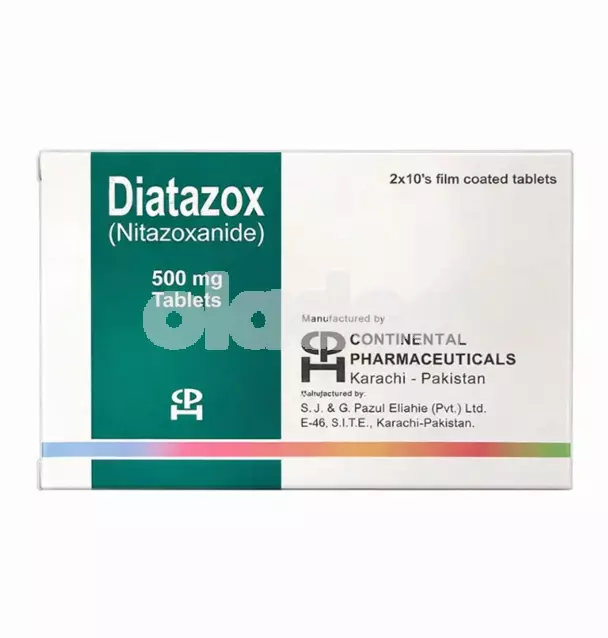
About Diatazox Tablet 500mg
Diatazox is broad-spectrum anti-protozoal medicine that fights infections caused by parasites, bacteria, and certain viruses.
Uses of Diatazox Tablet 500mg
- Diatazox is used to treat stomach and gut infections caused by parasites like Giardia and Cryptosporidium.
- It helps stop diarrhea and reduce inflammation in the gut by removing the parasites causing the problem.
- It can treat intestinal worms such as Ascaris, which may cause stomach pain and bloating.
- The medicine may be given when other treatments haven’t worked and the infection is still present.
- It treats infections caused by Entamoeba histolytica.
- It can help with traveler’s diarrhea caused by parasitic infections.
- Sometimes it is used for gut infections caused by certain bacteria, like Clostridium difficile.
- It helps restore normal gut function after a parasitic infection.
- Your doctor may also recommend it for other parasitic infections not mentioned here.
Diatazox Tablet 500mg formula
How to use Diatazox Tablet 500mg?
- Take the tablet by mouth with a full meal, as food helps the medicine work more effectively.
- Swallow the tablet whole with water and avoid breaking, crushing, or chewing it.
- Take one tablet in the morning and one in the evening, keeping a gap of about 12 hours between doses.
- Complete the full 3-day course as prescribed and do not skip any doses.
- Avoid alcohol during the treatment period, as it may reduce the effectiveness of the medicine.
- Children below 12 years of age should use the oral suspension instead of this tablet form.
- Always follow your doctor’s instructions and do not adjust the dose on your own.
Drug Interactions
- Anticoagulants such as Warfarin may have increased levels when taken with Nitazoxanide, which can raise the risk of bleeding. It is important to monitor this combination closely.
- Using Baricitinib together with Nitazoxanide is not recommended because it can lead to higher drug levels and potential side effects.
- Valproate and benzodiazepines may compete for protein binding when taken with Nitazoxanide, possibly increasing sedation or toxicity. Careful monitoring is advised.
- Cisplatin and Bumetanide may have altered levels when used with Nitazoxanide due to protein binding interactions, so they should be used with caution.
- Clindamycin has a minor interaction with Nitazoxanide related to protein binding, which is generally low risk but monitoring is still recommended.
- Combining Nitazoxanide with immunosuppressive agents may increase the risk of infection, so it is best to avoid this combination whenever possible.
- There are no significant food interactions known for Nitazoxanide.
- Taking Nitazoxanide with food is highly recommended because it can increase the absorption of the medicine by up to two times.
- Alcohol should be avoided during the course of treatment, as it can weaken the immune system and reduce the effectiveness of the medication.
Risks and warnings
- Patients with HIV or a weakened immune system may experience reduced effectiveness of this medicine, especially in severe cases.
- During pregnancy and breastfeeding, this medicine should only be used when clearly needed and under proper medical supervision.
- Elderly patients may require closer monitoring during treatment, as age-related kidney or liver conditions can affect how the medicine works.
- Nitazoxanide may interact with highly protein-bound drugs because it competes for protein binding. Always inform your doctor about all medicines you are currently taking, especially warfarin.
- This medicine should not be used for the prevention of parasitic infections and is intended for treatment purposes only.
Side Effects of Diatazox Tablet
- Gastrointestinal symptoms such as stomach pain, nausea, loose stools, bloating, or indigestion.
- Dizziness and headaches.
- Changes in urine color, which may appear pale yellow or slightly discolored.
- Dry mouth or increased thirst.
- Allergic reactions including hives, swelling of the face, lips, or throat, or difficulty breathing.
- Central nervous system symptoms such as unusual tremors, trouble sleeping, or loss of sensation.
- Signs of liver problems including yellowing of the skin or eyes, dark urine, or severe fatigue.
- Rapid heartbeat or elevated blood pressure.
Storage Conditions
- Store the medicine at room temperature, ideally between 20°C and 25°C.
- Keep it away from direct sunlight, heat sources, and areas with high humidity.
- Do not store the medicine in a bathroom or near a kitchen sink, as moisture can affect its quality.