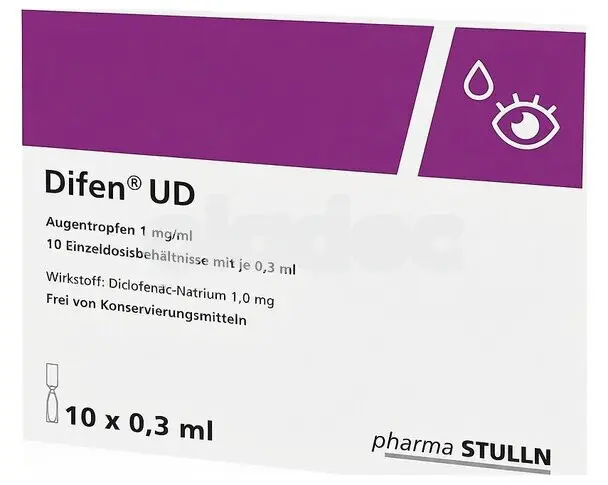
About Difen-Stulln UD Drops 0.10%
Preservative-free unit-dose eye drops for pain and inflammation after eye surgery.
Difen-Stulln UD Eye Drops Uses
- Pain and inflammation after cataract surgery
- Swelling and discomfort following other eye operations
- Prevention of miosis (pupil constriction) during eye surgery
- Post-operative eye pain after corneal refractive procedures
- Short term relief of eye irritation caused by minor injury, when prescribed by an eye specialist
Difen-Stulln UD Eye Drops Benefits
- Preservative-free unit-dose vials lower the risk of irritation in sensitive eyes
- Fast acting relief from post-surgical eye discomfort
- Suitable for patients who wear contact lenses or have preservative sensitivity
- Convenient single-use vials reduce contamination risk between doses
- Recovery after eye surgery is often smoother and more comfortable with consistent, correctly timed use
What Experts Say
Ophthalmologists prescribe diclofenac sodium eye drops to control the inflammation that naturally follows eye surgery. The medicine works by blocking prostaglandins, the chemicals responsible for pain, redness, and swelling in the eye tissue. Many eye specialists include it in the standard recovery plan after cataract removal or laser vision correction.
The unit-dose, preservative-free format is often recommended for patients with sensitive eyes or a history of dry eye disease. Preservatives like benzalkonium chloride, found in multi-dose bottles, can irritate the eye surface with repeated use. A single-use vial avoids this problem and lowers the risk of allergic reaction.
Experts advise using this product only under the guidance of an eye specialist, since incorrect use can mask an underlying eye infection. Patients are reminded not to let the dropper tip touch the eye or eyelid, which helps prevent contamination. Regular follow-up visits allow the doctor to track healing and adjust treatment if needed.
Drug Class
- Nonsteroidal anti-inflammatory drug (NSAID)
- Ophthalmic anti-inflammatory agent
- COX-1 and COX-2 inhibitor
ڈیفن اسٹولن یو ڈی ڈراپس کے استعمالات
- آنکھ کے آپریشن کے بعد درد اور سوجن کم کرنے کے لیے
- موتیا (کیٹاریکٹ) کی سرجری کے بعد آنکھ کی تکلیف میں آرام کے لیے
- آنکھ کی سرجری کے دوران پُتلی کے سکڑاؤ کو روکنے کے لیے
- لیزر یا کورنیا کے آپریشن کے بعد درد کم کرنے کے لیے
- ڈاکٹر کی ہدایت کے مطابق آنکھ کی معمولی جلن میں عارضی آرام کے لیے
Difen-Stulln UD Drops 0.10% formula
How to use Difen-Stulln UD Drops 0.10%?
- This eye drop is meant for use in the affected eye only, as directed by the eye specialist.
- One drop is usually placed in the operated eye up to four times a day, or as advised after surgery.
- The single-use vial is discarded after one application and never reused for a second dose.
- Washing hands before opening the vial helps lower the risk of eye infection.
- The dropper tip should not touch the eye, eyelid, or any other surface during use.
- Contact lenses are usually removed before applying the drops and reinserted only after the advised waiting period.
- Missed doses are applied as soon as remembered, unless the next dose is already close.
Drug Interactions
- Other Ophthalmic NSAIDs: Combining with another NSAID eye drop increases the risk of corneal side effects and is generally avoided.
- Topical Corticosteroid Eye Drops: Using both together can raise the risk of delayed corneal healing when used for extended periods.
- Anticoagulants (Warfarin): Systemic absorption is low, but caution is advised in patients on blood thinners undergoing eye surgery.
- Other Eye Medications: When more than one eye drop is prescribed, a gap of at least five minutes between products helps each medicine work as intended.
Risks and warnings
- Eye Infection Risk: This medicine can mask the signs of an existing eye infection, so it should only be used under medical supervision.
- Delayed Healing: NSAID eye drops may slow corneal healing in patients with certain pre-existing eye conditions.
- Corneal Complications: Rare cases of corneal thinning or perforation have been reported with prolonged NSAID eye drop use, especially after multiple eye surgeries.
- Contact Lens Use: Contact lenses are not recommended during treatment unless the eye specialist approves.
- Allergy History: Patients with a known allergy to aspirin or other NSAIDs need to inform their doctor before starting this product.
- Pregnancy and Breastfeeding: Using this medicine during pregnancy or breastfeeding is only advised when the treating doctor confirms it is necessary.
Difen-Stulln UD Eye Drops Side Effects
Most patients tolerate this eye drop well, though mild reactions can occur right after application.
- Temporary burning or stinging sensation
- Mild eye redness
- Blurred vision for a few minutes after application
- Watery eyes or itching
- Sensitivity to light
Serious reactions are uncommon but need prompt medical attention if they appear.
- Severe eye pain or vision changes that do not improve
- Signs of corneal damage such as persistent haze or a white spot on the eye
- Signs of an allergic reaction, including swelling around the eye or difficulty breathing
- Worsening redness or discharge that may point to infection
Storage Conditions
- Store at room temperature, away from direct sunlight.
- Keep unopened vials in their original foil pouch until ready to use.
- Discard each single-use vial immediately after one application.
- Keep out of reach of children.
- Avoid freezing the eye drops.