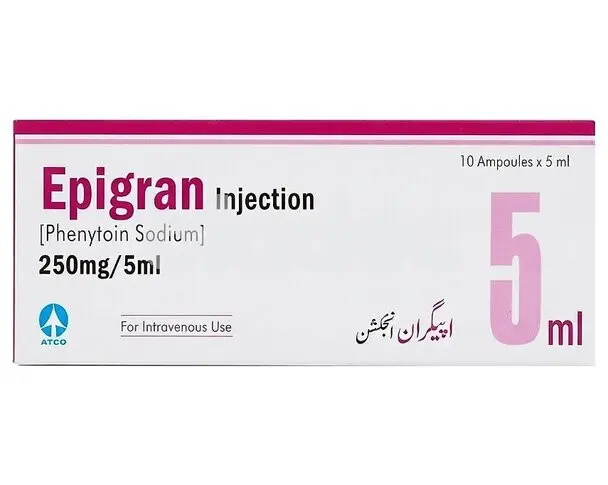
About Epigran Injection 250mg
Epigran Injection contains Phenytoin Sodium, a hydantoin anticonvulsant used to control seizures.
Epigran Injection 250mg Uses
- Treatment of status epilepticus (prolonged seizures)
- Control of generalized tonic-clonic (grand mal) seizures
- Prevention of seizures during and after neurosurgery
- Management of seizures when oral medicine cannot be taken
Epigran Injection 250mg Benefits
- Stops active seizures quickly when given intravenously
- Stabilizes overactive electrical signals in the brain
- Provides reliable seizure control in emergency and hospital settings
- Suitable for both short-term seizure control and longer maintenance therapy
What Experts Say
Physicians reserve intravenous phenytoin almost entirely for hospital and emergency settings, because the speed of the injection directly affects patient safety, and infusing it too quickly can trigger a sudden drop in blood pressure or a dangerous irregular heartbeat during administration.
Doctors closely monitor phenytoin blood levels throughout treatment, since the gap between an effective dose and a toxic one is narrow, and even small changes in dosing, missed monitoring, or interacting medicines can shift a patient from good seizure control into early signs of toxicity such as slurred speech.
Clinicians pay close attention to the injection site during and well after infusion, since any leakage of phenytoin into surrounding tissue can cause serious local damage, which is why hospitals generally prefer a dedicated, slow, saline-flushed intravenous line checked regularly by nursing staff.
Drug Class
- Hydantoin derivative
- Anticonvulsant / antiepileptic
- Sodium channel blocker
Epigran Injection 250mg Uses in Urdu
- مرگی کے دورے فوری طور پر روکنے کے لیے
- طویل یا مسلسل دورے (اسٹیٹس ایپی لیپٹیکس) کے علاج میں
- دماغی سرجری کے دوران اور بعد میں دوروں سے بچاؤ کے لیے
- ایسی صورت میں جب مریض منہ کے ذریعے دوا نہ لے سکے
Epigran Injection 250mg formula
How to use Epigran Injection 250mg?
- To be administered only by a qualified healthcare professional in a hospital setting
- Given as a slow intravenous injection or infusion, not intramuscularly, for emergency seizure control
- Injection rate should never exceed the limit set by the treating doctor to avoid heart and blood pressure effects
- Flush the IV line with normal saline before and after administration
- Do not mix with dextrose-containing solutions
- Continuous heart rate and blood pressure monitoring is required during administration
Drug Interactions
- Warfarin: Phenytoin can alter warfarin levels and change bleeding risk, requiring closer INR monitoring.
- Oral Contraceptives: Phenytoin reduces the effectiveness of hormonal birth control by speeding up its breakdown in the liver.
- Other Antiepileptics: Combining with valproate or carbamazepine can raise or lower phenytoin levels unpredictably.
- Azole Antifungals: Drugs like fluconazole can raise phenytoin blood levels and increase toxicity risk.
- Rifampicin: This antibiotic can lower phenytoin levels, reducing seizure control.
Risks and warnings
- Cardiac Effects: Rapid injection can cause low blood pressure and irregular heart rhythm, so continuous monitoring is required.
- Injection Site Reactions: Leakage outside the vein can cause severe tissue damage, sometimes called purple glove syndrome.
- Narrow Therapeutic Index: Blood levels must be monitored regularly, as toxicity can occur close to the effective dose.
- Serious Skin Reactions: Rare but severe skin reactions, including Stevens-Johnson syndrome, have been reported, and patients of South Asian descent may carry a genetic marker linked to higher risk.
- Pregnancy: Use only if clearly needed, as phenytoin is linked to birth defects; folic acid supplementation is usually advised.
Epigran Injection 250mg Side Effects
- Pain or swelling at the injection site
- Low blood pressure
- Irregular heartbeat
- Dizziness or drowsiness
- Slurred speech
- Nausea and vomiting
- Uncontrolled eye movements (nystagmus)
- Confusion
- Skin rash
- Gum swelling with long-term use
Storage Conditions
- Store below 25°C, away from direct light
- Do not freeze the ampoules
- Keep ampoules in their original box until ready for use
- Discard any unused solution remaining after opening; do not reuse
- Keep out of reach of children and away from self-administration by patients