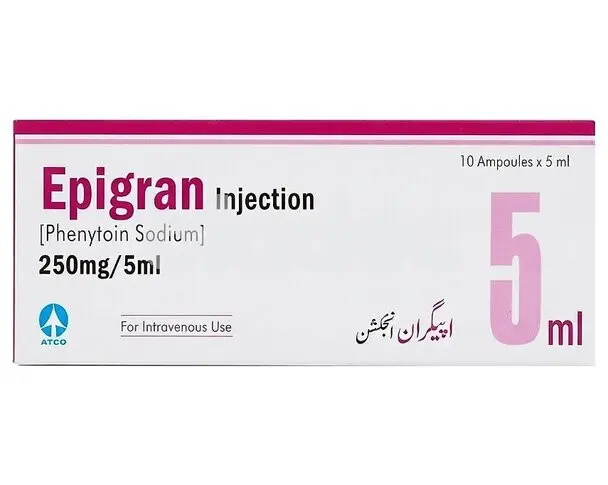
About Epigran Injection 250mg/5ml
Epigran Injection contains Phenytoin Sodium, an anticonvulsant used to control epileptic seizures.
Epigran Injection 250mg/5ml Uses
- Controls generalized tonic clonic (grand mal) seizures
- Manages status epilepticus as an emergency injection
- Prevents seizures during and after neurosurgery
- Used in hospital settings when oral phenytoin is not possible
Epigran Injection 250mg/5ml Benefits
- Provides fast seizure control when given intravenously
- Stabilizes nerve cell activity during an active seizure episode
- Available as a ready to use injection for emergency care
- Trusted anticonvulsant used in Pakistani hospitals for decades
Drug Class
- Hydantoin anticonvulsant
- Sodium channel blocker acting on neurons
What Experts Say
Phenytoin stabilizes voltage gated sodium channels in neurons, reducing the repetitive high frequency firing that triggers a seizure. This targeted action is what makes it effective for generalized tonic clonic seizures and status epilepticus, without causing the broad sedation that some other anticonvulsants produce.
Doctors across Pakistan give this injection slowly under cardiac monitoring, since a fast infusion can drop blood pressure and disturb heart rhythm. A loading dose is often followed by regular maintenance dosing, and blood levels are checked periodically because phenytoin has a narrow therapeutic window where too little medicine fails to control seizures and too much causes toxicity.
Epilepsy remains a common neurological condition across Pakistan, and status epilepticus is a true medical emergency that needs an injectable anticonvulsant when a patient cannot swallow tablets. Physicians reserve this injection for hospital and emergency use rather than routine home therapy, switching patients to oral maintenance treatment once seizures are brought under control.
Epigran Injection 250mg/5ml Uses in Urdu
- مرگی کے دوروں کو کنٹرول کرنے کے لیے
- سٹیٹس ایپی لیپٹیکس یعنی مسلسل دورے کی ایمرجنسی صورتحال میں
- دماغ کی سرجری کے دوران یا بعد میں دورے روکنے کے لیے
- جب مریض دوائی منہ سے نہ لے سکے تو ہسپتال میں انجیکشن کی صورت میں
Epigran Injection 250mg/5ml formula
How to use Epigran Injection 250mg/5ml?
- Given only by a doctor or trained nurse as a slow intravenous or intramuscular injection
- Never self administered at home
- Injection rate is carefully controlled to avoid a sudden drop in blood pressure
- Dose and frequency are decided by the treating physician based on seizure type and blood levels
Drug Interactions
- Warfarin: Phenytoin can change warfarin levels in the blood, raising bleeding or clotting risk.
- Oral Contraceptives: It can lower the effectiveness of birth control pills.
- Antifungal Drugs: Drugs like fluconazole can raise phenytoin blood levels and increase toxicity.
- Other Anticonvulsants: Combining with certain seizure medicines can raise or lower phenytoin levels unpredictably.
- Antacids: Some antacids can reduce phenytoin absorption when taken together.
Risks and warnings
- Cardiac Risk: Rapid injection can cause low blood pressure and abnormal heart rhythm, so it is given slowly with heart monitoring.
- Pregnancy: Use in pregnancy needs careful specialist assessment since phenytoin can affect the developing baby.
- Liver Or Kidney Disease: Dose adjustment is needed in patients with liver or kidney problems.
- Skin Reactions: Rare but serious skin reactions can occur and need immediate medical attention.
- Injection Site: Leakage outside the vein can damage surrounding tissue, a condition called purple glove syndrome.
Epigran Injection 250mg/5ml Side Effects
- Drowsiness and dizziness
- Unsteady walking or poor coordination
- Nausea and vomiting
- Low blood pressure during infusion
- Gum swelling with long term use
- Skin rash
- Slurred speech
- Irregular heartbeat with fast injection
- Confusion in older adults
Storage Conditions
- Store below 30°C, away from direct sunlight
- Keep the ampoule in its original box until ready to use
- Do not freeze
- Discard the ampoule if the solution looks cloudy or has crystals
- Keep out of reach of children