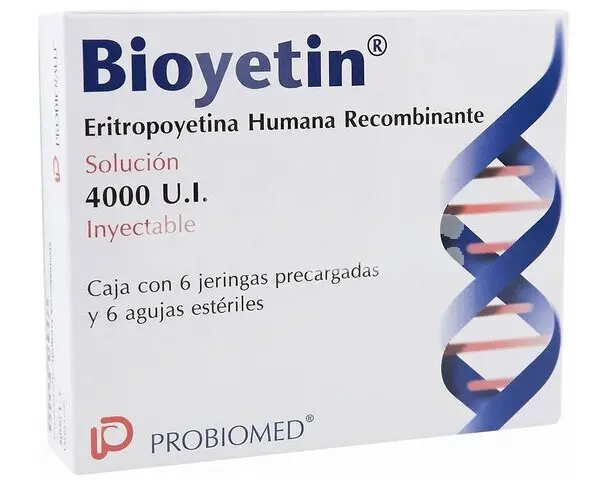
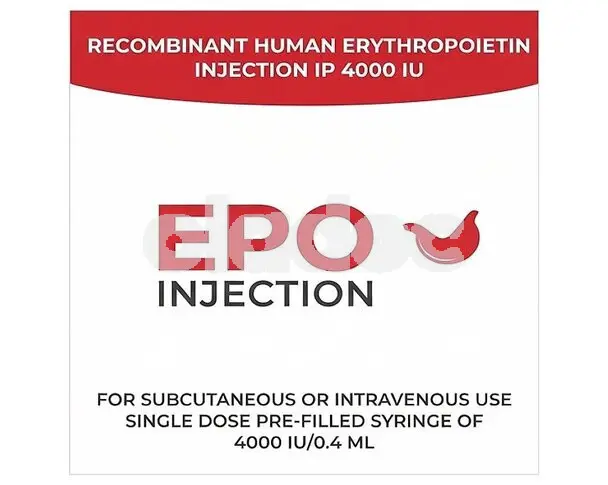
About Epotin Injection 4000IU
An injection that helps the body produce more red blood cells to treat anemia.
Epotin Injection Uses
- Anemia caused by chronic kidney disease, including in patients on dialysis
- Anemia related to certain cancer treatments
- Anemia in HIV patients on zidovudine therapy
- Reducing the need for blood transfusion before some planned surgeries
Epotin Injection Benefits
- Stimulates the bone marrow to produce more red blood cells
- Reduces fatigue and weakness linked to anemia
- Lowers the need for repeated blood transfusions in many patients
- Supports a better quality of life during long term kidney or cancer treatment
What Experts Say
Kidney specialists describe this injection as a manufactured copy of a hormone the body normally produces to signal bone marrow to make red blood cells. Patients with reduced kidney function often cannot make enough of this hormone naturally, which leads to persistent and sometimes severe anemia over time, along with fatigue and weakness.
Oncologists and nephrologists monitor hemoglobin levels closely during treatment, because raising the count too quickly has been linked to a higher risk of blood clots, stroke and heart related events in some patients. Blood pressure readings are usually tracked at every visit as well, since this treatment can raise blood pressure.
Experts stress that iron stores should be checked before and during treatment, since the medicine cannot build new red blood cells efficiently without adequate iron in the body. Regular blood tests help the care team fine tune the dose and catch any complications early, which supports safer long term use.
Drug Class
- Erythropoiesis stimulating agent
- Recombinant human erythropoietin
Epotin Injection Uses in Urdu
- گردوں کے مرض کی وجہ سے خون کی کمی کا علاج
- کینسر کے علاج کے دوران ہونے والی خون کی کمی میں افاقہ
- ایچ آئی وی کے علاج کے دوران خون کی کمی میں مددگار
- بعض آپریشنز سے پہلے خون کی منتقلی کی ضرورت کم کرنا
Epotin Injection 4000IU formula
How to use Epotin Injection 4000IU?
- This injection is given under the skin or into a vein, usually by a healthcare professional.
- The dose and frequency depend on body weight and current hemoglobin levels.
- Iron supplements are often prescribed alongside this injection for a better response.
- Regular blood tests are needed throughout treatment to guide dose changes.
Drug Interactions
- Iron Supplements: These are often needed alongside this injection, since low iron can reduce its effectiveness.
- Blood Pressure Medicines: Doses may need adjustment, since this injection can raise blood pressure.
- Heparin: Dialysis patients may need a heparin dose adjustment as blood counts rise.
- Other Bone Marrow Stimulants: Similar bone marrow stimulating agents are generally avoided in combination unless directed by a specialist.
Risks and warnings
- High Blood Pressure: This injection can raise blood pressure, so regular monitoring is required.
- Blood Clot Risk: There is an increased risk of blood clots, stroke and heart related events, especially if hemoglobin rises too quickly.
- Cancer Patients: Its use in certain cancers requires careful discussion, since it may affect tumor growth in some cases.
- Seizure History: Caution is needed in people with a history of seizures.
- Pregnancy And Breastfeeding: Continued use should only happen under close medical supervision.
Epotin Injection Side Effects
Common reactions to this injection are usually manageable and often improve as treatment continues.
- Headache
- Joint or muscle pain
- Nausea
- Mild fever
- Injection site discomfort
Some reactions are serious and require immediate medical evaluation.
- Signs of a blood clot, such as leg swelling or chest pain
- Sudden severe headache or vision changes, which may signal a hypertensive crisis
- Severe allergic reaction with swelling or difficulty breathing
- Unusual weakness that may indicate a rare drop in red blood cell production
Storage Conditions
- Store in a refrigerator between 2 and 8 degrees Celsius.
- Protect the vial from light by keeping it in its outer carton.
- Avoid freezing or shaking the vial vigorously.
- Keep out of reach of children.
- Discard the vial if the liquid appears cloudy or discolored.