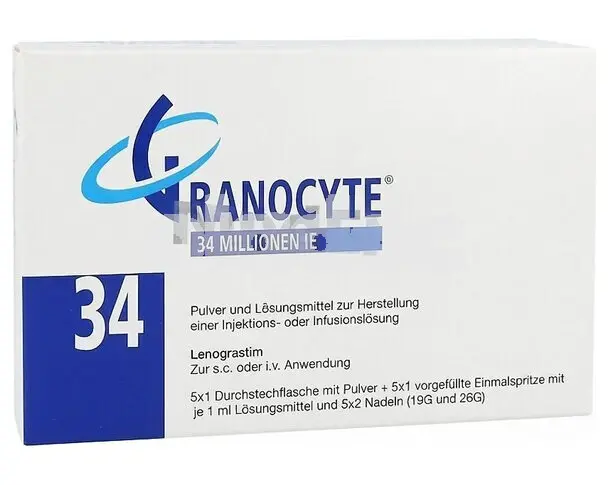
About Granocyte Injection 263mcg
An injectable therapy that helps your body produce more infection fighting white blood cells.
Granocyte Injection Uses
- Prevention of low white blood cell counts (neutropenia) after chemotherapy for cancers such as lymphoma, leukemia, and solid tumors
- Support during bone marrow transplant procedures
- Mobilization of peripheral blood stem cells before collection for transplant
- Management of chronic neutropenia in certain bone marrow disorders
Granocyte Injection Benefits
- A lower risk of serious infections during chemotherapy cycles
- A shorter duration of neutropenia so treatment schedules stay on track
- Faster recovery of white blood cell counts after a stem cell transplant
- Fewer hospital stays linked to chemotherapy related infections
What Experts Say
Oncologists rely on growth factor injections like this one to protect patients from dangerous drops in white blood cells during chemotherapy. Low white cell counts, known as neutropenia, leave the body vulnerable to infections that can delay or interrupt cancer treatment. A steady supply of healthy white blood cells allows patients to complete their planned chemotherapy cycles with fewer interruptions.
Doctors usually schedule this injection a day or two after a chemotherapy session, once the risk of low blood counts begins to rise. Regular blood tests during treatment help the care team confirm the medicine is working and decide when it is safe to stop the course. This approach keeps neutropenia related complications, including fever and hospital admission, to a minimum.
Because this is a specialized biologic medicine, it is administered only under close medical supervision in a hospital or clinic setting. Bone pain and mild flu like symptoms are common and usually manageable with simple pain relief. Any unusual reaction should be reported to the treating doctor right away.
Drug Class
- Colony Stimulating Factor
- Granulocyte Colony Stimulating Factor (G-CSF) Analog
- Hematopoietic Growth Factor
- Biologic Medicine
Granocyte Injection Uses in Urdu
- کیموتھراپی کے بعد سفید خون کے خلیات کی کمی کو دور کرنے کے لیے
- بون میرو ٹرانسپلانٹ کے دوران مدد کے لیے
- اسٹیم سیلز کو خون میں خارج کرنے کے عمل میں معاونت کے لیے
- انفیکشن سے بچاؤ کے لیے قوت مدافعت بڑھانے میں مدد
Granocyte Injection 263mcg formula
Available forms
- Injection (powder for reconstitution)
How to use Granocyte Injection 263mcg?
- This injection is given under the skin or into a vein by a trained healthcare professional.
- The dose and timing depend on body weight and the type of treatment being supported.
- Treatment usually starts a day or two after chemotherapy and continues until white blood cell counts recover.
- Blood tests are done regularly to guide how long the injections continue.
- The medicine should reach room temperature before administration, as advised by the healthcare provider.
Drug Interactions
- Chemotherapy medicines: This medicine should not be given in the 24 hours before or after cytotoxic chemotherapy since it can increase the sensitivity of rapidly dividing blood cells to those drugs.
- Lithium: Combined use may increase the release of white blood cells from the bone marrow, so blood counts need closer monitoring.
Risks and warnings
- Allergic Reactions: The medicine should be stopped and immediate care sought if swelling, rash, or breathing difficulty develops after the injection.
- Spleen Enlargement: Rarely, this medicine can enlarge the spleen, so sudden left sided abdominal pain should be reported right away.
- Sickle Cell Disease: People with sickle cell disorders need close monitoring since this medicine can trigger a sickle cell crisis.
- Pregnancy and Breastfeeding: This medicine should be used in pregnancy only if clearly needed, and a doctor should be consulted before breastfeeding.
- Bone Marrow Monitoring: Regular blood counts are required throughout treatment to track response and catch complications early.
Granocyte Injection Side Effects
This medicine can cause a range of side effects, though not everyone experiences them to the same degree.
- Bone or muscle pain
- Headache
- Low grade fever
- Nausea
- Fatigue or general weakness
- Injection site redness or discomfort
Some reactions are more serious and need urgent medical attention.
- Severe allergic reaction with swelling of the face, lips, or throat
- Sudden shortness of breath or chest pain
- Signs of an enlarged spleen, such as pain in the upper left abdomen
- Unusual bruising or bleeding
- Severe skin reactions with blistering or peeling
Storage Conditions
- Store in a refrigerator between 2 and 8 degrees Celsius.
- Keep the vial in its outer carton to protect it from light.
- Avoid freezing the injection at any point.
- Discard the vial if the solution looks cloudy or contains particles.
- Keep out of reach of children at all times.