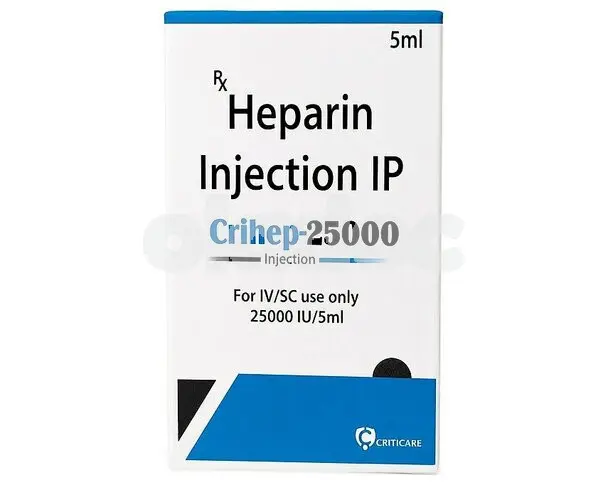
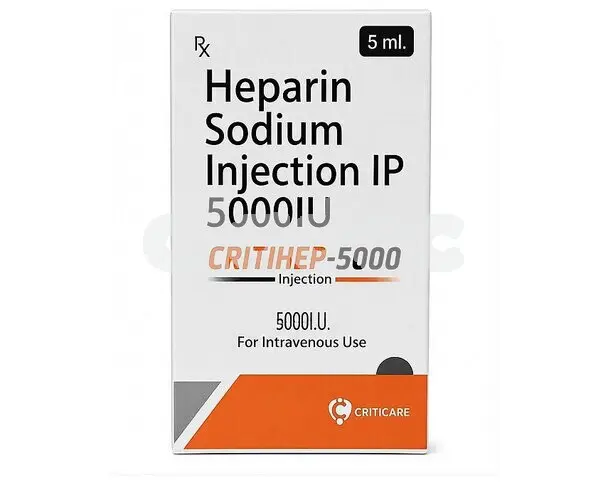
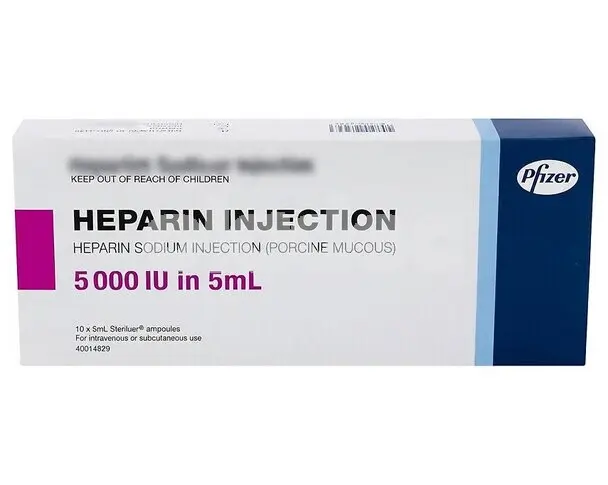
About Heparin Injection 25000 Units
High-strength anticoagulant injection used in hospitals to prevent and treat blood clots under supervision.
Heparin Injection Uses
- Treatment of deep vein thrombosis (DVT)
- Treatment of pulmonary embolism (PE)
- Prevention of blood clots during major surgery
- Anticoagulation during hemodialysis
- Management of acute coronary syndrome
- Prevention of clotting in IV lines and catheters
Heparin Injection Benefits
- Acts quickly to stop clot formation
- Effect can be reversed with protamine sulfate if needed
- Allows precise dose adjustment through blood monitoring
- Reduces risk of stroke and organ damage caused by clots
- Suitable for use in critical hospital settings requiring fast anticoagulation
What Experts Say
Heparin works by activating antithrombin, a natural protein that blocks clotting factors thrombin and factor Xa. This action stops existing clots from growing larger and prevents new clots from forming, which is why it is used in the first critical hours after a clot is diagnosed.
During dialysis, heparin keeps blood from clotting as it passes through the machine's filter system. Without it, the extracorporeal circuit can clog quickly, putting the patient at risk of a failed filter and blood loss.
Because heparin raises bleeding risk, doctors track activated partial thromboplastin time (aPTT) closely and adjust the dose based on the results. This constant balance between preventing clots and avoiding bleeding is why heparin therapy is always managed under close medical supervision.
Drug Class
- Anticoagulant
- Antithrombotic agent
Heparin Injection Uses in Urdu
- خون کے لوتھڑے (کلاٹس) کا علاج
- ٹانگوں کی رگوں میں خون جمنے سے بچاؤ
- پھیپھڑوں میں خون کا لوتھڑا بننے سے روکنا
- ڈائیلاسز کے دوران خون جمنے سے بچاؤ
- بڑی سرجری کے دوران اور بعد میں خون جمنے سے تحفظ
- دل کے دورے کی صورت میں علاج میں مدد
Heparin Injection 25000 Units formula
How to use Heparin Injection 25000 Units?
- Given only by a doctor or trained healthcare professional in a hospital or clinical setting
- Administered through intravenous (IV) injection, IV infusion, or subcutaneous injection
- Dose is calculated individually based on body weight and the condition being treated
- Blood tests such as aPTT are done regularly to check clotting time and adjust the dose
- Not intended for self-administration or home use without direct medical supervision
Drug Interactions
- Aspirin: Combined use increases the risk of serious bleeding.
- NSAIDs: Medicines like ibuprofen and diclofenac raise bleeding risk when taken with heparin.
- Other Anticoagulants: Using heparin with warfarin or other blood thinners multiplies bleeding risk.
- Thrombolytics: Clot-dissolving drugs used together with heparin significantly increase the chance of major bleeding.
- Herbal Supplements: Products like ginkgo, garlic, and fish oil can add to heparin's blood-thinning effect.
Risks and warnings
- Bleeding Risk: Heparin can cause serious or life-threatening bleeding, including internal bleeding, so any unusual bruising or blood in urine or stool needs immediate medical attention.
- Heparin-Induced Thrombocytopenia (HIT): A rare but serious drop in platelet count can occur, which paradoxically raises the risk of new clot formation.
- Active Bleeding: Should not be used in patients with active, uncontrolled bleeding or a known bleeding disorder.
- Recent Surgery: Requires caution after recent major surgery, spinal procedures, or trauma due to higher bleeding risk at the site.
- Severe Hypertension: Uncontrolled high blood pressure increases the chance of bleeding complications, including in the brain.
- Regular Monitoring Required: Blood clotting tests and platelet counts are checked routinely throughout treatment to catch complications early.
Heparin Injection Side Effects
- Bruising or pain at the injection site
- Mild bleeding from gums or nose
- Low platelet count
- Skin rash or itching
- Hair thinning with long-term use
- Heavy or unusual bleeding
- Blood in urine or stool
- Sudden severe headache or confusion
- Signs of allergic reaction such as swelling or difficulty breathing
Storage Conditions
- Store at room temperature between 20°C and 25°C, away from direct sunlight
- Keep the vial in its original carton until ready for use
- Avoid freezing the injection at any stage
- Discard the vial if the solution looks cloudy or discolored
- Keep out of reach of children
- Follow pharmacist instructions if refrigeration is advised for a specific brand