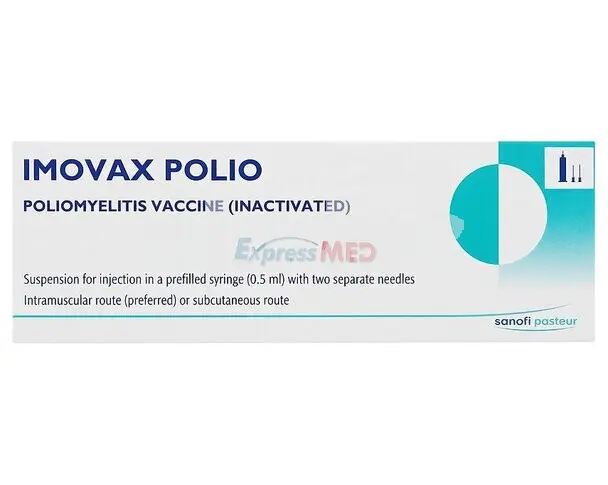
About Imovax Polio injection 10mcg / 0.5ml
Inactivated polio vaccine protecting children and travelers from poliovirus infection.
- Primary immunization against poliomyelitis in infants and children as part of routine vaccination.
- Booster protection for children and adults with an incomplete or unknown polio vaccination history.
- Travel vaccination for people heading abroad from Pakistan, since several countries ask for proof of polio vaccination at entry.
- Vaccination certificate requirement for Hajj and Umrah pilgrims, which many Pakistani travel agents ask for before visa processing.
- Extra protection in areas of Pakistan where wild poliovirus still circulates, since the country remains one of the few where transmission continues.
Imovax Polio Injection Uses in Urdu
- یہ ویکسین بچوں کو پولیو وائرس کی تینوں اقسام سے بچانے کے لیے دی جاتی ہے۔
- پاکستان میں EPI شیڈول کے مطابق بچوں کو مقررہ عمر پر یہ انجیکشن لگایا جاتا ہے۔
- بیرون ملک سفر یا حج و عمرہ کے لیے پولیو ویکسینیشن سرٹیفیکیٹ کی شرط پوری کرنے میں مدد دیتی ہے۔
- ان علاقوں میں اضافی تحفظ دیتی ہے جہاں پولیو وائرس اب بھی موجود ہے۔
- یہ ویکسین صرف تربیت یافتہ عملہ ہی کلینک یا ویکسینیشن سینٹر میں لگاتا ہے۔
Imovax Polio injection 10mcg / 0.5ml formula
- Poliovirus Type 1 (Mahoney strain, inactivated)
- Poliovirus Type 2 (MEF-1 strain, inactivated)
- Poliovirus Type 3 (Saukett strain, inactivated)
How to use Imovax Polio injection 10mcg / 0.5ml?
- A trained healthcare worker gives this vaccine as an injection into the muscle or under the skin, usually in the thigh or upper arm.
- The routine schedule in Pakistan follows the EPI program, with doses given at 6, 10 and 14 weeks along with other scheduled vaccines.
- A booster dose may be advised later in childhood or before international travel, based on the doctor's assessment.
- Self-administration is not appropriate for this vaccine, and it should only be given at a clinic or vaccination center.
Drug Interactions
- Immunosuppressive drugs: Steroids or chemotherapy medicines can lower the immune response to this vaccine.
- Other vaccines: This vaccine can usually be given alongside other routine EPI vaccines, but spacing should still be confirmed with the vaccinator.
- Immunoglobulins or blood products: Recent immunoglobulin therapy can reduce how well this vaccine works, so timing should be checked with a doctor.
Risks and warnings
- Allergy history: A past severe allergic reaction to neomycin, streptomycin, polymyxin B or a previous polio vaccine dose rules out this vaccine.
- Current illness: A moderate or severe fever at the time of the appointment usually means the dose should be postponed.
- Bleeding disorders: People with a bleeding disorder or on blood thinners need the intramuscular dose given with extra care, and a doctor should be told beforehand.
- Pregnancy and breastfeeding: Data is limited, so a doctor should weigh the benefit against the risk before this vaccine is given during pregnancy.
- Immunocompromised patients: People on chemotherapy or immunosuppressive treatment may have a weaker response, and timing should be discussed with the treating doctor.
Side Effects
- Pain, redness or swelling at the injection site for a day or two.
- Mild fever after the shot, more common in infants.
- Fussiness or reduced appetite in young children for a short period.
- Headache or tiredness in older children and adults.
- A rare but serious allergic reaction with facial swelling, breathing trouble or hives, which needs immediate medical attention.
Storage Conditions
- This vaccine needs refrigeration between 2°C and 8°C at all times before use.
- Freezing damages the vaccine, so it should never be placed in a freezer or freezer compartment.
- Protection from light is needed, since the vial should stay in its original carton until use.
- Any unused vaccine left over after the clinic visit should be handled and disposed of by the healthcare provider, not taken home.