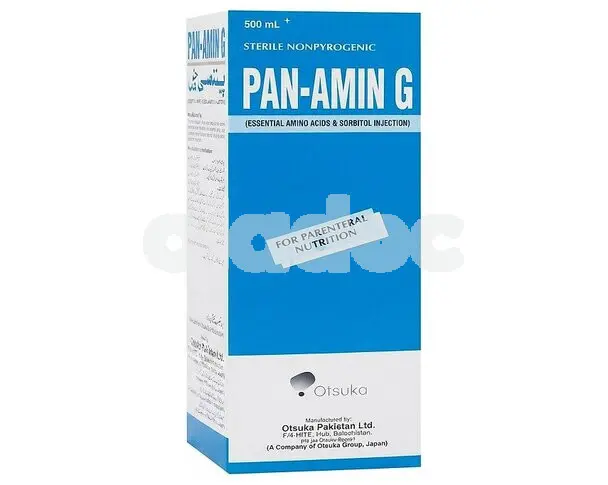
About Pan-Amin G Infusion
Crystalline amino acids with sorbitol, a parenteral nutrition infusion for protein and energy support in malnutrition.
Pan-Amin G Infusion Uses
- Provision of amino acids and energy in patients who need intravenous nutrition
- Malnutrition when eating or tube feeding is not possible
- Hypoproteinemia, meaning low protein levels in the blood
- Nutritional support before and after major surgery
- Gastrointestinal disorders that limit food intake or absorption
- Supportive nutrition during prolonged or debilitating illness
Pan-Amin G Infusion Benefits
- Supplies 11 crystalline amino acids, including all essential amino acids, with glycine
- Sorbitol provides an energy source that helps spare amino acids for protein building
- Helps prevent muscle wasting in patients who cannot eat adequately
- Supports wound healing and tissue repair after major operations
- Ready-to-use 500 ml graduated bottle suited for hospital infusion therapy
What Experts Say
Hospital teams across Pakistan frequently manage patients who cannot meet their protein needs because of surgery, gastrointestinal disease, cancer treatment, or prolonged infection. In these settings, clinicians rely on crystalline amino acid infusions such as Pan-Amin G to deliver the building blocks of protein directly into the bloodstream and limit muscle breakdown.
Nutrition specialists note that the sorbitol in the formulation serves as a carbohydrate energy source, and its early metabolism does not depend heavily on insulin. Supplying energy alongside nitrogen allows the infused amino acids to be used for tissue repair and wound healing rather than being burned as fuel.
Experts stress that parenteral amino acid therapy is supportive care rather than a substitute for balanced feeding. They advise monitoring of fluid status, electrolytes, blood sugar, and kidney and liver function during treatment, with a return to oral or tube feeding as soon as the digestive tract can be used safely.
Drug Class
- Parenteral Nutrition (Amino Acid Infusion)
Pan-Amin G Infusion Uses in Urdu
- جسم میں غذائی کمی کی صورت میں امائنو ایسڈز اور توانائی فراہم کرنے کے لیے
- خون میں پروٹین کی کمی یعنی ہائپوپروٹینیمیا کے علاج کے لیے
- آپریشن سے پہلے اور بعد میں مریض کی غذائی مدد کے لیے
- معدے اور آنتوں کے امراض میں جب منہ سے خوراک لینا ممکن نہ ہو
- طویل بیماری میں کمزور مریضوں کی پروٹین کی ضرورت پوری کرنے کے لیے
Pan-Amin G Infusion formula
- Crystalline Amino Acids + D-Sorbitol
How to use Pan-Amin G Infusion?
- Pan-Amin G Infusion is given into a vein as a slow drip by a doctor or trained nurse in a hospital or clinical setting.
- The usual adult dose is 500 ml infused over 100 to 160 minutes, adjusted for age, body weight, and clinical condition.
- The drip rate is kept slow because rapid infusion can cause nausea, flushing, or fluid and salt imbalance.
- Total sorbitol from all sources should not exceed 100 g per day.
- Only clear solution from an undamaged bottle should be used, and leftover solution is discarded after the infusion.
- Other medicines are not added to the bottle or line unless the healthcare team confirms compatibility.
- Never attempt self-administration at home; this product requires medical supervision.
Drug Interactions
- Tetracycline antibiotics: Their anti-anabolic effect can reduce the protein-building benefit of amino acid therapy.
- Corticosteroids: These increase protein breakdown and may work against the goal of nutritional support.
- Aminoglycoside antibiotics: Combined use adds to the workload of the kidneys, so renal function needs monitoring.
- Diuretics: Fluid and electrolyte shifts may be amplified during infusion therapy.
- Insulin and diabetes medicines: Blood sugar response may change because sorbitol supplies carbohydrate energy.
- Other intravenous medicines: Drugs must not be mixed into the bottle or line without confirmed compatibility.
Risks and warnings
- Severe liver disease: Amino acid infusions can raise ammonia levels and worsen confusion in patients with advanced liver failure.
- Kidney impairment: The nitrogen load may stress weak kidneys, so doctors adjust the dose or avoid use in severe renal failure.
- Fructose intolerance: Sorbitol is converted to fructose in the body, so this infusion must not be used in hereditary fructose intolerance.
- Amino acid disorders: People with congenital disorders of amino acid metabolism should not receive this solution.
- Infusion reactions: Chills, fever, or vein irritation can occur, and the drip should be slowed or stopped if they appear.
- Fluid overload: Patients with heart failure or restricted fluid intake need careful volume monitoring during therapy.
- Monitoring: Electrolytes, blood sugar, and acid-base balance should be checked during prolonged use.
Pan-Amin G Infusion Side Effects
- Nausea
- Vomiting
- Chills or mild fever
- Headache
- Flushing or a feeling of warmth
- Palpitations
- Pain or irritation at the drip site
- Vein inflammation (thrombophlebitis)
- Skin rash or itching
- Raised blood ammonia in patients with liver disease
- Metabolic acidosis with large or rapid doses
- Electrolyte imbalance
Storage Conditions
- Store the bottle below 30°C in a cool, dry place away from direct sunlight and heat.
- Do not freeze the solution, and discard the bottle if it has been frozen.
- This is a single-use bottle, so any solution left after the infusion is thrown away.
- Do not use if the solution looks discolored or contains particles, or if the bottle is damaged or leaking.
- Keep out of the reach of children.