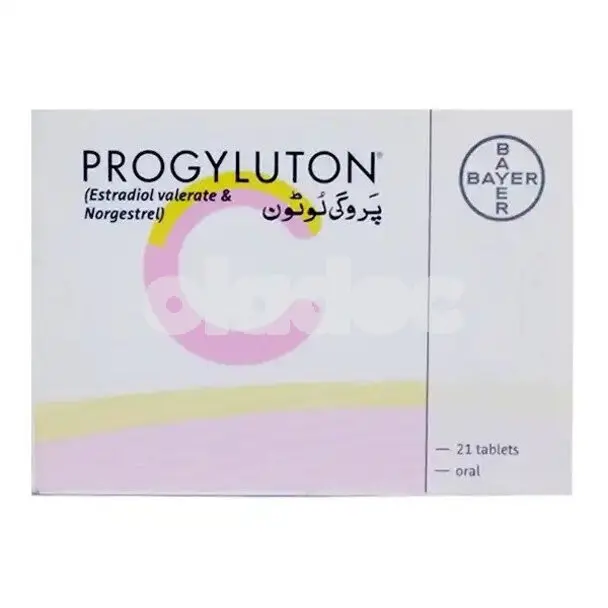
About Progyluton Tablet 2mg/0.5mg
Progyluton is a prescription HRT tablet used to regulate menstrual cycles and relieve menopausal symptoms.
Progyluton Tablet Uses
- Perimenopausal syndrome in women with an intact uterus
- Primary amenorrhea (absence of menstruation from the start)
- Secondary amenorrhea (cessation of previously normal menstruation)
- Abnormal or irregular menstrual rhythm
- Hot flashes, night sweats, and mood changes related to menopause
- Vaginal dryness associated with estrogen deficiency
- Hormonal deficiency following surgical removal of the ovaries (oophorectomy)
- Hormonal deficiency following radiation castration due to non-cancerous disease
- Prevention of osteoporosis in postmenopausal women at high risk
- Dysfunctional uterine bleeding caused by hormonal imbalance
Drug Class
- Hormone Replacement Therapy (HRT)
- Estrogen and Progestogen Combination
How Does Progyluton Work?
Progyluton contains two active hormones that work together. Estradiol Valerate is a prodrug of estradiol, the primary female sex hormone. After absorption, it is rapidly converted into estradiol, which binds to estrogen receptors and replaces the hormones the ovaries no longer produce in sufficient amounts. This relieves estrogen-deficiency symptoms such as hot flashes, mood changes, and vaginal dryness.
Norgestrel acts similarly to the natural hormone progesterone. It slows the release of gonadotropin-releasing hormone from the hypothalamus and reduces the pre-ovulatory LH surge. Its inclusion protects the uterine lining from the overstimulation that estrogen alone can cause, reducing the risk of endometrial hyperplasia and endometrial cancer.
Progyluton uses a two-phase approach: 11 white tablets containing only Estradiol Valerate, followed by 10 light-brown tablets containing both Estradiol Valerate and Norgestrel. This sequential pattern mimics the natural hormonal cycle.
When Not to Use Progyluton
Progyluton should not be taken if any of the following apply:
- Known or suspected breast cancer, or a history of breast cancer
- Known or suspected sex hormone-dependent cancer or precancerous condition
- Untreated endometrial hyperplasia
- Undiagnosed vaginal bleeding
- Previous or current benign or malignant liver tumors
- Severe liver disease, until liver function values have returned to normal
- Previous or current venous thromboembolic events such as deep vein thrombosis or pulmonary embolism
- Acute or recent arterial thromboembolic event such as stroke or heart attack
- Known clotting disorders such as antithrombin, protein S, or protein C deficiency
- Severe hypertriglyceridemia
- Porphyria
- Pregnancy or breastfeeding
- Known allergy or hypersensitivity to any ingredient in Progyluton
Packaging and Quantity
- 1 blister pack contains 21 sugar-coated tablets
- 11 white tablets, each containing Estradiol Valerate 2 mg only
- 10 light-brown tablets, each containing Estradiol Valerate 2 mg and Norgestrel 0.5 mg
Progyluton Tablet Uses in Urdu
Progyluton کو درج ذیل حالات میں استعمال کیا جاتا ہے:
- مینوپاز (رجونورتی) کی علامات جیسے گرم لہریں، رات کو پسینہ آنا، اور موڈ کی تبدیلیاں
- ماہواری کا نہ آنا (پرائمری اور سیکنڈری امینوریا)
- بے قاعدہ ماہواری یا ہارمون کے عدم توازن کی وجہ سے اسامانیہ خون بہنا
- بچہ دانی کی حفاظت کے ساتھ ایسٹروجن کی کمی کا علاج
- بیضہ دانی کے آپریشن (اوفوریکٹومی) کے بعد ہارمونز کی کمی کا علاج
- مینوپاز کے بعد ہڈیوں کی کمزوری (آسٹیوپوروسس) سے بچاو
Progyluton Tablet 2mg/0.5mg formula
- Estradiol Valerate (2 mg)
- Norgestrel (0.5 mg)
How to use Progyluton Tablet 2mg/0.5mg?
- The tablets should be swallowed whole with a full glass of water.
- Progyluton should be taken at the same time each day to maintain consistent hormone levels.
- The tablets should not be crushed, chewed, or split.
- The white tablets should be taken first for 11 days, followed by the light-brown tablets for 10 days, as indicated on the blister.
- After completing 21 tablets, a 7-day break should be taken before starting the next pack.
- The dose or schedule should not be changed without consulting the prescribing doctor.
- Annual gynecological examinations are recommended for all women using long-term HRT.
Drug Interactions
All current medicines, supplements, and herbal products should be disclosed to the prescribing doctor before starting Progyluton. Key interactions include:
- Anticonvulsants such as phenytoin, carbamazepine, and phenobarbital: these drugs induce liver enzymes and may reduce the effectiveness of Progyluton
- Rifampicin and rifabutin: these antibiotics are strong enzyme inducers and can significantly lower estradiol and norgestrel blood levels
- Antiretroviral drugs such as ritonavir and nelfinavir: these can reduce the effectiveness of hormonal preparations
- John's Wort (Hypericum perforatum): this herbal supplement induces liver enzymes and may reduce Progyluton effectiveness
- Antifungals such as ketoconazole and itraconazole: these may increase estradiol blood levels by inhibiting its metabolism
- Corticosteroids: estrogens can enhance the effects of corticosteroids in the body
- Thyroid hormone replacement therapy: estrogens may increase the requirement for thyroid hormone in women taking thyroid supplements
- Cyclosporine: estrogens can increase blood levels of cyclosporine, raising the risk of toxicity
- Warfarin and other anticoagulants: hormonal preparations may alter the anticoagulant effect, and dose adjustments may be required
Food Interactions
- Grapefruit juice: may increase estradiol blood levels by inhibiting its metabolism in the gut wall
- Alcohol: consumption of alcohol during HRT should be minimized, as it may increase circulating estrogen levels
Risks and warnings
1. Breast Cancer
- Long-term use of combined HRT has been associated with an increased risk of breast cancer, particularly with use exceeding 5 years.
- The risk decreases after stopping HRT but may remain elevated for up to 10 years following discontinuation.
- A clinical breast examination should be performed before starting Progyluton and repeated annually.
- Monthly self-examination of the breasts is advised. Any new lump or change should be reported to a doctor immediately.
2. Endometrial Cancer
- Estrogen used alone increases the risk of endometrial hyperplasia and endometrial cancer.
- The norgestrel component in Progyluton substantially reduces this risk by opposing the effect of estrogen on the uterine lining.
- Any unusual or unexpected vaginal bleeding during treatment must be investigated promptly.
3. Venous Thromboembolism (Blood Clots)
- HRT is associated with a 2 to 3 times increased risk of venous thromboembolism (VTE), including deep vein thrombosis and pulmonary embolism.
- The risk is highest in the first year of use.
- Progyluton should be discontinued immediately if symptoms of a blood clot appear, such as leg pain, chest pain, or sudden breathlessness.
- Women with a personal or family history of blood clots should discuss the risks carefully with their doctor before starting HRT.
- Prolonged immobilization such as long-haul travel or surgery increases clot risk. Temporary suspension of HRT may be recommended 4 to 6 weeks before elective surgery.
4. Cardiovascular Disease and Stroke
- HRT should not be used to prevent cardiovascular disease.
- Combined estrogen-progestogen therapy has been associated with a modest increase in the risk of coronary heart disease and stroke in postmenopausal women.
- Women with pre-existing cardiovascular conditions or significant risk factors should consider alternative therapies.
- The relative risk of stroke does not diminish with age, and the overall risk increases as women get older.
5. Ovarian and Liver Tumors
- Long-term HRT has been associated with a small increase in the risk of epithelial ovarian cancer.
- In rare cases, benign and malignant liver tumors have been reported in women using hormonal preparations. Severe upper abdominal pain or liver enlargement should be evaluated immediately.
6. Liver Disease
- Progyluton is contraindicated in women with severe liver impairment.
- Women with mild to moderate liver disease may use Progyluton under close medical supervision, with regular liver function monitoring.
- Progyluton should be discontinued if jaundice or hepatitis develops during treatment.
7. Conditions Requiring Close Monitoring
- Progyluton should be used with caution and under close supervision in women with hypertension, diabetes mellitus, migraine, asthma, epilepsy, or systemic lupus erythematosus.
- Women with a history of endometriosis, uterine fibroids (leiomyoma), or gallbladder disease should be monitored regularly during treatment.
- Progyluton may cause water and sodium retention, which can worsen hypertension and conditions such as heart failure or kidney disease.
8. Pregnancy and Breastfeeding
- Progyluton is contraindicated during pregnancy. If pregnancy occurs during treatment, the medicine should be stopped immediately.
- Progyluton should not be used during breastfeeding, as sex hormones may pass into breast milk.
9. Laboratory Test Interference
- Sex hormones can affect the results of certain laboratory tests, including thyroid function tests, blood glucose levels, liver enzymes, and lipid profiles.
- The prescribing doctor and laboratory staff should be informed that the patient is taking Progyluton before any blood tests are conducted.
Precautions
- The lowest effective dose for the shortest possible duration should always be used.
- Progyluton should not be used without a confirmed clinical indication and a doctor's prescription.
- Smoking significantly increases the cardiovascular risks associated with HRT. Women using Progyluton are strongly advised not to smoke.
- A gynecological examination including blood pressure measurement should be conducted before starting treatment and at least once a year thereafter.
- If withdrawal bleeding does not occur during the 7-day break, pregnancy should be ruled out before resuming the next pack.
- Women who experience persistent breakthrough bleeding that does not resolve should undergo appropriate investigation to exclude an underlying cause.
Progyluton Tablet Side Effects
Most women tolerate Progyluton well when taken at the prescribed dose. Side effects, when they occur, are often mild and tend to improve after the first few weeks of treatment.
Common Side Effects
- Nausea, particularly in the first few weeks of treatment
- Breast tenderness or breast enlargement
- Headache or mild migraine
- Mood changes, including low mood or irritability
- Bloating and abdominal discomfort
- Irregular bleeding or spotting between cycles
- Weight changes
- Reduced sex drive
- Skin discoloration (chloasma), particularly on the face, which worsens with sun exposure
- Contact lens intolerance due to changes in corneal curvature
Serious Side Effects
Medical attention should be sought immediately if any of the following occur:
- Leg pain, swelling, or redness, which may indicate a deep vein thrombosis
- Sudden chest pain, shortness of breath, or coughing up blood, which may indicate a pulmonary embolism
- Severe headache occurring for the first time, or a significant change in migraine pattern
- Sudden vision loss or visual disturbance
- Sudden hearing loss
- Signs of liver problems such as yellowing of the skin or eyes (jaundice), dark urine, or severe upper abdominal pain
- A lump in the breast or any unexplained change in the breast
- Significant rise in blood pressure
- Increase in frequency or severity of epileptic seizures
Storage Conditions
- Store at room temperature, ideally below 25°C.
- Keep away from direct sunlight, heat, and moisture.
- Store in the original blister packaging to protect from humidity.
- Keep out of reach and sight of children.
- Do not use after the expiry date printed on the packaging.
- Do not store in the bathroom or near a kitchen sink.