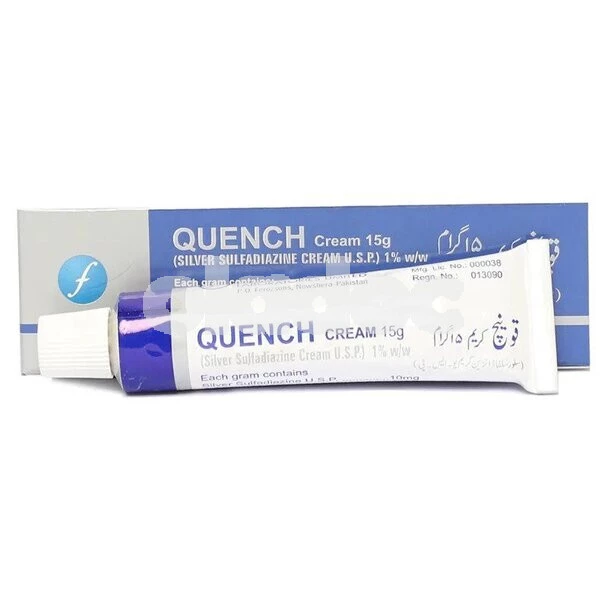
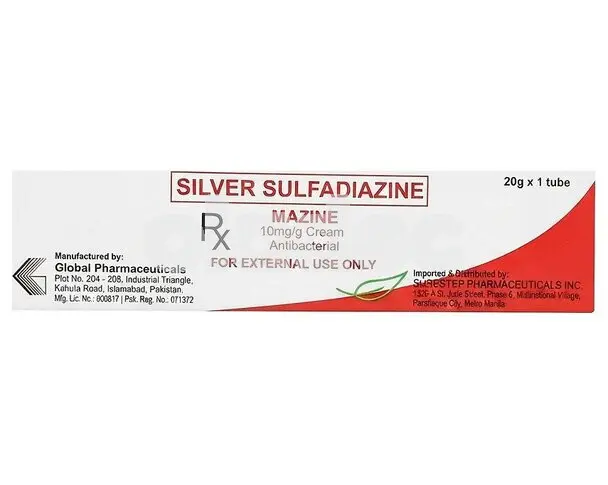
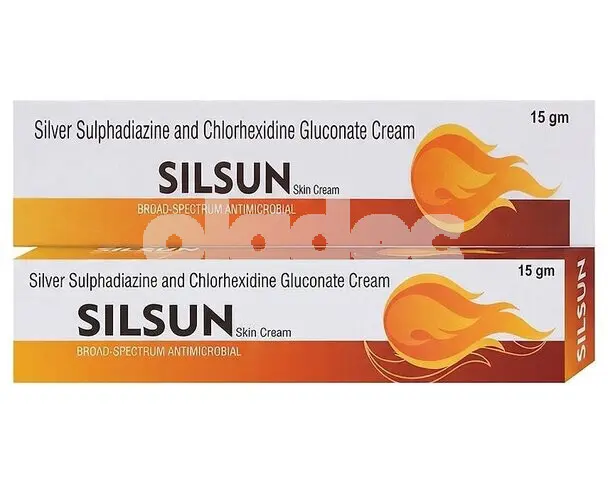
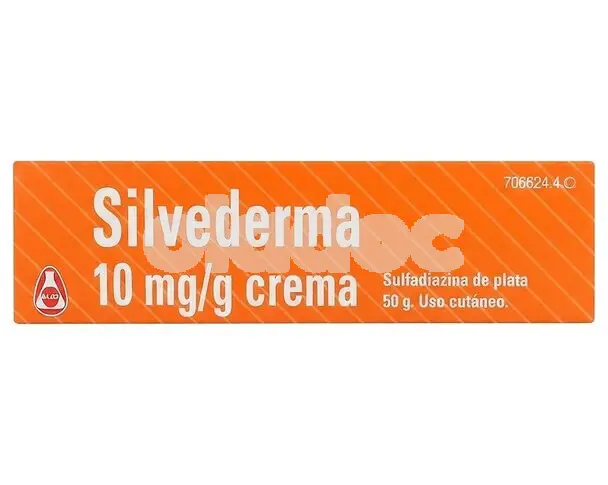
About Quench Cream 50g
Quench is a silver sulfadiazine cream used for burn and wound infection prevention.
Quench Cream Uses
- Prevention and treatment of infections in second and third degree burns.
- Management of infected leg ulcers and pressure sores.
- Protection of skin grafts and donor sites from bacterial infection.
- Treatment of other open wounds and traumatic injuries.
Quench Cream Benefits
- Releases silver ions gradually into the wound for sustained antimicrobial effect.
- Effectively inhibits bacterial growth without damaging healthy skin tissue.
- Reduces infection risk in high-risk burn and surgical wound scenarios.
- Combines silver and sulfadiazine for dual antimicrobial action.
- Promotes faster wound healing and tissue regeneration.
What Experts Say
Silver sulfadiazine functions through dual antimicrobial mechanisms. Silver ions (Ag+) released from the cream bind to bacterial cell membranes, disrupting their permeability and integrity, leading to bacterial cell death. The silver ions also intercalate into bacterial DNA and RNA, inhibiting replication and repair processes while disrupting bacterial enzyme function and metabolism.
The sulfadiazine component acts synergistically by inhibiting bacterial folic acid synthesis through competitive antagonism of para-aminobenzoic acid (PABA), a bacterial cofactor essential for nucleotide synthesis. This dual mechanism provides broad-spectrum coverage against gram-positive and gram-negative organisms while minimizing resistance development.
The cream is applied topically to affected areas where sustained silver ion release maintains effective bacterial suppression for 12 to 24 hours. Healing typically shows visible improvement within 3 to 7 days of consistent application. The cream does not significantly penetrate systemic circulation when applied to intact skin but may show minor systemic absorption through damaged epithelial surfaces.
Drug Class
- Topical Sulfonamide and Silver Antibacterial
Packaging and Quantity
- Available in 15g tubes, 50g tubes, and 250g jars.
When Not to Use Quench
- Known allergy to silver sulfadiazine, sulfa drugs, or any component.
- Severe sulfonamide hypersensitivity or Stevens-Johnson syndrome history.
- Infants under 2 months of age or premature babies.
- Patients with blood disorders including aplastic anemia or severe leukopenia.
Quench Cream Uses in Urdu
کوئنچ کریم درج ذیل حالات میں استعمال کی جاتی ہے:
- جلن اور زخموں میں بیکٹیریا سے حفاظت کے لیے۔
- پرانے اور سنگین زخموں کے انفیکشن میں۔
- جلد کی گراف اور زخمی ٹشو کی حفاظت میں۔
- دبائو کے زخموں اور ٹانگ کے السر میں۔
How to use Quench Cream 50g?
- Wash your hands thoroughly with soap and water before application.
- Clean and dry the affected area gently to remove debris.
- Apply a thin layer of cream approximately 2 to 3mm thick using clean fingertips.
- Cover with sterile gauze or dressing as recommended by healthcare provider.
- Reapply once or twice daily or as prescribed by your doctor.
- Apply as directed by a healthcare professional for optimal results.
Drug Interactions
Topical application minimizes systemic drug interactions. However, monitor for:
- Topical enzymatic debriding agents: May reduce silver sulfadiazine efficacy when applied simultaneously.
- Hydrogen peroxide or other oxidizing agents: May inactivate silver ions if used as cleansing agents.
- Systemic sulfonamides: Concurrent use may increase sulfonamide levels and side effects.
- Potassium permanganate: May be inactivated by silver sulfadiazine cream.
- Other topical antimicrobials: Avoid simultaneous application to prevent reduced efficacy.
Risks and warnings
- Neonatal use: Contraindicated in premature infants and babies under 2 months.
- Breastfeeding: Systemic absorption through damaged skin may affect nursing infants.
- Kidney disease: Not recommended in severe renal impairment due to sulfadiazine component.
- Blood count monitoring: Regular monitoring required with prolonged or extensive application.
- Avoid sensitive areas: Do not apply to eyes, inside nose or mouth, or lip area.
- Superinfection risk: Discontinue if secondary infection develops.
- Storage requirements: Keep away from excessive light and moisture.
Quench Cream Side Effects
Most patients tolerate Quench well with minimal side effects.
- Local skin irritation or burning sensation.
- Itching at the application site.
- Temporary skin discoloration or gray appearance.
- Rash or dermatitis in sensitive skin.
- Minimal absorption if applied to intact skin.
Effects requiring medical attention with prolonged or extensive use:
- Decreased white blood cell count (leukopenia) with long-term therapy.
- Severe allergic reactions or Stevens-Johnson syndrome.
- Systemic side effects including fever, chills, abdominal pain.
- Rare hepatic or renal complications with extensive systemic absorption.
Storage Conditions
- Store at room temperature below 25°C.
- Keep away from direct sunlight and excessive light exposure.
- Store in a cool, dry place away from moisture.
- Keep the container tightly closed when not in use.
- Keep out of reach of children and pets.
- Do not use after the expiration date printed on the packaging.