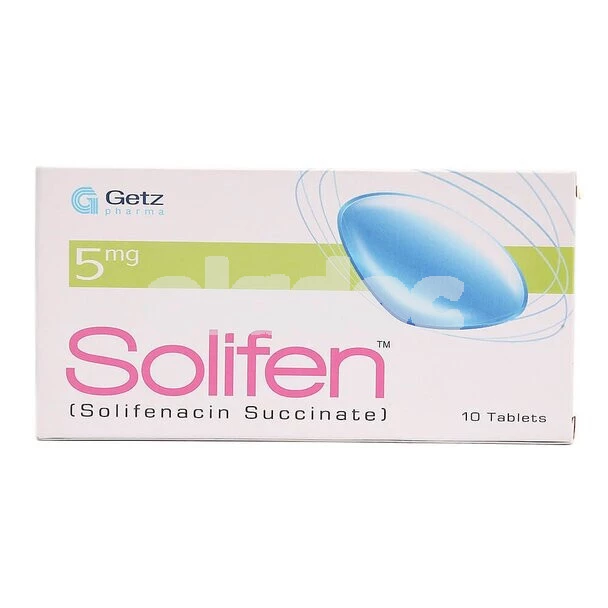
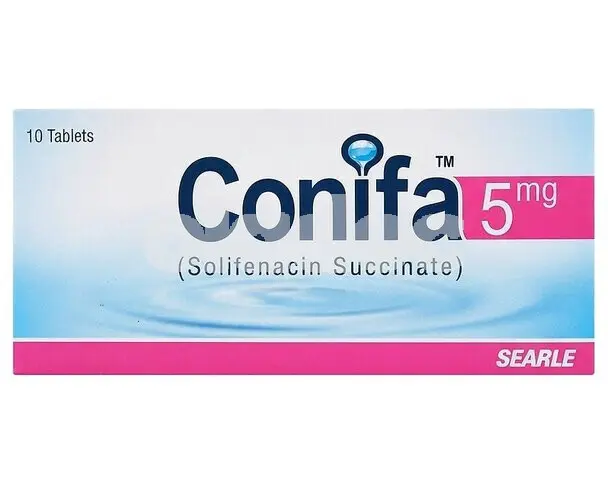
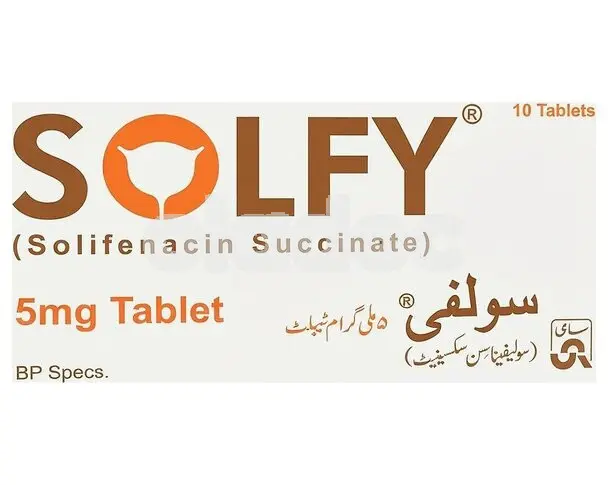
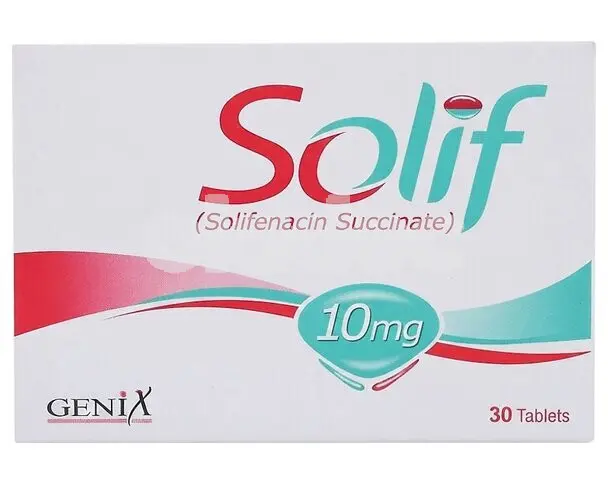
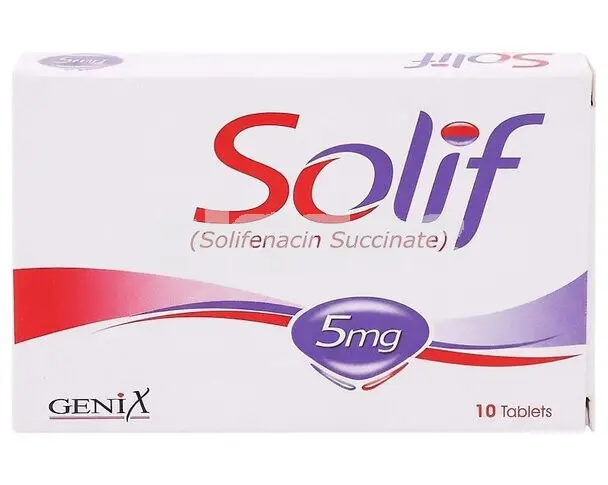
About Solifen Tablet 5mg
Solifen is an antimuscarinic tablet containing Solifenacin, used to treat overactive bladder, urgency, and urinary incontinence.
Solifen Tablet Uses
- Overactive bladder (OAB) presenting with urinary urgency, increased frequency of urination, and urge urinary incontinence.
- Urinary urgency: a sudden, compelling, and difficult-to-defer urge to urinate that interferes with daily activities.
- Urge urinary incontinence: involuntary leakage of urine associated with an urgent need to urinate.
- Urinary frequency: urinating more than 8 times per day or more than 2 times at night (nocturia).
- Neurogenic detrusor overactivity in patients with spinal cord injury or multiple sclerosis, causing uncontrolled bladder contractions.
Solifen Tablet Benefits
- Selective action on M3 muscarinic receptors in the bladder reduces involuntary detrusor contractions without producing the same degree of anticholinergic side effects in other organs as older, less selective antimuscarinic medicines.
- Once-daily dosing provides 24-hour symptom control, reducing both daytime urgency episodes and nighttime urination.
- Available in two strengths allowing dose escalation from 5mg to 10mg based on response and tolerability.
- Full therapeutic benefit typically becomes apparent after 4 weeks of regular treatment, providing a clear window for clinical assessment.
- Clinically proven to significantly reduce the number of urgency episodes, incontinence episodes, and daily micturition frequency in controlled trials.
What Experts Say
Solifen contains Solifenacin Succinate, a selective competitive antagonist of muscarinic M3 receptors used specifically for overactive bladder, a condition affecting millions of adults in Pakistan who frequently go undiagnosed or underdiagnosed.
How It Works
Solifenacin blocks muscarinic M3 receptors located on the detrusor muscle of the bladder wall. Under normal physiology, acetylcholine released from parasympathetic nerve terminals binds to M3 receptors on the detrusor muscle, triggering the coordinated bladder contractions that produce normal voiding. In overactive bladder, the detrusor fires involuntarily and excessively, producing urgency, frequency, and incontinence. By occupying M3 receptors without activating them, Solifenacin prevents acetylcholine from binding, reducing the frequency and amplitude of detrusor contractions and allowing the bladder to fill to greater volumes before triggering the voiding reflex.
M3 Selectivity and Tolerability
Older antimuscarinic medicines such as Oxybutynin act broadly across multiple muscarinic receptor subtypes including M1, M2, and M3. M1 receptors in the brain mediate cognitive function; M2 receptors in the heart influence heart rate. Broad muscarinic blockade produces CNS side effects such as cognitive impairment and memory problems, and cardiac effects such as tachycardia. Solifenacin's preferential affinity for M3 receptors, which are the dominant subtype in bladder smooth muscle, produces effective bladder relaxation while generating a lower burden of cognitive and cardiac side effects than non-selective antimuscarinics. Dry mouth and constipation remain common because M3 receptors are also present in salivary glands and the gastrointestinal tract.
Clinical Note
Overactive bladder is significantly underdiagnosed in Pakistan, particularly in women who accept urgency and leakage as an inevitable consequence of age or childbirth rather than a treatable medical condition. Solifen should always be part of a broader management plan that includes bladder training, fluid management, and pelvic floor exercises. Patients should be reassessed after 4 to 8 weeks of treatment to confirm clinical benefit. If adequate response is not achieved at 5mg, the dose may be increased to 10mg. Solifen must be used with caution in patients with glaucoma, urinary retention, or constipation, as M3 blockade can worsen all three.
Drug Class
- Antimuscarinic Agent.
- Selective M3 Muscarinic Receptor Antagonist.
Packaging and Quantity
- 1 pack contains 10 tablets.
- Available in 5mg and 10mg tablet strengths.
When Not to Use Solifen
- Known allergy or hypersensitivity to Solifenacin Succinate or any ingredient in the tablet.
- Urinary retention or clinically significant bladder outflow obstruction.
- Gastric retention or significant gastrointestinal obstructive disorder.
- Uncontrolled narrow-angle glaucoma.
- Myasthenia gravis.
- Severe hepatic impairment.
- Severe renal impairment combined with concurrent use of a potent CYP3A4 inhibitor.
- Patients on hemodialysis.
Solifen Tablet Uses in Urdu
Solifen Tablet کا استعمال زیادہ فعال مثانے کے علاج کے لیے کیا جاتا ہے (ایسی حالت جس میں مثانے کے پٹھے بے قابو ہو جاتے ہیں اور بار بار پیشاب آتے ہیں)۔ Solifen Solifenacin Succinate پر مشتمل ہے جس کا تعلق ادویات کے ایک گروپ سے ہے جسے antispasmodics کہا جاتا ہے۔ یہ پیشاب کے مثانے کے پٹھوں کو آرام دے کر کام کرتا ہے۔ اس سے پیشاب کی تعدد اور جلدی کم ہو جاتی ہے۔ یہ دوا ان مریضوں میں تجویز کی جاتی ہے جن میں پیشاب کی بے ضابطگی ہے (پیشاب پر کنٹرول کھونا اور غیر ارادی طور پر پیشاب کرنا)۔
Solifen Tablet 5mg formula
How to use Solifen Tablet 5mg?
- Solifen may be taken with or without food.
- The tablet should be swallowed whole with a full glass of water. It must not be crushed or chewed.
- Solifen should be taken at the same time each day to maintain consistent blood levels and symptom control.
- Grapefruit and grapefruit juice should be avoided during treatment as grapefruit inhibits CYP3A4 and may raise Solifenacin blood levels.
- Adequate fluid intake should be maintained throughout treatment. Restricting fluids to reduce urgency is counterproductive and increases the risk of constipation and urinary tract infections.
- The standard adult starting dose is 5mg once daily. If symptoms are not adequately controlled after 4 weeks and the tablet is well tolerated, the dose may be increased to 10mg once daily.
- The dose should not be changed without consulting a doctor.
Drug Interactions
All current medicines, supplements, and herbal products must be disclosed to the prescribing doctor before starting Solifen. Key interactions include:
- Strong CYP3A4 inhibitors such as ketoconazole, itraconazole, clarithromycin, and ritonavir: These significantly increase Solifenacin blood levels, raising the risk of side effects including QT prolongation. The maximum dose of Solifen is 5mg daily when combined with these medicines.
- Other antimuscarinic medicines including antihistamines, tricyclic antidepressants, and antipsychotics: Additive anticholinergic effects increase the risk of dry mouth, constipation, urinary retention, blurred vision, and cognitive impairment.
- Cholinesterase inhibitors such as donepezil and rivastigmine: Solifenacin may reduce the effectiveness of these medicines used for Alzheimer's disease by opposing the cholinergic effect they are intended to enhance.
- Prokinetic medicines such as metoclopramide: Solifenacin may reduce the effectiveness of medicines that promote gastrointestinal motility.
- QT-prolonging medicines: Solifenacin modestly prolongs the QT interval. Concurrent use with other QT-prolonging medicines increases cardiac arrhythmia risk.
- Grapefruit juice: Inhibits CYP3A4 and may raise Solifenacin blood levels. It should be avoided during treatment.
Risks and warnings
- Urinary retention: Solifen must not be used in patients with urinary retention. It can worsen existing bladder outflow obstruction by further relaxing the detrusor muscle. Any difficulty in passing urine during treatment must be reported to a doctor immediately.
- Narrow-angle glaucoma: Solifenacin's anticholinergic effect can raise intraocular pressure. It is contraindicated in uncontrolled narrow-angle glaucoma.
- Constipation: M3 blockade in the gastrointestinal tract reduces gut motility. Patients with pre-existing constipation must use Solifen with caution and maintain adequate fluid and fiber intake.
- QT prolongation: Solifenacin prolongs the cardiac QT interval. Caution is required in patients with known QT interval prolongation or those taking other QT-prolonging medicines.
- Kidney and liver disease: Dose adjustment is required in moderate renal impairment and moderate hepatic impairment. Solifen is contraindicated in severe hepatic impairment.
- Elderly patients: Older adults are more susceptible to anticholinergic side effects including cognitive impairment, confusion, constipation, and urinary retention. The lowest effective dose should be used.
- Alzheimer's disease: Solifenacin may oppose the effects of cholinesterase inhibitors used in Alzheimer's management. This combination should only be used under specialist supervision.
- Pregnancy: The safety of Solifenacin during pregnancy has not been fully established. It should only be used during pregnancy when the benefit clearly outweighs the risk.
- Breastfeeding: It is not known whether Solifenacin passes into breast milk. Breastfeeding is not recommended during treatment.
- Driving and machinery: Solifen may cause blurred vision and dizziness. Caution is advised when driving or operating heavy machinery until the individual response is known.
Solifen Tablet Side Effects
Most patients tolerate Solifen well at the 5mg starting dose. Side effects are dose-dependent and more common at 10mg.
- Dry mouth, the most commonly reported side effect.
- Nausea or indigestion.
- Blurred vision or difficulty focusing.
- Dizziness or lightheadedness.
- Urinary tract infection.
Serious side effects are rare. Medical attention should be sought immediately if any of the following occur:
- Inability to urinate (urinary retention), which is a contraindicated condition for this medicine.
- Angioedema presenting as swelling of the face, mouth, lips, or throat.
- Severe allergic reaction including difficulty breathing or widespread rash.
- Signs of QT prolongation including palpitations, irregular heartbeat, or fainting.
- Severe confusion or cognitive impairment, particularly in elderly patients.
Storage Conditions
- Store at room temperature, between 15°C and 30°C.
- Protect from direct sunlight, heat, and moisture.
- Store in the original packaging.
- Keep out of reach and sight of children.
- Do not use after the expiry date printed on the packaging.
- Do not store in the bathroom or near a kitchen sink.