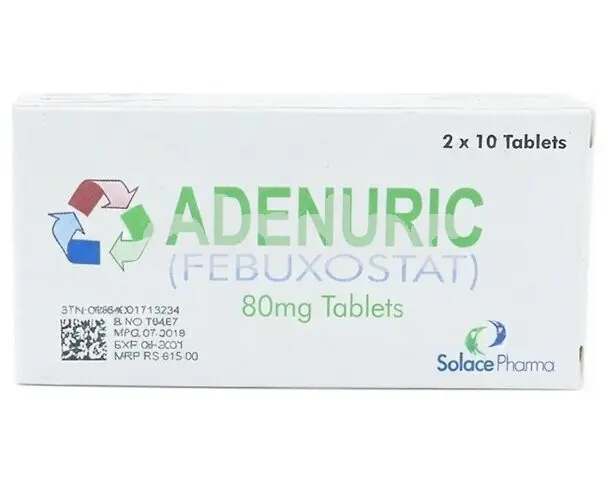
About Urigo Tablet 80mg
A gout medicine that lowers high uric acid to prevent painful flare-ups.
Urigo Tablet Uses
- Long-term management of chronic gout
- Lowering high uric acid (hyperuricemia) levels
- Preventing recurrent gout flare-ups
- Reducing uric acid crystal deposits (tophi) over time
Urigo Tablet Benefits
- Reduced frequency of painful gout attacks
- Lower serum uric acid levels, reaching recommended targets
- Prevention of long-term joint damage from urate deposits
- Suitable option for patients with mild to moderate kidney impairment
What Experts Say
Febuxostat lowers uric acid by blocking xanthine oxidase, the enzyme that converts purines into urate. This selective action makes it more potent at reducing serum urate than several older agents, particularly in people who cannot tolerate allopurinol. It needs little dose adjustment in mild kidney disease, so doctors often reserve it for gout patients with reduced kidney function.
A temporary rise in gout flares can occur during the first weeks of treatment, since rapid uric acid changes destabilize existing crystal deposits in the joints. This does not mean the medicine has failed. Many prescribers pair it with a short course of colchicine, and continuing febuxostat through a flare usually gives better control than stopping it.
Trials have flagged a higher risk of cardiovascular death with febuxostat versus allopurinol in people who already have heart disease. This drives the advice to reserve it for patients who fail first-line therapy. Periodic liver tests and uric acid checks remain part of safe long-term use, since relief depends on holding urate below target.
Drug Class
- Xanthine oxidase inhibitors
- Antigout agents
- Urate-lowering therapy
Urigo Tablet 80mg Uses in Urdu
- گاؤٹ کے مرض میں یورک ایسڈ کی سطح کم کرنے کے لیے
- جوڑوں کے درد اور سوزش سے بچاؤ کے لیے
- بار بار ہونے والے گاؤٹ کے حملوں کو روکنے کے لیے
- خون میں زیادہ یورک ایسڈ کو طویل مدت میں قابو میں رکھنے کے لیے
Urigo Tablet 80mg formula
How to use Urigo Tablet 80mg?
- Take one tablet daily as prescribed, with or without food.
- Swallow the tablet whole with a glass of water.
- Take the dose at the same time every day for consistent uric acid control.
- Continue the medicine during a gout flare unless your doctor advises otherwise.
- Attend scheduled blood tests to monitor liver function and uric acid levels.
- Avoid alcohol, since it can raise uric acid and strain the liver.
Drug Interactions
- Azathioprine and Mercaptopurine: Combining these is best avoided, as febuxostat can raise their levels to dangerous, bone marrow suppressing amounts.
- Theophylline: Theophylline levels may increase, requiring monitoring.
- Colchicine or NSAIDs: These are often used together briefly during flare prevention, but only under medical supervision.
- Alcohol: Uric acid levels can rise and extra strain is placed on the liver.
Risks and warnings
- Cardiovascular Risk: Studies show a higher rate of heart-related death compared with allopurinol in people with existing heart disease.
- Liver Function: Liver enzymes can rise during treatment, so periodic liver tests are advised.
- Early Gout Flares: A temporary increase in gout attacks can occur in the first few weeks after starting this medicine.
- Severe Skin Reactions: Rare but serious reactions such as Stevens-Johnson syndrome have been reported.
- Kidney Impairment: Caution and medical supervision are advised in significant kidney disease.
Urigo Tablet Side Effects
- Nausea
- Joint pain or gout flare during early treatment
- Elevated liver enzymes
- Skin rash
- Diarrhea
- Headache and dizziness
- Chest pain or irregular heartbeat (seek urgent care)
- Yellowing of skin or eyes, dark urine (signs of liver problems)
- Severe allergic reaction with swelling or difficulty breathing
Storage Conditions
- Store below 30°C in a cool, dry place.
- Keep the tablets in the original blister pack until use.
- Protect from direct sunlight and moisture.
- Keep out of reach of children.