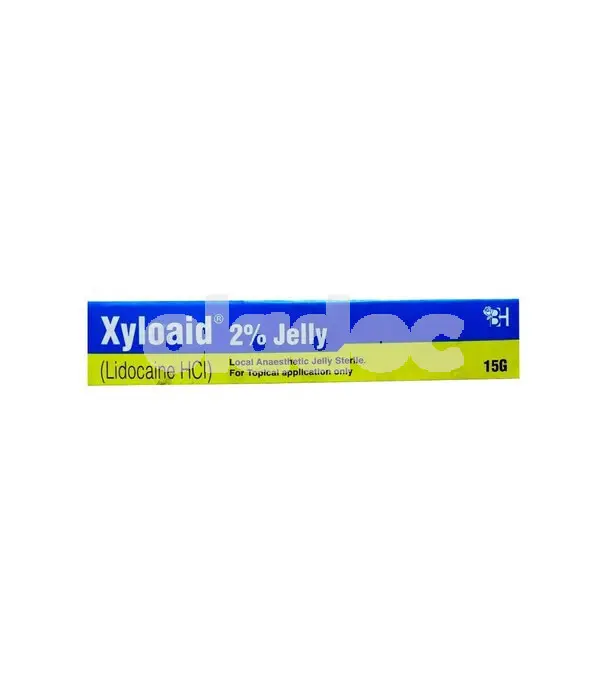
About Xyloaid Jelly 2% 15G
Xyloaid jelly is a topical anesthetic jelly used for local pain relief and numbing.
Xyloaid Jelly Uses
- Local anesthesia and pain relief for minor surgical and dental procedures.
- Topical numbing of skin and mucous membranes before injections and needle procedures.
- Anesthesia for urological procedures including catheterization and urethroscopy.
- Relief of pain and discomfort associated with mouth ulcers and throat irritation.
- Lubrication and anesthesia for endoscopic procedures.
Xyloaid Jelly Benefits
- Rapid onset of action providing numbing within minutes of application.
- Effective local anesthesia without systemic side effects when used appropriately.
- Non-greasy formulation allows easy application and good tissue penetration.
- Dual action as anesthetic and lubricant reducing procedural discomfort.
- Suitable for use on sensitive areas including urogenital mucosa.
What Experts Say
Lidocaine is a local anesthetic agent belonging to the amide class that works by blocking sodium channels in nerve cell membranes. This blockade prevents depolarization and action potential propagation resulting in reversible local anesthesia. Lidocaine demonstrates rapid onset typically within 2 to 5 minutes of topical application. The jelly formulation provides excellent coverage and sustained contact with mucosal surfaces. The drug is metabolized hepatically with inactive metabolites excreted renally.
Pharmacokinetically, lidocaine applied topically shows limited systemic absorption when applied to intact skin but significant absorption through mucosal membranes. Peak plasma concentrations occur within 10 to 20 minutes of application. The duration of anesthetic action typically ranges from 30 to 60 minutes depending on the site and concentration used. Metabolism via hepatic deamination produces inactive metabolites. The jelly formulation allows for controlled application and reduced systemic exposure compared to liquid formulations.
Clinical efficacy of lidocaine jelly for topical anesthesia has been well established across multiple medical specialties. Studies demonstrate effective anesthesia for urological procedures, dental applications, and minor surgical interventions. The agent is particularly valuable for patients requiring procedures without systemic anesthesia. Tolerability is excellent with minimal adverse effects when used within recommended doses. The combination of anesthetic and lubricant properties makes it ideal for procedures requiring both pain relief and mucosal protection.
Drug Class
- Topical Local Anesthetic (Amide Class)
Packaging and Quantity
- Tube containing 15 grams of jelly in 2 percent concentration.
When Not to Use Xyloaid
- Known hypersensitivity to lidocaine or other amide local anesthetics.
- Hypersensitivity to methylparaben or propylparaben preservatives.
- Application on open wounds or severely damaged skin.
- Cardiac conduction abnormalities or severe cardiac disease.
- Severe hepatic impairment or liver disease.
Xyloaid Jelly Uses in Urdu
زائلوایڈ جیلی درج ذیل حالات میں استعمال کی جاتی ہے:
- سرجری اور دندان پزشکی کے طریقوں سے پہلے درد میں کمی کے لیے۔
- جلد اور مخاطی غشاء کو سن کرنے کے لیے۔
- پیشاب کی نالی کے طریقوں میں درد سے بچاؤ کے لیے۔
- منہ کی خرابی اور گلے کی خرابی میں سکون کے لیے۔
Xyloaid Jelly 2% 15G formula
Available forms
- Jelly
- Gel
- Ointment
- Topical Solution
- Injection
How to use Xyloaid Jelly 2% 15G?
- Apply appropriate amount of jelly directly to the area requiring anesthesia.
- Massage gently into the skin or mucous membrane.
- Wait 2 to 5 minutes for numbing effect to develop.
- For urological procedures, instill jelly into the urethra and allow 5 to 10 minutes before procedure.
- Maximum single application should not exceed 200 mg of lidocaine.
- Avoid application near eyes or on large body surface areas.
Drug Interactions
Xyloaid may interact with various medications affecting efficacy or safety:
- Beta-blockers: May reduce metabolism of lidocaine potentially increasing systemic levels.
- Cimetidine: May inhibit hepatic metabolism of lidocaine increasing plasma concentrations.
- Antiarrhythmic drugs: Concurrent use of other local anesthetics or antiarrhythmics may increase cardiotoxicity risk.
- Monoamine oxidase inhibitors: May potentiate vasopressor effects of epinephrine if present in formulation.
Risks and warnings
- Dosage limits: Do not exceed recommended doses; maximum single application 200 mg to minimize systemic absorption.
- Cardiac disease: Use with caution in patients with cardiac conduction abnormalities; systemic absorption may cause arrhythmias.
- Hepatic impairment: Severe liver disease impairs metabolism; use with caution.
- Renal dysfunction: Severe kidney disease may impair elimination of metabolites.
- Large surface area application: Avoid application on large body areas to prevent excessive systemic absorption.
- Pregnancy and breastfeeding: Generally safe when used topically in minimal amounts; minimal systemic absorption occurs.
- Eye contact: Avoid application near eyes; if contact occurs, rinse with water immediately.
Xyloaid Jelly Side Effects
Topical application rarely causes systemic side effects. Following are locally reported adverse effects:
- Temporary stinging or mild burning sensation at application site.
- Mild localized irritation or redness.
- Temporary numbness extending beyond intended area.
- Slight blanching of mucous membranes.
Serious side effects requiring immediate medical attention:
- Allergic reaction with rash, angioedema, or anaphylaxis.
- Systemic toxicity with tremors, confusion, or seizures from overdose.
- Cardiac arrhythmias or cardiovascular collapse from excessive absorption.
- Methemoglobinemia causing cyanosis or respiratory distress.
Storage Conditions
- Store at room temperature between 15 to 25 degrees Celsius.
- Keep away from direct sunlight and excessive heat.
- Protect from moisture in a tightly sealed tube.
- Keep tube cap tightly closed after each use.
- Keep out of reach of children and pets.
- Do not use after the expiration date on the packaging.