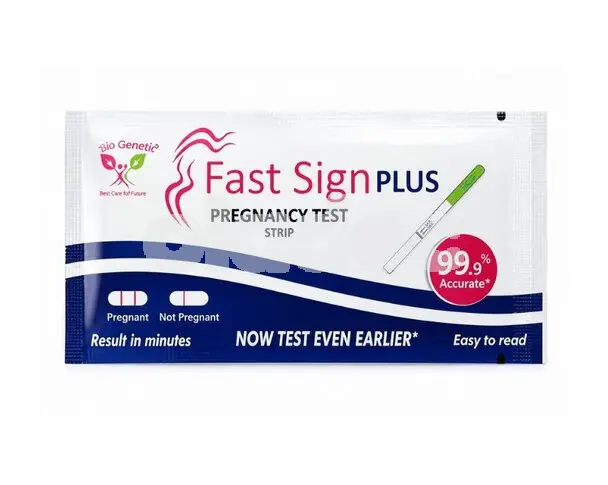
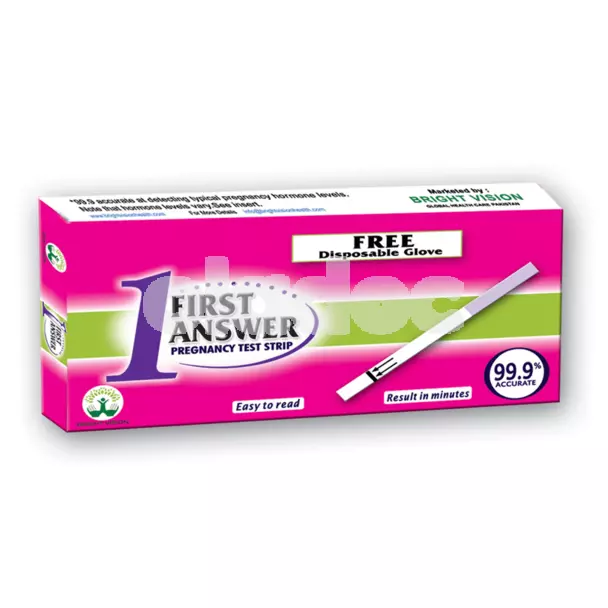
About Pregnancy Test Strip
Pregnancy test strips (UPT strips) help detect pregnancy by identifying the hCG hormone in urine quickly and accurately.
Uses of Pregnancy Test Strip
- A pregnancy test strip checks urine for hCG, the hormone the body starts producing once a fertilized egg implants.
- It tells women whether a missed period is due to pregnancy or just an irregular cycle.
- A positive result is often the first sign to book a doctor's appointment for prenatal care.
- Couples going through fertility treatment sometimes use it to track results alongside their doctor's guidance.
- It can be repeated at home whenever an earlier result comes back faint or unclear.
Pregnancy Test Strip Uses in Urdu
- حمل کی ابتدائی تشخیص کے لیے پیشاب میں حمل کے ہارمون کی موجودگی معلوم کی جاتی ہے۔
- ماہواری میں تاخیر کی وجہ حمل ہے یا نہیں، اس کی تصدیق کے لیے استعمال ہوتا ہے۔
- حمل کی تصدیق کے بعد ڈاکٹر سے رابطے کا صحیح وقت جاننے میں مدد دیتا ہے۔
- بانجھ پن کے علاج کے دوران نتائج جانچنے کے لیے بھی استعمال کیا جاتا ہے۔
- پہلے نتیجے کے غیر واضح ہونے کی صورت میں دوبارہ تشخیص کے لیے استعمال ہوتا ہے۔
How to use Pregnancy Test Strip?
- Collect a urine sample in a clean, dry container, or hold the strip directly in the urine stream.
- First morning urine works best, since hCG levels are highest after a full night without drinking fluids.
- Dip the marked end of the strip into the urine for the time stated on the package, usually around 5 to 10 seconds.
- Set the strip down flat on a clean, dry surface and let it sit.
- Check the result within the time window printed on the package, typically 3 to 5 minutes.
- Reading the strip after that window can show a faint evaporation line that looks like a result but isn't one.
How to Interpret Result
- Two visible lines, even if one looks faint, point to a positive result.
- A single line at the control position, with nothing at the test line, means the result is negative.
- If no line appears at the control position at all, the test hasn't worked and needs to be repeated with a fresh strip.
- A faint line is still worth taking seriously. Testing again after 48 hours with first morning urine usually gives a clearer picture.
When to Take a Pregnancy Test
- Implantation typically occurs 6 to 12 days after ovulation, and hCG levels only begin to rise after that point.
- Testing before a missed period often leads to a false negative, simply because hCG hasn't risen high enough yet.
- Most standard strips detect hCG at 25 mIU/mL, which makes the day of a missed period the most reliable time to test.
- Early detection strips, sensitive to as little as 10 or 15 mIU/mL, can sometimes detect pregnancy a few days earlier, though results this early are less dependable.
- First morning urine is the most concentrated sample of the day, so it gives the clearest result no matter when testing happens.