




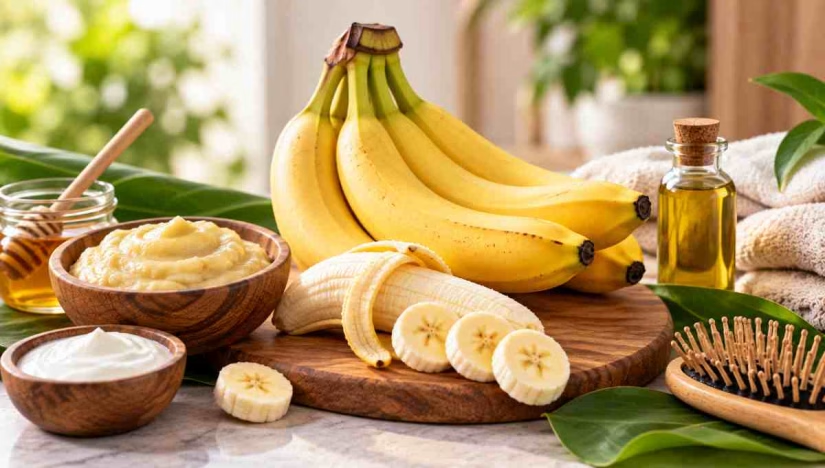
A banana sits in almost every kitchen. Most people eat it for a quick snack, not for their skin or hair.
Its potassium, vitamin C, and antioxidants give it a real, if modest, role in skin hydration and hair conditioning.
The bigger claims, wrinkle erasing peel rubs and miracle hair masks, rest on thinner evidence.
This article looks at what banana actually contains, what real studies show, and how to use it safely at home.
Table of Contents
What’s in a Banana That Matters for Skin and Hair?
Banana’s benefit case rests mostly on its nutrient content, not on any single active ingredient.
The table below breaks down what’s in one medium banana and how each nutrient connects to skin or hair.
| Nutrient | Amount in One Medium Banana (118g) | Role for Skin and Hair |
| Water | About 88g | Adds moisture, softens DIY masks |
| Potassium | 422mg | Supports skin barrier function and cell hydration |
| Vitamin C | 10.3mg | Antioxidant, supports the body’s own collagen production |
| Vitamin B6 | 0.43mg | Supports normal skin and scalp cell turnover |
| Manganese | A small amount | Cofactor for the body’s antioxidant enzymes |
| Natural sugars | 14.4g | Acts as a humectant in a mask, drawing in moisture |
| Fiber | 3.1g | Mainly a digestive benefit, not a topical one |
Most of these nutrients matter more when eaten than when rubbed on skin or hair.
A mashed banana mask still carries some of them onto the surface, just in smaller, less absorbable amounts.
Banana Benefits for Skin
- Hydration: Banana’s water and potassium content make it a reasonable natural humectant in a mask. It softens dry patches temporarily rather than treating an actual skin condition.
- Antioxidant support: A 2026 proof of concept study tested a 5 percent lady finger banana peel extract serum on 49 women over 12 weeks. Photoaging scores and a skin aging marker called MMP-1 both dropped significantly. The study had no control group, so it points to a promising direction, not proof the serum works for everyone.
- Mild brightening: Vitamin C plays a genuine role in the body’s own collagen production. A banana’s vitamin C content is modest next to citrus fruit or a formulated vitamin C serum, so eating or applying banana alone won’t match a dedicated treatment.
- The peel rubbing myth: Social media often claims raw banana peel rubbed on the face reduces wrinkles and under eye circles. Dermatologists say there’s no real evidence for this specific practice, even though the peel does contain antioxidants in lab testing.
Banana Benefits for Hair
- Moisture and frizz: A ripe banana mashed into a hair mask coats strands with natural sugars and potassium, which can smooth frizz temporarily, similar to a store bought conditioner.
- Scalp comfort: Some people use banana masks for a flaky or irritated scalp. The antioxidant content may help calm mild irritation, though no dedicated clinical trial has tested banana specifically for dandruff.
- Shine and softness: The moisture and mild residue left behind after rinsing can make hair look glossier right after use. This is a short term cosmetic effect, not a structural change to the hair itself.
Most banana hair mask claims come from its known nutrient profile, not from studies that tested banana masks directly.
That’s worth knowing before expecting dramatic results from a single treatment.
Bananas aren’t the only kitchen staple linked to hair and skin. oladoc’s guide on vitamin E capsules for hair and skin covers another commonly used option.
How to Use Banana for Skin
| Method | How to Use | Best For |
| Simple mash mask | Mash one ripe banana, apply for 15 minutes, rinse with lukewarm water | Dry or dull skin |
| Banana and honey | Mix mashed banana with one tablespoon of honey | Dry, sensitive skin |
| Banana and yogurt | Mix mashed banana with two tablespoons of plain yogurt | Dull, uneven skin tone |
| Banana peel rub | Rub the inside of a ripe peel gently for two minutes, then rinse | Low risk experimenting, not a treatment |
A patch test on the inner arm, held for 24 hours, is worth doing before applying any new mask to the face.
How to Use Banana for Hair
| Method | How to Use | Best For |
| Basic banana mask | Blend one ripe banana until smooth, apply root to tip, leave 20 minutes | Dry, frizzy hair |
| Banana and coconut oil | Blend banana with one tablespoon of coconut oil | Very dry or damaged ends |
| Banana and egg | Blend banana with one egg, apply for 20 minutes | Extra conditioning |
| Banana and honey | Blend banana with one tablespoon of honey | Scalp dryness |
Banana residue left in the hair can clump and turn hard to remove once it dries, so a thorough rinse with cool or lukewarm water matters.
Cold water also keeps any egg in the mix from cooking near the scalp.
Side Effects and Precautions
Bananas are safe for most people in normal food and topical use. A few groups need to be more careful.
- Latex fruit allergy: People allergic to latex sometimes react to bananas too. A 2024 review of latex fruit syndrome found most reported reactions were systemic rather than a mild itchy mouth, ranging up to full anaphylaxis in some patients.
- Skin irritation: Leftover banana or egg residue on the scalp or face can trigger irritation if it isn’t rinsed off completely.
- Acne prone skin: The natural sugars in a banana mask can feel sticky and may clog pores in someone prone to breakouts. Wash off promptly and watch for a reaction.
- Not a replacement for treatment: Persistent dandruff, hair thinning, or skin conditions like eczema and psoriasis need an actual diagnosis, not a home mask.
Signs It’s Time to Consult a Dermatologist at oladoc
A banana mask can soothe dry skin or add temporary shine to hair, but it won’t fix a real underlying condition.
Persistent scalp itching, patchy hair loss, or skin that stays inflamed after switching products are signs worth having checked properly.
A dermatologist in Lahore can tell whether the issue is simple dryness or something that needs an actual treatment plan, and oladoc also connects patients with specialists in other major cities across Pakistan.
Booking a visit early, rather than layering on more home remedies, can stop a mild irritation from turning into a longer running problem.
The Takeaway
Banana carries real nutritional value, and some of that supports skin and hair health in a general, whole body way.
The direct evidence for masks and peel rubs stays limited. One recent study on a purified peel extract serum showed promise, while most other claims rest on nutrient logic rather than a dedicated trial.
Used as a mild, low cost addition alongside a normal skincare and hair routine, banana is safe for most people and worth trying. Anyone with a latex allergy or a real scalp or skin condition needs a different approach, ideally with a specialist’s help.
FAQs
Its potassium, vitamin C, and moisture content give it real nutritional value for both. The direct evidence for masks and peel rubs is limited but not nonexistent.
Dermatologists say there’s no solid evidence that rubbing raw banana peel on skin reduces wrinkles. A concentrated peel extract serum showed some benefit in one small study, which differs from rubbing raw peel at home.
Once or twice a week is reasonable for dry or frizzy hair. Overuse mostly wastes bananas rather than adding extra benefit.
Yes, especially in people with a latex allergy. Reactions can range from mild mouth itching to more serious systemic symptoms, so try a small patch first.
Eating it delivers nutrients the body can actually absorb and use. Applying it topically adds moisture and a small amount of surface antioxidants, a milder, more short term effect.
It can feel sticky and may clog pores for some people. Rinse thoroughly and stop use if breakouts increase.
