




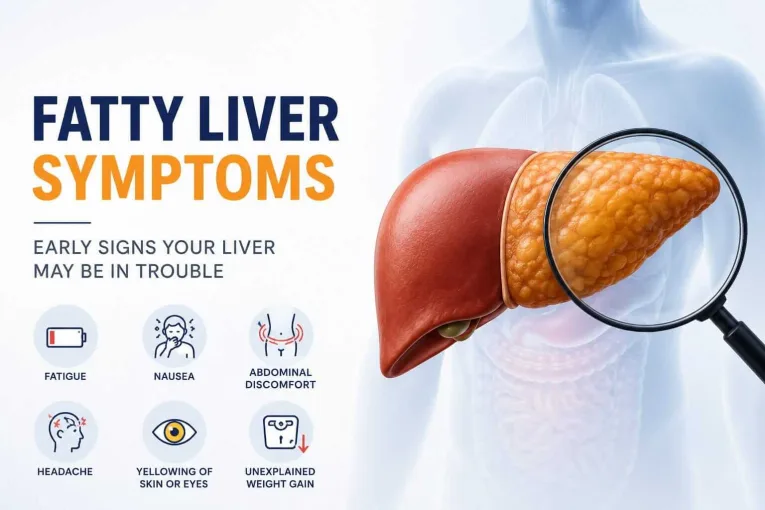
Fatty liver is one of the most common liver conditions in Pakistan, and most people who have it do not know it yet. The liver is a quiet organ; it rarely signals trouble in the early stages.
Many patients discover fatty liver accidentally, during a routine ultrasound or blood test. By then, the condition may have been building for years without a single obvious sign.
Understanding the early symptoms, what causes it, and how diet affects it can make a real difference, especially when caught at Grade 1 or Grade 2.
Table of Contents
What Is Fatty Liver?
Fatty liver is a condition where excess fat builds up inside liver cells. A small amount of fat in the liver is normal, but when fat makes up more than 5% of the liver’s weight, it becomes a medical concern.
Fatty liver is very common in Pakistan due to rising rates of obesity, diabetes, and high-fat diets. Most cases are non-alcoholic.
Early Symptoms of Fatty Liver
Fatty liver is known as a “silent” condition because most people experience no symptoms in the early stages. However, some signs appear even before a diagnosis is made.
Common symptoms include:
- Fatigue or low energy that does not improve with rest
- Dull, aching pain in the upper right side of the abdomen, below the ribs
- Bloating or heaviness after meals, especially oily or fried food
- Nausea that comes and goes without an obvious cause
- Unexplained weight gain, particularly around the belly
As fatty liver progresses, more noticeable symptoms can develop.
- Yellowing of the eyes or skin (jaundice)
- Swelling in the legs or abdomen due to fluid retention
- Dark-coloured urine or pale stools
- Easy bruising or bleeding
These later symptoms suggest the liver is under serious strain. Medical attention is needed immediately at this stage.
Fatty Liver Grades 1, 2, and 3 Explained
Doctors classify fatty liver into three grades based on how much fat is present in the liver. The grade also guides the treatment approach.
Grade 1 Fatty Liver (Mild)
Grade 1 means up to 33% of liver cells contain fat. At this stage, the liver is still functioning normally. Most people have no symptoms at all. The good news is that Grade 1 fatty liver is fully reversible with diet changes and regular exercise.
Grade 2 Fatty Liver (Moderate)
Grade 2 means between 33% and 66% of liver cells are affected. Mild inflammation may be present. Some patients notice fatigue and abdominal discomfort. This grade still responds well to lifestyle changes, but medical monitoring is important.
Grade 3 Fatty Liver (Severe)
Grade 3 means more than 66% of the liver contains fat. The liver is likely inflamed, and scarring (called fibrosis) may have started. Symptoms are more noticeable at this stage. Without treatment, Grade 3 can progress to cirrhosis, a serious form of permanent liver damage.
Fatty Liver Causes and Risk Factors
Fatty liver does not have a single cause. Several factors raise the risk, and many people in Pakistan have more than one. The causes of fatty liver are as follows:
Lifestyle-related causes:
- Eating a diet high in refined carbohydrates, sugar, and fried food
- Low physical activity or a largely sedentary lifestyle
- Rapid weight gain or obesity, especially belly fat
- Regular consumption of sugary drinks, including packaged juices and sodas
Medical causes:
- Type 2 diabetes or insulin resistance (a condition where the body’s cells stop responding to insulin properly)
- High cholesterol or high triglycerides (types of fat in the blood)
- Polycystic ovary syndrome (PCOS) in women
- Hypothyroidism (an underactive thyroid)
- Certain medicines, including long-term steroids
Fatty liver is especially common in people over 40 in Pakistan, particularly in urban populations with desk jobs and high-calorie diets.
Fatty Liver Diet: What to Eat and What to Avoid
Diet is the single most powerful tool for managing and reversing fatty liver, especially at Grade 1 and Grade 2. The goal is to reduce liver fat and lower inflammation.
Foods to Eat
- Green vegetables such as spinach, broccoli, and karela (bitter gourd). Karela is particularly helpful for blood sugar control, which directly affects liver fat.
- Whole grains like brown rice, oats, and whole wheat roti instead of white rice and maida.
- Legumes such as lentils (dal), chickpeas, and kidney beans. These are high in fibre and help reduce fat in the liver.
- Olive oil or canola oil for cooking instead of vanaspati (hydrogenated vegetable fat) or large amounts of ghee.
- Low sugar fruits, including apples, pears, and berries. Fruit is healthy, but very sweet fruits like mangoes and grapes should be eaten in moderation.
- Nuts and seeds in small portions, including almonds, walnuts, and flaxseeds.
- Plenty of water, at least 8 glasses daily. Water supports the liver’s detox functions.
Foods to Avoid
- Fried and oily food, including samosas, pakoras, parathas cooked in excess oil, and fast food
- White bread, white rice, and maida-based foods such as naan and biscuits
- Sugary drinks such as packaged juices, soft drinks, energy drinks, and sweetened chai
- Red meat and processed meats, especially beef and mutton, in large portions
- Full-fat dairy in excess, switch to low-fat milk or yoghurt
- Excessive salt, which can cause fluid retention in advanced cases
Small, consistent changes to the daily Pakistani diet, such as reducing ghee, increasing dal and vegetables, and cutting sugary drinks, show measurable results within 3 to 6 months.
How Fatty Liver Is Diagnosed
Most fatty liver cases are found through an abdominal ultrasound. The ultrasound shows how bright or “echogenic” the liver appears, which reflects the amount of fat present.
Blood tests also play a role. Raised levels of liver enzymes (called ALT and AST) are a common early signal. However, normal liver enzyme levels do not rule out fatty liver; some patients with Grade 1 or 2 have normal blood results.
In more advanced or unclear cases, a doctor may order an MRI, a fibroscan, or, rarely, a liver biopsy (a small tissue sample taken from the liver to check for scarring).
When to Consult a Specialist
You should consult a doctor if any of the following are present: persistent fatigue, upper abdominal pain, yellowing of the skin or eyes, or abnormal results on a liver ultrasound or blood test.
Patients with diabetes, obesity, or a family history of liver disease should get a liver check even without symptoms. Early-stage fatty liver caught at Grade 1 is far easier to reverse than Grade 3.
A gastroenterologist or hepatologist (a liver specialist) can confirm the grade, assess any damage, and create a personalized treatment plan.
Verified gastroenterologists are available for consultation in Lahore and other major cities across Pakistan.
The Takeaway
Fatty liver is a common, often silent condition that can be reversed, especially when caught early. Grade 1 and Grade 2 respond well to consistent diet changes, regular movement, and medical monitoring. The earlier the action, the better the outcome for the liver.
FAQs
Grade 1 fatty liver is fully reversible. With a low-fat, low-sugar diet, regular exercise, and weight loss, most patients see complete resolution within 3 to 6 months. No medication is usually needed at this stage.
The most effective approach combines a low-sugar diet, daily physical activity of at least 30 minutes, and weight loss of 5 to 10% of body weight. Results are visible on ultrasound within 3 to 6 months.
Most cases of fatty liver cause no pain at all. Some patients feel a dull ache or heaviness on the upper right side of the abdomen. Significant pain usually appears only in more advanced stages.
Fried foods, white rice, sugary drinks, maida-based breads, red meat, and vanaspati (hydrogenated cooking fat) are the biggest dietary contributors to fatty liver in Pakistan.
Yes. Fatty liver is not limited to people who are overweight. Thin individuals with insulin resistance, high triglycerides, or poor dietary habits can also develop it. Blood tests and an ultrasound are the only reliable ways to know.
Fatty liver is excess fat in liver cells, and it is often reversible. Cirrhosis is permanent scarring of the liver, usually the result of long-term, untreated liver disease. Fatty liver can progress to cirrhosis if left unmanaged for years.
